[00:00:01] Speaker A: He was born on a Saturday in 73 he loves punk rock music fighting the 13 cabin the dazzle J Radio bass his motherfucking Andy Scrolling.
Look at motherfucker, cuz here he comes Andy Scrolling wearing his or his hat.
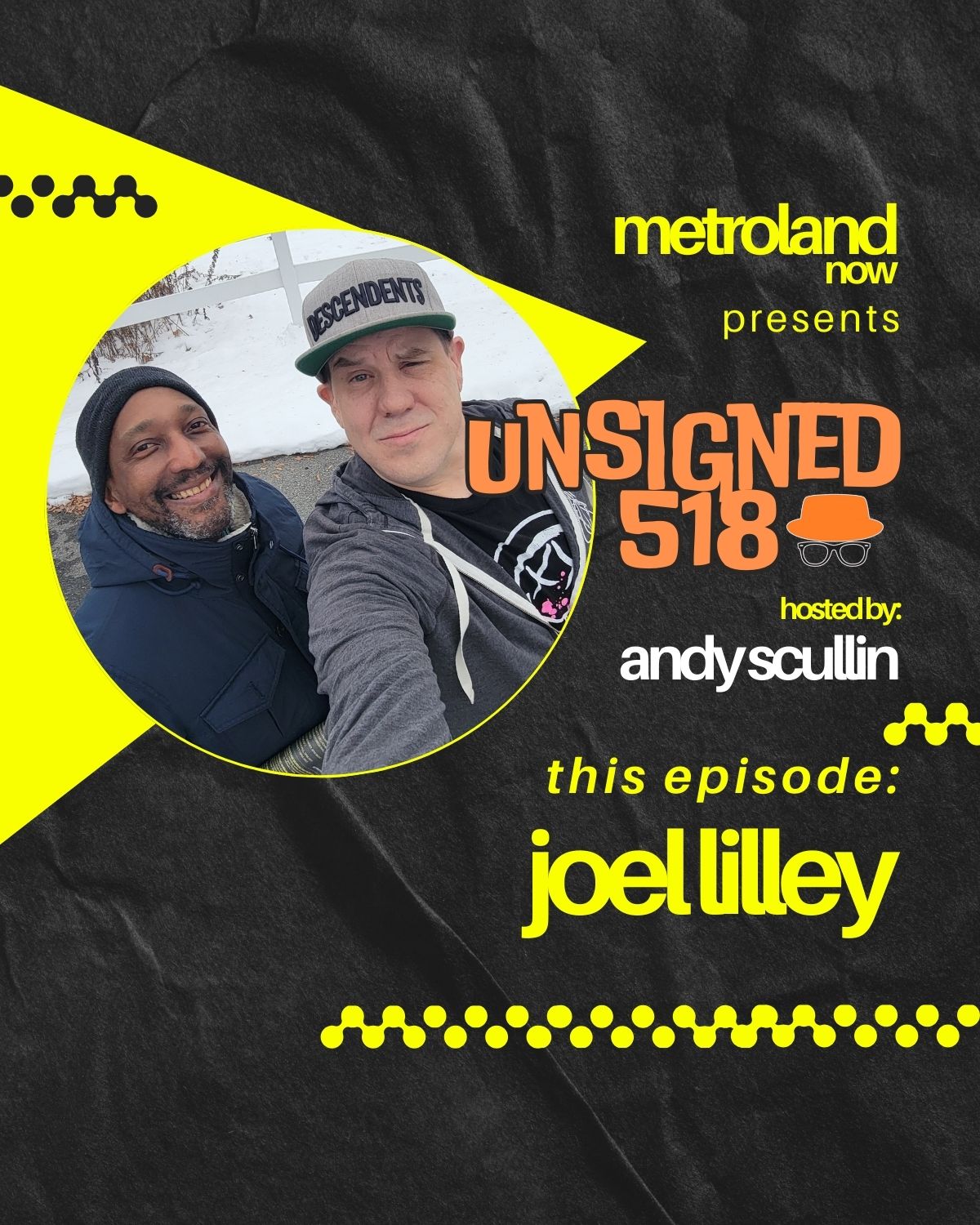
[00:00:27] Speaker B: Welcome to Unsigned 518. I'm here with Joel Lilly. How's it going, man?
[00:00:32] Speaker C: What's going on, man?
[00:00:33] Speaker B: You know, going, going well. And we just met, you know, and I don't know, had. Have we met in person before?
[00:00:40] Speaker C: No, this is the first time, like we're aware and we share some people.
[00:00:44] Speaker B: Yeah, that we're aware. I mean, it is possible in just like our conversation before we got started, it is possible that, you know, probably at DA's or something that we were.
[00:00:53] Speaker C: You know, it's a very small pool that we swim in. Yes. And I've told people before, this is a type of town, an area where like, you can't really mess up. Like if you mess up, you just gotta like move out because that's it. There's nowhere to hide. So, yeah, everybody knows everybody.
[00:01:08] Speaker B: Everybody knows everybody and what's going on. And you know, the town specifically we're talking about is Saratoga. Because, you know, I. Well, I don't know, maybe people don't know this about me, but I lived in Saratoga before we moved out here to the country and I, I was a big fan of the scene. And actually like the beginnings of this podcast happened in Saratoga due to like my seeing the music scene there, like specifically, like with like, you know, James Gascoigne and Mary Lee and Ben Garrett and like all those guys that were like doing their own shit. And it was like.
I didn't realize that happened around here.
[00:01:51] Speaker C: Like at the time it was actually pretty intense. I knew for me, for my part, certainly going through the mid to late 90s into the early aughts, people don't realize just how vibrant the scene was. Which is not to like besmirch what the scene is now. There's a lot of people doing some really cool shit right now. But back then, I mean, for example, like the per capita, like the bar population per capita, I mean, if I'm not mistaken, I think Saratoga had more bars per capita than any town in upstate New York. I mean, every other establishment downtown was a bar and every other establishment, you'd walk downtown on a Friday, Saturday, and you just walk down Broadway and every other storefront had a band in the window. And I know because, you know, my bands were, were some of those bands we would be playing. You look across street, see some friends of ours playing.
[00:02:47] Speaker B: So let's take it, you know, take it back, I guess. Go back to.
To that time. Like, to the 90s. Like, when did you start getting, I guess, into that scene? And I, you know, I. I guess just fucking tell us. Tell us some stories about saratoga and the 90s.
[00:03:06] Speaker C: Yeah. No, I mean, it was cool. I actually. It's funny.
I was out on my own for the first time, trying to figure my out, and, you know, a buddy of mine came up, came to my place, and we were hanging out, and he's like, yeah, you know. You know who you playing now? Because I was always in bands. I said, you know, I'm not actually playing with anybody right now. He looked at me like I was nuts. He's like, what are you talking about? I'm like, yeah, I just, you know, I don't know. I'm just trying to figure things out and whatever. He's like, dude, just, you know, you got to play with somebody. You're always playing music. And I said, well, I don't know. And he. Back in the days when there were newspapers. Remember those things? They were made out of paper and they had words on them. I know. His whole stack.
[00:03:43] Speaker B: Metro Land Spec.
Yes, I do remember. I do remember.
[00:03:49] Speaker C: And he sat down on the couch in my joint, and just, like, he started flipping the paper. He's like, look, there's a. There's a band looking for a drummer. And I was like, dude, nobody, the good band ever got together by, you know, advertising in the back of, like, a local rag. Except, of course, very notoriously, the Pixies. That's how they got together, which I learned at UMass.
Yeah.
[00:04:12] Speaker B: You know, and it's funny. Like, that was like a.
You know, like, nowadays this shit happens all the fucking time. Like, on Craigslist or whatever. You know, you need a drummer. You were like, hey, I need a fucking drummer. You put it out there. But you're right. Like, that is, like, an interesting component that I guess I hadn't thought of. Is what.
How you use the media. Yeah, that was available at the time.
[00:04:36] Speaker C: Yeah. I mean, every. You know, everything. And I still. I. You know, part of my ethos is diy.
Like, I really enjoy that. It's a. It's an element of what I'm doing these days that I really. I'm sort of treasuring and I'm relishing and. And I revel in it. Is that, you know, when you're doing everything yourself for yourself, there's no expectations. There's no labels that you have to ascribe to in any way.
There's no arguments to have about the material or the content or whether or not there's a single or whether or.
[00:05:09] Speaker B: Not the songs vibe together.
[00:05:11] Speaker C: Yeah, you know, it's diy. I have, I have the equipment that I have.
Those are the only boundaries, are the boundaries of what I have in front of me. When I head into the studio, I go in there, my cup of coffee, it's just me and a whole room full of instruments and my recording gear. And whatever happens, happens. And there's no parameters, except if it makes me happy, then I go with it, right?
Street, street diy, you know what I mean? And that's how it was back, back in the day. And when, you know, I answered the article because my friend said, oh, you should do this. I said, what the fuck? Sure, why not? And it was a lark. I was like, ah, sure, what the hell, I'll do it. And I think it was a week later I was on stage with Dreier opening for Super Chunk.
[00:05:59] Speaker A: Wow.
[00:06:00] Speaker C: I think it was. I'm pretty sure it was a week BC Bob, Bobby Carlton, he came downtown, met me at DA's, which had been my, my bar when I was in my, you know, from 17 to 1720. It's true story, 17 to 21 or whatever. And then Da's became our band Dryer. That was our bar for, you know, entirety of the time that we were together. Not that we've ever broken up. We just.
[00:06:29] Speaker A: We. Right, right.
[00:06:29] Speaker C: You know, we've, you know, we're doing it. We're doing our thing as we're doing it. But actually if you go in there now, you still see there's a, like head shots of us on the, on the ceiling. If you go into Das, you look above the bar, there's a. There's a band photo of us up there and on the jukebox. I assume they, they still have the jukebox. I haven't been there in a bit.
[00:06:44] Speaker B: They do have the jukebox. We, My band just played there doing.
[00:06:49] Speaker C: A super, super dark. Yeah, doing. That's cool.
[00:06:51] Speaker B: It's so much fun to play there.
[00:06:53] Speaker C: Yeah.
[00:06:54] Speaker B: Like, and especially as someone that used to hang out there.
[00:06:57] Speaker C: Yeah. Yeah. Speaking of diy, we told those guys, not told this guy. But you know, you know, Travis and everybody were like, yeah, you guys should have bands. And they didn't have bands. Right. Long, long, long time. And I think they've been rocking with the super dark stuff.
[00:07:08] Speaker B: It's Been a while. Yeah. For five, six years.
[00:07:12] Speaker C: They're doing real good.
[00:07:13] Speaker B: And the shows are. Are like. We were talking to one of the guys there and, you know, I was like, you know, what kind of crowd do you think? You know, because it was like a snowy, even a cold evening, not a snow evening. And, you know, they're on a Monday.
[00:07:28] Speaker A: Oh, yeah.
[00:07:28] Speaker B: You know, and he was like, every single one is busy.
[00:07:32] Speaker C: Yeah.
[00:07:33] Speaker B: He's like, every single one. Like, there's people that come out consistently, there's a consistent crowd, and they don't care who's playing or what style of music is playing. They're coming out to see what style.
[00:07:45] Speaker C: You know what I mean? Coming out for the art of it all. Coming out for the art of it all. And like, you gotta. You gotta give props. They've done a really fantastic.
[00:07:53] Speaker B: They really have. They're so much fun to play. And like, those. The lineups they do are always so cool. Like, they bring in some. Some really good. True story on a Monday, people consistently show up. So go out to DA's.
[00:08:08] Speaker C: Yes. Check out Super Chip. Take out Super Dark. They do a really great job.
[00:08:11] Speaker B: Yeah, totally. All right, so we're, you know, we're in the 90s. You're. You're with Dryer. You're opening for Super Trunk. Where was that at?
[00:08:19] Speaker C: That was at Boogies, I believe. I think that was Boogies.
[00:08:24] Speaker A: Nice.
[00:08:25] Speaker B: So right out of the gate, you're playing shows. And how was, you know, I don't even know. The number of bars in Saratoga has probably stayed relatively the same, but they switched to restaurants. Yeah.
The number of Straight up.
[00:08:44] Speaker C: Yes.
[00:08:45] Speaker B: Just bars doesn't exist. But that there's still drinking establishment.
[00:08:50] Speaker C: There are, but even that, I'd say there's not. Yeah. I'd say there's half as many bars and as those bars. The. The number of those bars that host live music, it's like half of those.
[00:09:02] Speaker B: And like, there's none on fucking Broadway anymore.
[00:09:04] Speaker A: No.
[00:09:04] Speaker C: And they're all cover bands. They're all shit.
[00:09:06] Speaker B: Right, right.
[00:09:06] Speaker C: No offense. Cover people. I get it. I mean, yeah, but like, I get it, man.
[00:09:10] Speaker B: I've played in many, many.
[00:09:14] Speaker C: But like, you know, it's.
I can tell you from a. As a person who, who lives in a, you know, fifth floor walk up in downtown Saratoga, when the windows are open, I can hear all the bands. And it's shit music, Right.
[00:09:27] Speaker B: And it's sometimes. Sometimes that stuff that, like, it hurts your soul a little bit, like playing it. Like I said, I've played in Cover bands. I've played in cover bands that are still active and playing.
[00:09:40] Speaker C: Look, the struggle is real, Saratoga.
Yeah, being a musician is second to being an actor or a comedian, third to be the comedian.
It's a tough road to hoe for most of us. And if you're lucky, you can find a lane where you're happy.
I've been fortunate. You know, Dreier.
We're like family. Me and bc, Bob, BC and Rach.
You know, Brian, who joined the band in the aughts as a second guitarist and vocalist, who's, you know, accomplished musician in his own own right. He came from playing with the Winter Pills and all sorts of, like, really cool gigs over in Mass.
You know, we're. We. We're like family. As you know. Dryer had its ups and downs. We did the, like, break up on the road in. I think it was like Detroit or Chicago someplace, but, you know, we did all that stuff back in the day. But now, you know, we hang out. I'm catching up with Bob. I think we're having a beer next week. Rach actually recorded some vocals for one of my songs off of the last. The last record. The record from this.
This fall. She recorded vocals for a song. And that was because she was, you know, we were just hanging out. We were having some lunch and a beer and whatever. I was telling her what I was up to. I was like, hey, you know, you want to come in? Just like, check some stuff out. I brought her in the studio, sat down, and she's like, oh, this is cool. I'm like, yeah, yeah. Like, here's this song I was working on. You want to just like. I know here. Here's a mic here. Just, you know, hang out for a while and lay some shit down and see what you do. And that ended up being one of the singles I released. So, yeah.
[00:11:24] Speaker B: So, I mean, I. I guess I. I've learned enough about the. The scene in the 90s in Saratoga, but, like, I caught a.
A little of it. It was more like early 2000s. I worked for EQX and used to come over this way to, like, host. You know, we would host shows and I used to have the keys to the EQX van and I'd come and throw out, you know, throw out fucking T shirts and stickers and, like, mingle with people and do live broadcasts. And it did really change. Like, that was, you know, 22, 23 years ago.
And I mean, a lot of. A lot of those whole blocks of entertainment venues just don't even exist anymore are just like.
So do you think that that hurt local bands or do you think that that kind of pushed them to broaden the scene? Like, might that have helped bridge the gap between the quote unquote, Saratoga music scene and the Albany music scene?
[00:12:28] Speaker C: And, you know, I think to my mind and my personal experience, like I said, Dreyer was active, highly active, from the early to mid-90s through to the aughts. And then when Dreier, we didn't so much break up as we stopped being a functional band.
Bob and I started the 615s and we recorded a couple of records. And so I got to. While all that was happening, we were noticing what was happening with the scenes. And it was not just here, it was not just the Albany scene. It was all across the country. Some of our favorite clubs were shutting down places that we had always. We'd head out to Chicago, we'd head out to Detroit, we'd head out west. And whatever clubs we played there, Boston clubs, we played there all the time, were no longer there. The scenes were changing. Like the laws for everything were changing.
People's attitudes were changing.
And I was. It was.
I feel like the scene was no longer friendly to independent music. That's. That's what I think was going on. It had a lot to do with what was happening with the labels. I mean, you know, between dryer and 615s, I can tell you we had a lot of issues with label stuff.
You know, manipulation.
I mean, there was Dreier, actually. We were very close to being signed with one of the majors. I forget if it was Capital Atlantic, but.
And the deal fell through because they flat out wanted us to compromise the band. And, you know, I think, like, as a full grown adult, as much as I am a full grown adult now, whatever that means. Exactly. I think probably I would have been like, yes, we'll do whatever. You know, Sad to say, I probably would have done that. But at the time, we still had, you know, our youth and we were standing up or something. We said, fuck, no, we're not. They wanted us to switch the lineup around. They wanted us to change with the focus and make one person out front and everybody else in the background. And we were a gala, we were a trio. You know, we. When we were out on the road, it was the. The three of us against the entire world.
[00:14:57] Speaker A: What?
[00:14:57] Speaker C: We were not going to sacrifice that for the fact that just to get on your stupid label and be supported by you.
[00:15:04] Speaker B: Right. Because then it's not really, you on.
[00:15:05] Speaker C: The label, it's not us.
[00:15:06] Speaker B: You know, like if you're playing whatever the role that they want you to.
[00:15:09] Speaker C: Play, and if they're pushing you around that much, you're not even signed yet, what's going to happen once you're on.
[00:15:13] Speaker B: Totally when they own you and they're like, oh, you owe us this much money for your tour, for your record.
[00:15:19] Speaker C: It, it, it happened to us, the couple labels that were on, you know, they really. It was very unpleasant, I would say it was very, very unpleasant. Yeah, and, and we know such a.
[00:15:31] Speaker B: Gentle way of putting it. No, it's just like very unpleasant.
[00:15:35] Speaker C: The number of bands that we know who were able to benefit from, you know, from, from labels at that point in time ended up owing the labels money. They ended up, I mean really, it was, it's, it was a shitty system. And we've seen what happened. It blew up. And now we're in this strange new world where nothing makes sense for everyone. There's a billion bands, everybody's screaming into the void all the time, trying to get voiced. And so I'm here, I'm so.
I, I go by the moniker of Cuddly Bear because I needed a way to separate who I was sort of recognized as being back in the day from who I believe musically, myself to be now. Which is not say I have, like I, like I said myself, my former bands, we're like family. And I couldn't be more proud of the work, you know. Dryer, we made some really cool stuff, right? So a lot of records, a lot of singles, a lot of shows, a lot of fun and we made some really cool stuff. See me, the 615S, which was a very short lived band, but for the couple of records that we made, you know, we had a lot of attention down in Brooklyn, A lot of, you know, a lot of good times, a lot of music. I'm proud, very proud of all that material.
But when Cuddly Bear came to be, it's funny, you know, you think you know yourself, right? And I thought I knew myself. And then the pandemic rolled around and, you know, I found myself engaging in some remote projects with people, which meant having to learn a new skill set, which is, you know, okay, so now I gotta be like recording and sending stuff back and forth to people digitally, figuring this stuff out. Okay, cool, so I'll do this, let me buy this equipment.
And at the end of it all, you know, I think those projects themselves, you know, worked to varying degrees. But what came out of it was that I'd find myself every weekend in this. This cave, this den. Right, that. That I. That I had carved out in. In our apartment, surrounded by instruments and obsessively, obsessively every weekend, going in at like, you know, 11 o' clock in the morning on Saturday, grab some coffee. Wouldn't even be speaking yet, really not, you know, But I just go in, I'd pick up usually a guitar, whatever, I've, you know, the keys, the man, whatever was there. Drums, whatever, whatever I was feeling, I would just pick it up and just start playing and I just start hitting record.
And out of that I realized, like. Oh, like I.
I thought I knew myself. It turns out I didn't. Right.
The fog of youth. You think you know yourself. I know myself. And everybody else can fuck. No, no, man.
[00:18:40] Speaker B: You also change a lot.
[00:18:42] Speaker C: Oh, yeah.
[00:18:43] Speaker B: You know, like I say, every 10 years you're a fucking different person. And I believe that. Yeah.
[00:18:47] Speaker C: And I. You know, for me, again, the reason I came up with Cuddly Bear is because.
[00:18:55] Speaker A: I.
[00:18:55] Speaker C: It's not that I'm like trying to dissociate myself from.
[00:18:58] Speaker A: Yeah.
[00:18:58] Speaker C: I'm Joe. I'm Joel Lilly, drummer for Dryer615. Bag of vocals, all that stuff. This is another thing. This is like sort of.
It's. It's the meest me, you know, I mean, it's the me that's not jiving with other people. It's. There's, you know, bands.
It's like being in a family and like having conversations all the time, right? You're having. You're musically having conversations with the other folks in the band, right? You back and forth holding hands, things being disparate about things, whatever. And then that soup, whatever comes out of that soup, that's what the band is. When it's just me.
It's all those crazy influences. Everything I've told people before, it's like I grew up. I'm actually, you know, I've been in upstate since 89. I've been here forever.
I actually grew up in Philadelphia. I'm a Philly boy. And so I came up in a place that was cacophonous, right? It's Philadelphia. I'd walk down the street, there'd be like reggae playing and weed smoke blowing out the windows. There's the Chinese restaurant across the street. There's the L, the train going overhead.
People with a beatbox walking down the street. It's constant influence all the time. It's never silent until about 2 or 3 o' clock in the morning. It's always loud.
There's that. There's people driving down the street. They're playing, you know, whatever music is. Is popular at the time. I'm driving down the street with my mom. She's blasting, you know, like, some easy listening from, like, the 70s or 80s or whatever. And, like, regardless of how you feel about it, it all shows up, right? Like, I'm like. I'm not a. I'm not like a church dude. It's not my thing. But, you know, I went to Sunday school when I was a kid. I was on the choir. I was in the. In the Sunday school choir, right?
It all comes out, you know, when I. When I'm mixing my songs down and I've come up with, like.
Like I said, I don't have any, like, parameters. I just. I sort of jumped in this thing, and now I realize, sort of. You know, I guess. I guess I'm about three years into it now is that I do have, like, this process. And part of the process is going in and listening to all the tracks and, like, extrapolating what's going on and listening to how all the groupings of, you know, the rhythm section, you know, all the guitars, the vocals, what they're all doing, and I break it down, and at one point, I listen. I was like, God damn, that's a Sunday school choir. I'm listening to, like, eight or nine vocal tracks stacked. I'm like, wow. I'm like, it's not intentional. I'm not doing anything. I'm just doing whatever I feel like is happening in the moment.
[00:21:31] Speaker B: That's, like, kind of the rule of that kind of music. You mean, like.
[00:21:34] Speaker C: I mean, like, harmonies were stacked or whatever. Like, all the influences, like, whether I want those influences to be there or not, they're there. I'm like, foundation. Yeah, Yeah, I hear, like, to change the foundation. Yeah, I liked it. I'm like. I was listening in one section. I'm like, well, that's. That's easy listening. That's some. That, like, I had to listen to when I was a kid, and now it's just there and, like, it come.
[00:21:56] Speaker A: You.
[00:21:56] Speaker C: You take it in and you spit it back out via your own soul or whatever. You know what I mean? So.
[00:22:02] Speaker B: Well, can we, like. I do want to hear more about Cuddly Bear as a project, but can we kind of kick off that conversation maybe with a song?
[00:22:11] Speaker C: Yeah, man, that sounds cool.
[00:22:12] Speaker A: Which.
[00:22:13] Speaker B: Which one do you want to play?
[00:22:14] Speaker C: Oh, man.
[00:22:19] Speaker A: Wow.
[00:22:20] Speaker C: I guess we should probably do one from the. The Release from a couple of months ago. I am kind of. I'm kind of. Kind of prolific. I'm doing about four records a year at this. At this point.
Well, you know what, man? It's.
I love it. It makes me feel whole. So how about let's go with for you know who. That's kind of a cool one.
Sure, why not?
[00:22:50] Speaker B: All right, well, let's check out for you know who, Cuddly Bear, and then we'll be right back to talk some more with Joel.
[00:24:12] Speaker A: Sav currently currency apple break so soon, You know, who knows you?
It's a sign of the time.
Ram.
It.
Sa.
It's but a question of time Mat me, Matthew.
And were we falling When I could see True a spent time could be see through.
Now what are we going to do, Sam?
[00:29:26] Speaker B: All right, that was for you know who, Cuddly Bear, and you know, Joel. We could talk about, you know, I was almost going to be like, well, let's talk about the album. But since there's been four of them in the last chunk of months, maybe it's a little more interesting for everybody to hear about how you make the album. Because you kind of mentioned when we were listening to that last song how you've got a little different process, I guess, in the way you do it.
[00:29:53] Speaker C: Yeah, it's pretty odd.
It's funny. I had a meeting with a buddy of mine, one of my old bandmates, and we just went out to have some dinner and have a beer.
This is after I released the first record, which is Evil Era, that was New Year's last year.
And he's like, yeah, you know, I never really, like, chat with my friends about their. About their. Their projects, you know, because we have. We've got, you know, we all. We all know so many people that are making music and, you know, we're just all doing our thing.
[00:30:29] Speaker A: Right.
[00:30:29] Speaker C: But he wanted to chat because he's like.
I think he'd never really heard what I did on. On My Own, which of course he didn't. I didn't either, you know, and he was really surprised at what it was, I think.
And he wanted to hear a little bit, I think, about, like, how I went about it, because it did seem unusual in comparison to the stuff, you know, I wrote songs for Dryer back in the day. But they were all, you know, Dryer was a. Was a. Was a pop punk outfit and, you know, with some slight Prague stuff that would happen.
But the stuff I wrote was really straightforward and I. I think, pretty immature to be quite Honest with you, that's.
[00:31:15] Speaker B: That was some of my favorite music is immature.
I mean, I'm 52 years old.
[00:31:23] Speaker C: I'm not even saying I'm a. Grow it up now. Let's be honest about it. That's what it is.
[00:31:27] Speaker B: Look where we are. Is this an adult's room?
[00:31:30] Speaker C: I love it, dude. All about it.
But so I sort of write on a continuum and so what happens typically or what has happened and what's happening now as we speak, I'm working on. I'm mixing the next record, which I'm hoping to put out on New Year's this year.
And at the same time, I'm writing a record that's slated for release in two and 20,000 March. Right. I try to do them once, like four, four times a year. So like every like three months.
And you know, what has happened is that I started off a couple years ago really, really writing. I mean, originally I was. I was writing stuff and then I would like, you know, I'd send like wav files to a buddy. A buddy of mine I've known since high school. We. My. My first band was with a couple buddies of mine from high school back in Philly. And we were all. I think I was 13 when I started playing and we started a band before we knew how to play instruments. It's that sort of situation.
[00:32:35] Speaker B: Same.
[00:32:35] Speaker C: Yeah, yeah, yeah. No, man, I mean, I was musically inclined to a certain extent. I mean, my mom. Rest in peace, mom, she made me do lots of stuff I didn't want to do when I was a kid, but now I get it. So she used to make me go to this music class every Saturday and learn Suzuki Method. And I never thought anything about it then, but now I appreciate it after the fact.
And then in high school, you know, I played. Yeah, I played violin. Yep, that was me, like fifth chair, whatever, violin. And I got to be 13 and I swear to you, like a lightning from the blue. I was like, you know, I don't think I'm ever gonna get a girlfriend playing, you know, fifth tier violin. But if I played a. A cool instrument, like, like drums maybe. And so, you know, we were hanging out in the basement, me and. Me and my crew in high school. And we're like, let's start a band. Because what we would do anyway is we'd get together on Saturdays, you know, we'd go to like fucking Burger King or fuck. Hang out and get. Get stupid food and drinks to go back to my buddy's house and we'd spin. Spin Spin plates. We just like, we'd go to the record store and we would like play records all afternoon, listen to records and bullshit around and do whatever.
And that became. Maybe we should start a band and make music. And so we made crazy music about crazy stuff we had no idea about because we're all like 13, 14 years old. What did we know? But like, that was super formative stuff for me.
That was where it came from, you know. And I learned how to play music really by being in bands, by jamming with other people, bouncing off of them, that energy and that whatever, that's how I learned.
[00:34:24] Speaker B: And a lot of that is also the encouragement. The encouragement. Like, because doing any like art shit.
[00:34:31] Speaker C: Yeah.
[00:34:32] Speaker B: Is there's a soul tax a little bit.
[00:34:35] Speaker C: You know what I mean?
[00:34:35] Speaker B: Like, it takes a lot to put yourself out there like that. But when you're amongst other people that are also doing it, it helps, you know, because it's less embarrassing to do, you know? Like I wouldn't be able to even now as someone who's been playing guitar for fucking 35 years.
[00:34:51] Speaker C: Yeah.
[00:34:52] Speaker B: If you put me in the room with a bunch of people that weren't and didn't know anything about music and weren't music people at all and you were like, play the guitar and play a song for these people. I'd be like, fuck no.
[00:35:04] Speaker C: Yeah, believe me, I know. I was, I was actually.
I was a. I was a sculptor for 15 years professionally. I worked for a couple of different companies and I went solo for about 33 years.
And one of the guys I worked with, he had been my boss at the first company.
At one point he was like, you should have stuck with music. And I was like.
And I realized later on he wasn't saying that I wasn't good. I mean, I was actually. I'm pretty good.
What he was saying is that when you're doing this as a business, you will come to hate it. And he was right. I stopped sculpting three. I think it's three years ago now. I told clients I had shut the studio down. I'm just not. I'm not doing it anymore.
And I stopped because it didn't bring me joy anymore.
[00:35:53] Speaker A: Right.
[00:35:53] Speaker C: You know, my. I was taking a pride. I was about to sign on to a project. My wife was like, why are you doing that? I was like, well, cuz I got. She's like, but you hate it. I'm like, no. She's like, you, you hate it every single time. You complain about the entire time. And I was like, you're right.
[00:36:08] Speaker B: Yeah.
[00:36:09] Speaker C: Like, stop bringing me joy. So I stopped doing it. And that coincided. I mean, quitting, doing that and picking music up again happened right around the same time. I think it's not a coincidence that all that energy went into something that mattered to me. And so I went from sending wav files to buddies of mine and being like, that's pretty cool, man. It's wild. Whatever, blah, blah, blah. To somebody saying, like, oh, you should do something with it, because blah, blah, blah. And I looked and I'm sitting on.
I won't tell you how much music, but I'm sitting on a lot of music. And I'm like, you know, another buddy of mine who's actually. He's a very accomplished musician.
[00:36:48] Speaker A: He's.
[00:36:49] Speaker C: Flies around the globe, he teaches classes. And, you know, he's. He's really. He's. He's quite. He's. He's a crazy guy. And he's like, you. You can't. You can't not put stuff out into the world. You gotta. If it's there, if it means something to you, what's the use of it sitting in a. And so when I write, typically the records tend to be around 15 songs. And of those 15 songs, five songs are sort of already mostly done.
I pulled them from this well of stuff I've been working on, and they're sort of sitting in a folder, right? Literally. Literally manila folders and then folders on my computer.
[00:37:31] Speaker A: And.
[00:37:34] Speaker C: With those as the, like, the starter, like you're baking something. Those are like, the starter. I then have five songs that are, like, kind of like halfway done.
And then. So I'll be working on those songs and I'll be revisiting the first songs. And those are now influencing each other. And then in the process of finishing that group of 10 songs, I write songs in between because I'm still. I'm still working. I mean, my process is I get up and I pick up the guitar, whatever, and I just start. I see whatever happens very, very often. I'm totally serious about this. Like, the power of your unconscious mind, right? Instead of, like, fucking getting up and being like, ah, it's not working. If it doesn't work. If it doesn't work, I put it down. I. Swift Gears. Do something else.
[00:38:15] Speaker A: You should.
[00:38:15] Speaker C: Yeah, but before I even wake up, I pick up the guitar, I have a sip of coffee, and I just play.
[00:38:21] Speaker B: I just record it.
[00:38:23] Speaker C: Well, I just play.
And if there's an earworm, if there's something that, like, just appeals to Me, whatever the fuck it is.
That's. I mean, because the first thing I do.
You're right. About recording, the first thing I do is I walk in, I got my coffee in my car, and I turn everything on right? Everything is set. So if something happens, all I literally have to do is push the record button and start going.
And very often, a lot of my songs, it's really funny, a lot of those songs are the first four or five chords I played that day. I get up, I just, dun, dun, dun, dun. I'm like, oh, that's the thing. Let's work it. Let's work it. And then, you know. And so again, I got the five songs, the next five song. And then the songs that happen while I'm writing those. And so they all happen sort of on this continuum. I'm always working on songs that have a root in the past, the present, and then what's happening as I'm making all that happen.
So, you know, this next record, the ones coming on New Year's, is actually the record that I was going to release first.
This record I wrote and recorded a year and a half ago.
And when I was right about to put it out, I got on this streak and wrote a whole bunch of stuff, and I was like, I want to put this out. And so I put the first record aside and I just started writing a new record, which turned into basically sort of like a trilogy. I mean, you know, those first three records that I released, I all consider those to be part of one whole thing. And so those are in the pipe.
They're out there now. And now I've gone back. I'm remixing the very first record and putting that on New Year's.
[00:40:04] Speaker B: That's wild.
[00:40:04] Speaker C: And while I'm doing that, I'm going in and like, yesterday morning I got up and I was writing songs for the record for March, which now looks like it's going to be a double album, because it's already big. It seems to be getting bigger and bigger, so I'm just going with it. Why not? Nobody's telling me. No, I don't have to answer anybody.
[00:40:23] Speaker B: Nobody's telling me anything. That's the best. You could just. Just let it all out. And being that nobody's telling you, like, you get to keep the joy. You know what I mean? It's not like somebody's saying, hey, Joel, wake up and go do those songs. You're being like, I want to go into. Get into this pattern of creating. And, like, I'm kind of jealous like, if I, because I don't have the, like, technical, know how to like, operate in a studio, you know what I mean? Like, I'm a musician, but I'm not, I'm not someone who could mix and master and like, you know, on that in that sense. So, like, any of my recordings are always just like a microphone and an acoustic guitar and that's usually where they, where it stops.
[00:41:06] Speaker C: Yeah, you know. No, you know, I mean, I, I, I felt the same way. And I, I can tell you, you know, going back to the days, you know, like I said, you know, Dreyer, how many records did we do? Five, six? I'm not sure we did a good number of records. And then the 6:15s, I think we recorded two official full lengths, I believe then, you know, there are, like singles in them around there and a lot of stuff, you know. The studio was my least favorite part back in the day.
I loved being on stage. Yeah, I mean, you know, the live experience and like, getting feedback from, like, the audience just getting up there and, you know, I told people, you know, I remember people thinking, oh, it's so cool you're in a band. I'm like, you have no idea how much work it is being in a band. Like, I love it. But being in a band, if you're actually doing it, means you spend 20 hours a week rehearsing, writing for every 45 minutes to an hour you get to spend on stage.
[00:42:06] Speaker B: I'm like, even like, you know, I only play. Like I said, we play maybe fucking 8 to 10 gigs a year or whatever. And even that is a ton of fucking work. And we're not doing it for anything other than just like, you know, fun. But if, you know, you were out tour, you know, can anybody listen? You know, a lot of people listening are in local bands. But like, picture like, what you were doing out. You know, you're going out to fucking California and going out west and like putting these big tours together. Like, think of how much foreign that is.
[00:42:35] Speaker C: Yep, so much.
[00:42:36] Speaker B: When, you know, if you compare to going to play fucking DA's on a Monday takes, you know, takes a lot out of me.
[00:42:41] Speaker C: I mean, you know, we had like back in the day.
It's very funny. I kept a lot of the old, like Metro. I think Driver was on the COVID of Metro like three times maybe.
And I kept those because they're really fun, because they're funny. I think they're very funny to go back and listen, you know, read like our interviews and such.
There was a point in Time when we were sort of.
We weren't reviled on the scene, but we took a lot of flack from some of the other bands, you know, because I think they thought that we were, you know, we were being, like, bratty or whatever. We weren't. We were being real. Because these other bands, you know, we knew these guys, you know, we know these guys. It's fine, you know, you know, and petty rivalries happen and whatever, but the fact was that we would do our thing and we play these shows and these other bands, they would be the biggest fish in the smallest pond. And they get up there and just swinging their dicks around and we're like, come on.
[00:43:41] Speaker A: That's just.
[00:43:42] Speaker C: What are you guys doing? Like, who do you think you are? Exactly, dude. What do. What band do you think you are? And do you think anybody's gonna remember you in 20 years? They're not, by the way.
And the proof was in the pudding, because Dryer would go out there, we'd put ourselves out there, we'd go to cities where nobody fucking knew us.
If we picked up one or two fans at a show, we were happy about it. We go places where. I mean, we played some crazy shows because of the. The punk ads. So we ended up some wild metal shows and stuff where people clearly wanted to, like, hurt us.
And we'd walk out of there, not only would they not have heard us, they. We'd have picked up a couple of fans, be like, these guys are kind of cool. Sweet. Mission accomplished. These other bands, they would hit the road and break up immediately, right? I'm not even kidding.
I can think of two bands that gave us flack, and they're. Oh, you guys suck. And we're awesome. They went on the road. One of them, I think, lasted one week. One maybe lasted two weeks. And they broke up on the road because they couldn't handle it. They didn't understand. This is. This is work, man. We love it. But it's work. And you're not going to go out there.
[00:44:47] Speaker B: And it's not just work, but it's something like. Especially like out on the road, it's something that you can't just turn off. You know what I mean? It's not like work.
[00:44:54] Speaker A: Oh.
[00:44:54] Speaker B: Like, you go to work and then when you leave work, you leave work at work. When you're out on the road, like, you're at work 24 hours a fucking day.
[00:45:01] Speaker A: Yeah.
[00:45:02] Speaker C: And it's. It's a. It's a labor of love if you treat it as anything else. Other than a labor of love. You are fucked.
[00:45:07] Speaker B: Right.
[00:45:08] Speaker C: You know what I mean?
So.
Yeah. Yeah. So, you know, when I.
When I write, it's a. It's a whole. It's a. It's a whole thing. And I had no expectations, like, I. It was an accident that I did in the first place. And now I just. I'm just recognizing. What I've come to understand is the pattern of how I write things. And that seems to work for me, and it makes me happy, and that's all that I really care about, I guess.
[00:45:31] Speaker A: Awesome.
[00:45:32] Speaker B: Well, I think we should hear another song.
[00:45:34] Speaker C: Oh, that's cool.
[00:45:35] Speaker A: So which.
[00:45:35] Speaker B: Which one did you want to do?
[00:45:38] Speaker C: Let me see. How about.
How about you give for what you get? That's kind of a weird one. I like that one. It's not. No, it's not. I don't mean it's not weird. It's just I.
I like unconventional song structures sometimes, so I think this one is one of those. I like it.
[00:45:53] Speaker A: All right.
[00:45:53] Speaker B: And it was. You give what you get.
[00:45:55] Speaker C: You give for what you get Give.
[00:45:56] Speaker B: For what you get. All right, well, let's check out. You give for what you get, Cuddly bear. And then we'll be right back to wrap it up with Joel.
[00:46:31] Speaker A: Yes. A war of wheels Straight out your mind I said running a sacrifice from now on I will say it twice how long until. Until it's time the privacy can be always seven miles to climb this is what you get in you play.
It's what you get for what you get it's what you feel what you get it's what you get for what you get.
All right.
[00:49:39] Speaker B: That was. You give for what you get Cuddly bear and Joel, I want to thank you so much for coming out and doing this. It was a really cool conversation, and I think you should come back sometime when we can. Can shoot the. A little more.
[00:49:52] Speaker C: Yeah, man. That'd be cool.
[00:49:54] Speaker B: The way things were and the difference between then and now, it's. It's really good insight for local bands to kind of hear what happens outside of our scene.
[00:50:07] Speaker C: Yeah.
[00:50:07] Speaker B: Like, because it's. It's not always peaches and roses.
[00:50:11] Speaker C: Yeah, man. No, it's.
[00:50:12] Speaker A: It's.
[00:50:13] Speaker C: It's. It's hard work, but, you know, I think, you know, just do it. Do it for the right reasons. Do it because you love it. You know what I mean? That's what I do.
[00:50:19] Speaker B: But, you know, before we go, I want to give you the chance I could do with all my guests to say your Gratitude. So microphone is all yours.
[00:50:26] Speaker C: Cool.
Yeah, man. Look, I want to thank all of my crews again. You know, the dryers and, you know, 615s. What's up, guys?
Both projects never really ended.
We're still talking about doing stuff. I think Dreyer is going to be doing, releasing a couple of covers for, like, a benefit, basically. But, you know, we'll talk to you about that when that actually, actually happens.
[00:50:54] Speaker B: Actually, you should hit up Swinghammer for that.
[00:50:56] Speaker C: Yes, I would talk to bj. Ah, Swinghammer.
I'm gonna. You know what? I'm gonna thank my mom, because, rest in peace, she passed away before this whole thing, and I think she would have dug it the most.
And thank her for making me do lots of shit when I was a kid. It turns out she was right. It actually benefited me because here I am doing stuff that I love. And I want to thank my wife because she's also an artist and she's awesome. And she's been putting up with me. And she's been putting up specifically, not just with me, she's been putting up with Cuddly Bear because I'm sort of like, literally, it's like a different animal. I just. I get. There's a whole different headspace I have, which is why I have a moniker. Like I said, it's just.
I feel it's a me that exists in and to itself. It's not the me from before. It's the me that was simmering underneath, sort of.
And, yeah, my wife has been very, very patient with Cuddly Bear and his excesses. So thanks, babe. Appreciate it. And, yeah, man, if. If you come across me on the. On the, you know, on the socials, Instagram and all the streamers. If you want to really support, come check me out on. On at.
I can't think.
Yeah, just come check out Cully Bear.
[00:52:18] Speaker B: Yeah.
[00:52:19] Speaker C: K, U, D, D L Y B A R.
And yeah, come. Come like and follow and do all that stuff, man. Be cool. Oh, yeah.
[00:52:27] Speaker B: All right. So he is Joel Lilly. I am Andy scullin. This is unsigned 518.
See you on the road.
Unsigned 518 is produced and hosted by me, Andy Scullin. New episodes are available every week wherever you are. Stream podcasts. If you'd like to help support the show, please like and subscribe wherever you are listening. Or you could buy me a
[email protected] unsigned 518.
If you would like to advertise on the show, send me an
[email protected] and to be a guest on the show, reach out to me through Instagram at unsigned518.
Take care of one another, and I'll see you next week.