[00:00:01] Speaker A: He was born on a Saturday in 73 he loves punk rock music I need to split Jabbing the dazzle Dead rock now on the beat Guitar with the short with radio back his motherfucking envy scrolling look at motherfucker cuz here he comes Andy Sculling wearing his orange.
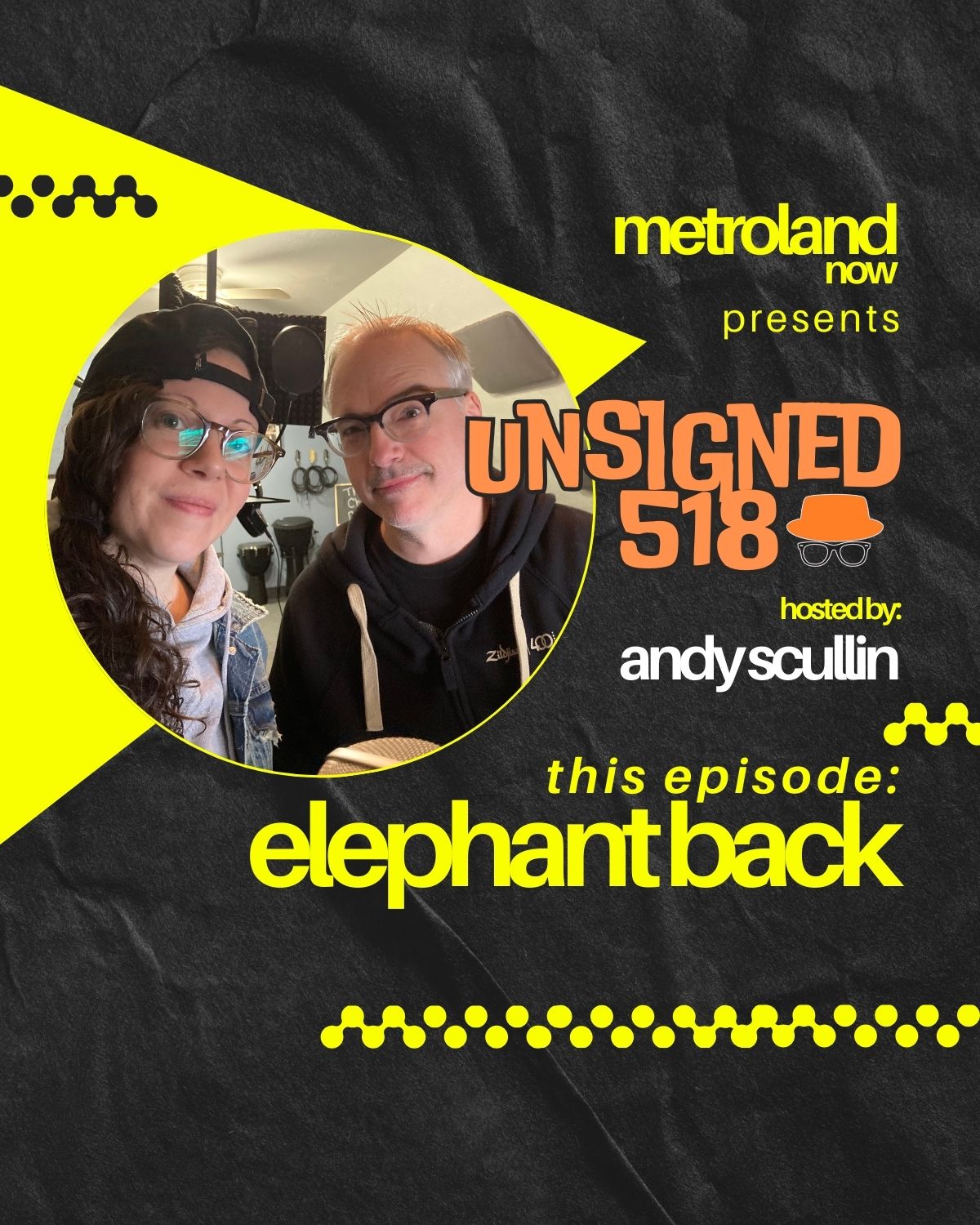
[00:00:26] Speaker B: Hat welcome to unsigned 508. I'm here with Dave and Sarah of Elephant Back. How's it going?
[00:00:33] Speaker C: Going great.
[00:00:34] Speaker B: Well, yeah, so you've been on the show before and you know, if anybody wants to hear, I guess, the, the origin story of Elephant Back, they can go back through the feed and, and listen to that episode. But, but this is more like a, you know, you've done so much since the first time we spoke. I guess it's kind of like an update.
So kind of what's. What's been going on?
[00:00:58] Speaker C: Yeah, I mean, it's. I don't know, it's been crazy. It's. It's weird. I can't believe it's been like, what, two years?
[00:01:05] Speaker B: Yeah, yeah, almost.
[00:01:06] Speaker C: That's crazy.
But so we, we just keep writing. I mean, we keep writing, we keep playing, keep doing more shows. We, we wrote. We just dropped Evolution in October at the end of October and we recorded it last October and then we released it this October after it was mastered and all the things.
We're super, super, super excited about the album.
It's been a crazy journey with music and I personally think it's our best one to date and has come out really fantastic.
[00:01:49] Speaker B: So, you know, last time we talked, you know, obviously this album didn't exist because it was, it was almost two years ago and.
[00:01:56] Speaker C: Yeah.
[00:01:56] Speaker B: Was it like already in the works? Did you already have, have the album planned? Because I can't remember. I mean, maybe I should go back and listen to the episode.
[00:02:04] Speaker C: No, I don't think so. When we talked to you last, we had just gotten back from Abbey Road.
[00:02:09] Speaker B: Oh, that's right.
[00:02:10] Speaker D: Yeah.
White album.
[00:02:13] Speaker C: Yeah, we released a double album, the White Album and the Black album. Right. When we were talking to you. So this one hadn't really come out yet. Maybe we had lyrics or something.
[00:02:26] Speaker D: We did write this album and we, we performed it out, the songs out for a while just for them to mature a little bit.
So we might have had a couple songs.
[00:02:36] Speaker C: Yeah, we might have had a couple in the can, but.
[00:02:39] Speaker B: And is that something that you do with, with a lot of your stuff is, you know, you know, create it as a song before it goes into the studio? Because I know a lot of people might you know, be like, hey, we're gonna record an album and kind of create the songs in the studio, but you make them as like, you know, in the flesh, live songs first.
[00:02:58] Speaker C: Yeah.
[00:02:59] Speaker D: It's too expensive to just wing it in the studio. So we make sure we have everything we want planned and then we go in and try to execute it to.
[00:03:11] Speaker C: Yeah, because we're. We're like in and out kind of people. You know, we get. We. We recorded this eight songs in a day, and then we went back and just did some touch. Touch upy stuff the next day.
[00:03:26] Speaker B: Gotcha. So you really do, like, do. And do you. Does the song change? Like, if you're out playing the song and you're playing it live? Like, do you base like some audience feedback on it or how you feel when you play it live? Does the. Does this song change before you go into the studio, or is it kind of like you write it and know that's what it's going to be?
[00:03:47] Speaker D: I don't think it changes too much. I think it kind of ages and matures a little bit.
[00:03:53] Speaker C: Yeah.
[00:03:53] Speaker D: And you kind of figure out what, oh, I shouldn't do that. I should do this kind of thing. But it, like, usually the structure is.
[00:04:01] Speaker B: The same, so it just gets, like, refined a little bit.
[00:04:04] Speaker C: Yeah, yeah. It's like a fine tuning of parts. Like, I might play it slightly different drum beat or something like that.
[00:04:11] Speaker B: Now did write, you know, writing song, and I'm not, you know, I'm not really much of like a songwriter, so I guess it like, I mean, I am, but I'm more of like a collaborative songwriter. I can like, help as long as someone's smarter than me.
[00:04:25] Speaker C: But.
[00:04:26] Speaker B: But like writing as much as you do and like, you know, having the catalog and being like, you know, we just put out a double album, then immediately going back to work on another album. Is it just like.
I mean, I mean, do you just feel that you just have to get the stuff out? Like, what. What drives you to just put out so much content?
[00:04:50] Speaker C: It's. I mean, it's just like in the flow, like, this evolution was a lot of.
I wrote a lot of lyrics. Not, not necessarily. Necessarily. I didn't really know what to do with them. That. That's where Dave's genius comes in. You know, it's like I. I handed him most of these songs, finished lyrics and was like, here, have that. And then he comes back with like this perfect piece of music for it. And it's. I don't know, it's just kind of, like, in the flow kind of a thing.
[00:05:19] Speaker B: So, like, you write the lyrics. Dave will do, like.
Like, some of the. The melody stuff and chord structure, and then you add the. The rhythm to it. You know, the beat to it. Is that accurate? Kind of.
[00:05:31] Speaker C: Yeah.
[00:05:32] Speaker D: Yeah, you could say that. She. She. She usually has her own melody in her head, but she doesn't tell me just to see what I come up with kind of thing.
So I do my thing and then be like, hey, yes. What do you think?
[00:05:45] Speaker C: And sometimes it depends on the song. Like, sometimes it's like, I. I have really. I'm really stuck on something. But with Evolution, I.
Everything he came back with me at was just so perfect that I really didn't have a lot of critique for anything because it just. It suited the lyrics perfectly. And I was just like, oh, this is, like, really, really good. Like, we're super onto something here.
[00:06:11] Speaker D: If I was. To be honest, she. She handed me a bunch of love songs, and I was like, we just got done writing the White Album. I'm like, I don't want to do love songs. So the music to these love songs that I made is a reaction to having to write love songs.
[00:06:30] Speaker C: They were all love songs.
[00:06:31] Speaker D: So I kind of tried it. I tried to hide the love songs, but every single song is a love.
[00:06:36] Speaker C: Song in that it is not.
No, it. Sound bite is not a love song.
[00:06:41] Speaker B: And do you think, like, you know, being that it's just the two of you and, like, the nature of your relationship, do you think that creates, like, this line of communication that a lot of artists or songwriting partners may not have, you know.
[00:06:58] Speaker C: Kind of. It. I mean, I feel like.
Like when. When I'm in a mood for a certain way of writing, like, he already knows where my headspace is because we're hanging out and listening to the same music. Like, there's certain songs where I was like, oh, super listening to Bob Dylan at the time, and then he wrote something, and, like, he knew that that's what I was listening to and kind of went in that direction with something, you know, like, not necessarily on this album, but on other songs.
[00:07:26] Speaker B: Right.
[00:07:26] Speaker C: So it's kind of. It's kind of nice actually, to have be in tune, you know?
[00:07:33] Speaker B: Yeah. Yeah. Because, I mean, a lot of. A lot of it, I think, like, being collaborative, it would. Having to be explaining your vision to someone else and. And getting them on board with your vision, but, like, you know, the two of you already sympatico. Like, you know, it's like that. That part doesn't need to be there. You, you could just be like, hey, this. Oh, I get it. You know, I know exactly what you're talking about.
[00:07:55] Speaker D: Like, yeah, it's, it's. Sometimes we have to slow down. Like, slow ourselves down, because at this, at this time right now, we have an acoustic album, material for a whole full acoustic album, and material for the next electric album. Already done. Wow. So it's like, it can, it almost gets overwhelming at one point, but it's.
[00:08:16] Speaker C: Hard to keep track of sometimes. Like, it, like, I'm a very, like, organized person, and it really stresses me out when we have, like, all these ideas and I'm like, wait, which one is which one and where is it and how?
[00:08:27] Speaker D: Like, like, I basically write songs every single day, so I'm like, oh, this one's cool. This one's cool.
[00:08:32] Speaker C: This was cool.
[00:08:33] Speaker D: She's like, just know.
[00:08:36] Speaker B: And when you write song, you know, again, like, obviously you, you have that need to create, which is something that, that I can, I can relate to. But, like, when you're writing songs every day, are you necessarily thinking, hey, this is something that I'm gonna use, or is it more like a, like an exercise, a muscle, you know, that you're just keeping, keeping sharp?
[00:08:57] Speaker C: For me, it's more of like a muscle, and then it's like, okay, this was an actual good idea.
[00:09:03] Speaker B: Right? Like, you can pull stuff from it, but for the most part, you're just, you know, keeping your, keeping your skills.
[00:09:10] Speaker C: It depends on which one we run with.
[00:09:11] Speaker D: You know, I, I, I usually have stuff I have to get out, and that's my kind of like my, my session of healing is, is just going and writing a song kind of thing.
[00:09:23] Speaker C: Yeah, and that's the same, that's the same way I write with, like, lyrics, but, like, I also have this thing where, like, I don't want my, my lyrics and my, what I'm putting out to be any sort of like, a negative space.
So, like, when I'm not in a good mood, I try not to. Like, I might write, but I don't want to make that a song.
[00:09:46] Speaker B: Right. And is that because you don't want the permanence of it?
[00:09:50] Speaker C: Like, yeah.
[00:09:51] Speaker B: You know, if you're, like, in a bad mood and you write a song about feeling shitty, every time you play that song, you're going, you're gonna be reminded of feeling shitty.
[00:10:00] Speaker A: Yeah.
[00:10:00] Speaker C: Like, yeah. It's like, what do I want to put out into the universe? Do I wanna, like, and how relatable? And in what way do I Want it to be relatable. Like, I can write like a maybe downtrodden kind of song, but I want. I don't want it to stay that way. I want it to come back up and have you have a better day. You know what I mean? Like, I don't know. That's just my reference.
[00:10:24] Speaker D: I think for me it's. It's.
As I grow older, I. Every time I write a song, I'm thinking, is this relevant to. Is to anything? Because. Because I'm essentially writing the song for myself, you know, when I'm at. In the moment. But then afterwards I have to think, okay, are people going to understand this is relevant in this modern day?
[00:10:47] Speaker C: Yeah.
[00:10:48] Speaker B: Like, is it too personal or is it going to translate?
Right.
[00:10:53] Speaker D: But.
But if I really write something that I really love and I'm excited for, it's. It's going. Yeah, I don't care if it's relevant or not, you know?
[00:11:04] Speaker B: Right. And with, you know, with that big of like a catalog, you know, the fact that you're constantly writing songs and, you know, constantly creating this stuff, like, how do you, like, what would make something stand out to be like, hey, this needs to go on an album, you know, like in a. In a sea of stuff. What. What makes something to the top, like, for yourself, with your own songwriting?
[00:11:28] Speaker C: I. I feel like it has to be good lyrics with good melody. Like, it's got to be.
It's got to hit somewhere like this. This entire album.
[00:11:38] Speaker A: The.
[00:11:38] Speaker C: The first four songs off of. Off of Evolution are my absolute favorites. And I just. Even when we play them live, even though we've played them live before and we play them live now, we've been playing them live for probably like a year. They still hit for me, like, when I'm in the moment and I'm playing these song, I'm feeling the songs still. And that's why. That's why they are the songs. They are.
[00:12:00] Speaker D: Yeah. If the 10th time we're playing the song, we're bored.
[00:12:03] Speaker B: Right.
[00:12:03] Speaker D: It's probably not going to make it on the album, you know?
[00:12:06] Speaker A: Yeah.
[00:12:07] Speaker B: And that's. That's tough, like, as a band, you know, and again, like, not to. You focus, I guess, on the, on the. On the nature of the. The duo. But like, you know, usually with the band, there's so many different takes on a style or a song or what song does hit or what song doesn't hit. So you. You almost just have that. It's almost like a superpower to be like, you know, we're we're in tune. We both kind of. You know, the same thing kind of hits you both, I think, is what I'm. What I'm getting from that. I think that.
[00:12:38] Speaker C: Well, and I think that's. That's probably why we are able to write as much as we write is because we don't have to deal with five different opinions.
[00:12:46] Speaker A: Right.
[00:12:47] Speaker C: Of a song and. Or four different, you know, which just. It's just the two of us, and usually we're pretty in sync, so it's like, it's easy to. To book things and schedule things, and it's also easy to. To write and practice and. And that kind of stuff because there's less.
Less to.
[00:13:04] Speaker D: Less balls being juggled.
[00:13:06] Speaker B: Right? Yeah.
[00:13:07] Speaker D: She's just like, yeah, we can do that gig. And she doesn't even ask me.
[00:13:11] Speaker B: She tells you.
[00:13:12] Speaker D: You're showing up here, Dave.
[00:13:13] Speaker C: Okay. Yeah.
[00:13:14] Speaker A: All right.
[00:13:14] Speaker B: That works.
[00:13:15] Speaker C: It's in the calendar.
[00:13:17] Speaker A: Yeah.
[00:13:17] Speaker B: I mean, that would kind of be, like, the dream to be, like, just here, show up here at this time. Okay.
It takes all the thinking out of it and puts it all on Sarah.
So I think we should probably play a song off. Well, do you want to play something older or. We want to do a couple of. Couple of ones off Evolution.
[00:13:47] Speaker C: Yeah, let's do Evolution.
[00:13:48] Speaker B: Yeah, I think that's a good call because I. I reviewed Evolution, Right. Didn't I? Yeah, yeah, I did. I was. I was thinking that I'm like, yeah, I know all these. All these songs I was listening to, and I was like, that's right. I wrote. I wrote the review.
I'm like, you know, you with songwriting, that's like me with Metroland articles. I write so many of them that I just, like. I lose track of them. But which. Which one do we want to hear?
[00:14:14] Speaker D: Mine.
[00:14:14] Speaker C: Yeah, let's do mine.
[00:14:16] Speaker D: Well, let's. Let's do mine and listen to the lyrics. It's a love song hidden in a rock song.
[00:14:24] Speaker B: All right, well, cool. Let's check out mine. Elephant back. And then we'll be right back to talk some more with Dave. And.
[00:14:35] Speaker A: You never like to see me cry and I know oh, it's better Goodbye Life can always change on a die.
Go ahead and hold me one more time Sa.
And I know don't believe me when I say But I swear I miss you every single day Life can always change on the die.
So go ahead and hold me one more time Sam.
Back in my heart there's only you and I wanna spread the light hold me through the night all the stars, they spell out your name?
Without you I would be the same if I care.
You are my mind, you are mine, you are mine.
Never be another like you?
You make me feel brand new.
As we behind.
You And I want to spread the light?
Hold me through the night don't stop, they spell out your name without you I be the same Never again.
You are my mine.
You are mine.
You are mine.
You are mine.
[00:19:20] Speaker B: All right, that was mine. Elephant Back. And you know, now that you've got the album out, you've got several irons in the fire, it sounds like, but I guess, like, what's kind of on, like, the immediate horizon for Elephant Back? You know, like through the winter in. Into, like, spring, early summer, kind of.
[00:19:41] Speaker C: I mean, we've got.
We're planning on recording the acoustic album here, so we've. We've got a lot of that to work on. That's. We've got some demos done, but, you know that. That recording's got to get done.
[00:19:56] Speaker D: It's got to get mixed and pre production for that.
We're going to be playing a lot. A lot of shows. We play electric with electric in a full drum set, but we've kind of. We want to expand the set a little bit, so we're going to. We're playing acoustically, too, now, so with Sarah's on the cajon and percussion, and I'm on the acoustic guitar. And those. Those gigs have been fun doing stuff like that.
[00:20:26] Speaker B: Do you find, like, the. Like. I love the adaptability of bands, you know, to be able to, you know, play a small, intimate gig, like you said, like, with a cajon and an acoustic guitar, or depending on the space and the pa, like, being able to do full electric, like, do you.
Is that something, like, newish that you're doing to kind of offer both to potential venues?
[00:20:51] Speaker D: It's actually something that I've always wanted to do.
You kind of have to.
You have to kind of realize where the band is. Like, what do you want the band to be? What's the image of the band? What are we doing?
And once you. I think you solidify who you are, you can expand and do stuff like this, you know, and. And it becomes something fresh as opposed to.
We started doing it right up from the back. People would be confused, like, what are you guys doing?
[00:21:24] Speaker C: And that was like. That was the struggle at the beginning was. Was to establish that we are a band and not.
Not saying, like, we're not a duo, we're not an acoustic duo.
[00:21:34] Speaker B: Right.
[00:21:34] Speaker C: But now that We've established, like, this is what we are as a band now. It's like, okay, well, we could be an acoustic duo if it fits your venue so that we can get a gig with you. Like, you know, here's something new.
[00:21:47] Speaker B: Yeah.
[00:21:47] Speaker D: And I just.
[00:21:48] Speaker B: I love that. I love. I love the adaptability. Like, you know, bands that can do whatever.
[00:21:54] Speaker A: Yeah.
[00:21:54] Speaker D: And it makes it more interesting for us too, because it's just spices up things, you know, makes things new.
[00:22:01] Speaker C: And, I mean, these days, you. You have to be adaptable or you're not gonna get gigs.
[00:22:07] Speaker B: Yeah, yeah, it's true. But there is still a lot of. A lot of people that. That are kind of r. You know, and if you want to be rigid in your. In your artistic integrity, there's nothing wrong with that, but just understand that it may come with some consequences, like not getting as many gigs. Whereas, you know, if you understand that, well, this. This place isn't gonna really want a full drum set and electric guitar.
[00:22:31] Speaker C: Right.
[00:22:31] Speaker D: Then we play places where Sarah just taps the snare a little bit. And you could see everybody going, and.
[00:22:39] Speaker B: It'S like, okay, this is gonna be.
[00:22:41] Speaker D: This kind of gig.
[00:22:41] Speaker B: Yeah, Everybody thinks drum. Like, it's like drums aren't even the fucking loudest. Like, guitar. Guitar amps can go way louder than just like.
[00:22:49] Speaker D: Yeah.
[00:22:50] Speaker B: Unmiked drums.
[00:22:51] Speaker D: Like, and it usually is. It's the guitarist. Usually. If I hear a loud band that's, like, abusively loud, it's usually the guitar.
[00:22:58] Speaker B: Is like, yeah, yeah, yeah. Because, I mean, you know, drums. Drums are loud. Like, until you bring in a Marshall stack. Yeah, they're not that loud.
[00:23:11] Speaker C: Drummers get a lot of. For. For being too loud, but it's like, you could. I don't even. Couldn't even hear myself.
[00:23:17] Speaker B: Right, right.
Yeah, it is. But again, the adaptability is good because it. And. And also it'll open you up to new audiences that. That may not have gotten a chance to see you doing, like, an electric show. If they see you in an intimate setting and they get to talk to you and you can be like, hey, you know, check out our other shit. Like, yeah, yeah.
[00:23:39] Speaker D: And it definitely. It broadens our audience, for sure. Like, people that like acoustic guitar are going to be like, oh, you know, I.
I didn't. I couldn't picture the songs like this, but I like them like this. So.
[00:23:50] Speaker A: Right.
[00:23:51] Speaker D: Right acoustically or whatever.
[00:23:53] Speaker C: But yeah, I always think it's fun to, like, hear an artist where, like, I might not have heard your version of your electric song, but I heard the acoustic. And I loved it. So it's kind of fun that now we. We can do that where somebody will hear an acoustic version and not really even know maybe that we have an electric version of it.
[00:24:13] Speaker B: Yeah, I used to love that. I remember, like, in the early 2000s, when, like, you know, downloading music was. Was the thing and whatever would be finding bands doing acoustic versions of their own songs, you know, from like a radio session or, you know, something that wasn't, like, commercially released. And I used to just think that was amazing to hear.
To hear them strip down. Yeah, yeah.
[00:24:38] Speaker D: All those, like, tiny desk shows.
[00:24:42] Speaker C: Concerts.
[00:24:42] Speaker B: Yeah, yeah, those are. Those are so cool too, man. And like, same, like, even. Just like MTV Unplugged. Even though, like. Yeah, just like everything else, every MTV touched it, like, kind of turned to. And they really took the unplugged aspect away from it. It's like. Yeah, it's like there's an acoustic or there's an electric guitar in there. This is not Unplugged anymore.
[00:25:04] Speaker C: You know.
[00:25:06] Speaker B: Just because you're sitting down doesn't mean that you can play an electric guitar.
[00:25:10] Speaker C: Exactly.
[00:25:12] Speaker D: And that was like. Like Nirvana had their Unplugged, and it was an amazing album.
[00:25:16] Speaker B: So good.
[00:25:16] Speaker D: It was totally different from the vibe that they had, but it was still Nirvana. So that's what we kind of like, that's what I want to do with the. Our acoustic set is it's still elephant back, but it's. It's just different, you know?
[00:25:30] Speaker A: Right.
[00:25:31] Speaker B: And they're new. They're like, actually different songs. Like you. While they're like.
Same title. Like, they're. They're clear differences, which is really cool. You know, it's. Yeah, you can like, double your. Your catalog.
[00:25:45] Speaker C: Yeah, exactly.
[00:25:47] Speaker B: Yeah. That's awesome. So, you know, going out gigging, you know, you've got the album out. There's the acoustic album that you're recording. Is there like a timeline on that or is it just kind of like, let it happen.
[00:26:00] Speaker C: We've. We've been on the stick of, like, releasing an album a year. So acoustic album ideally will be 2026's album, and then the electric album will be 2027's album.
[00:26:12] Speaker D: Well, we.
[00:26:13] Speaker C: We.
[00:26:14] Speaker D: We have to still talk about that because I. The. The new electric songs that I've been writing, I'm, like, super excited about. And now I'm like, acoustic album can wait. We could just do this album.
[00:26:26] Speaker C: But yeah, more work for Sarah.
[00:26:29] Speaker B: More work for Sarah. Drop. Drop it as a double album, you know, like.
[00:26:33] Speaker C: Yeah, exactly. Jesus.
[00:26:35] Speaker D: We'll be playing all of the stuff out in on our shows, so anybody that comes will see the future elephant back albums being played. For sure.
[00:26:44] Speaker C: Yeah. And we. We also have, you know, our own stuff in the can because, like, Dave's got some stuff that, you know, he's writing that might not. Not necessarily be elfin back music. I've got stuff that I've written, like, I said, with, like, the darker stuff. Like, I don't want that elephant back music. So that might be, like, my album. Like, we've. We've got ideas of, like, oh, maybe we'll do an EP each.
[00:27:07] Speaker D: Yeah. Like, you know how Kiss did their solo.
[00:27:09] Speaker B: I do. Yeah, we.
[00:27:11] Speaker D: We have.
[00:27:11] Speaker B: And Peter Chris's, ironically, was the best out of the four, you know.
[00:27:15] Speaker A: Yeah.
[00:27:15] Speaker D: Oh, for sure. And I already have my cover for my solo album.
[00:27:19] Speaker C: And I already have my cover for my solo album. So it's.
[00:27:21] Speaker D: And all the songs written. So I'm just waiting to be let to.
[00:27:24] Speaker C: Yeah.
[00:27:25] Speaker D: Record those.
[00:27:26] Speaker C: I would love to see A Matter of, like, time. Like, if I could just sit home every day and just do music and not go to my day job, it would be fantastic.
[00:27:35] Speaker B: I agree. That would be. That'd be awesome. If I could just talk into a microphone in the dazzle den all day and not have to go to a day job. But, you know, whatever. It makes me appreciate this time more, you know?
[00:27:48] Speaker A: Yeah.
[00:27:49] Speaker B: Yeah, I guess.
[00:27:50] Speaker A: So.
[00:27:51] Speaker B: Should we play another song off of Evolution before we go?
[00:27:57] Speaker A: Yeah.
[00:27:58] Speaker B: Which one did you want to play.
[00:28:03] Speaker C: Dave? I don't know. Dave and I have different opinions about the song.
[00:28:07] Speaker D: I think Soundbite is a hit and Sarah wants to do our next video is Fight for you. So, I mean, if we actually think about it, we should probably have you play.
[00:28:17] Speaker C: I mean, whatever. Well, how about you, Andy? Did you have one? What was your favorite?
[00:28:22] Speaker B: I don't remember the names of any of them.
And also I. I forgot that I had even heard that. Like, I said, I was like, why do I know the words to all these songs?
[00:28:36] Speaker C: Hey, if that's. But that's a testament to, like, it was catchy enough that you. You're like, oh, wait, I know these.
[00:28:43] Speaker B: Yeah, yeah, yeah. I don't know what you said the video was going to be.
[00:28:49] Speaker C: Fight for you, the next video. Yeah, I'm working on it now. It's almost done. I just. I. I'm being nitpicky.
[00:28:56] Speaker B: Yeah, I would. I would lean towards Fight for you then.
[00:28:59] Speaker D: Yeah.
[00:29:00] Speaker B: Yeah. All right, well, cool. Well, let's check out Fight for You elephant back. And then we'll be right back to wrap it up.
[00:29:17] Speaker A: Maybe sit and get drunk Go all alone in the basement light with the radio always on I don't like it when I used to fall apart Every time you didn't answer my phone call.
But, baby, we've grown now we're into something new that we could go it might be new it might be true I'd fight for you it might be new it might be true I fight for you thank you. I love after all oh, I know you're right there.
If I fall how can you know me so well?
Oh, so well or so well.
I'm breaking down to the parts I really bend oh, yeah inside they always cut me down and make myself high in the basement flight with the radio always on I don't like it when I used to fall apart Every time you didn't answer my phone call.
But, baby, we've grown now we're into something new that we can use it might be new it might be true I fight for you it might be been you it might be true I might be you thank you, my love after all I know you're right there if I fall how can you know me so well?
Oh, so well?
[00:31:58] Speaker B: All right, that was fight for you, elephant back. And that one is on Evolution, which is out now. You can find it everywhere. But is it. Is it on Band Camp?
[00:32:10] Speaker C: It's not on Band Camp, no.
[00:32:14] Speaker B: All right, well, I'll. I'll edit that. I'll edit that out, then.
[00:32:21] Speaker C: I'm not sure, to be honest, because we do like the Distro Kid. We just put it on all the things.
[00:32:26] Speaker B: Oh, yeah. No. Bandcamp would be separate. It doesn't attach to disregard. Well, anyway, here, let me. Let me back sell that again and do that so that there's not that awkward moment on tape.
All right, that was fight for you, elephant back off. The new album, Evolution. And, Dave, Sarah, I want to thank you so much for taking the time out of your day to do this. It was really cool to get to talk to you again. I always appreciate it when artists reach out to me and want to come back on the show. It tells me that maybe you had a good time the first time you came on, and I think that's really cool.
But before we go, I want to give you the chance to say your gratitude. So I don't know who's going to go first, but microphone's all yours.
[00:33:11] Speaker D: Well, I guess I'll go first.
I certainly have gratitude for all the people that love music and, and for you guys and doing the interviews and doing the reviews and supporting every, all the artists that you support and the people that, that listen to the music and support and also have gratitude for my beautiful wife.
[00:33:38] Speaker A: Aw.
[00:33:39] Speaker D: And yeah. What do you think, Sarah?
[00:33:41] Speaker C: Yeah, definitely. Thank you, Andy, for sure. Because this is always, it's always a great time. I love coming on with you and, and talking music.
Definitely everyone out in the 518 that's following also Rob Smith over there and Lucas Garrett always, always supporting us. John Ballistic from Underground Garage, he's got, he's been a big fan. He's, he's not even in our state, but he's been following us for years since we started and it's been great. Poly Fiction and I've gotta, gotta thank my, my husband over here because this album came out great and he had this musical genius behind the whole thing, so awesome.
[00:34:32] Speaker B: All right, well, they are Dave and Sarah of Elephant Back. I am Andy scullin. This is unsigned 518 and I'll see you on the road.
Unsigned 518 is produced and hosted by me, Andy Scullin. New episodes are available every week wherever you stream podcasts. If you'd like to help support the show, please like and subscribe wherever you are listening. Or you could buy me a
[email protected] unsigned 518 if you would like to advertise on the show, send me an email at untimed518.
And to be a guest on the show, reach out to me through Instagram at unsigned518.
Take care of one another and I'll see you next week.
[00:35:19] Speaker A: Andy.