[00:00:01] Speaker A: He was born on a Saturday in 73 he loves punk rock music fighting the 13 cabin in the dazzle Jazz on the beat Guitar with the short with radio back his motherfucking envy Scrolling look at motherfucker, cuz here he comes
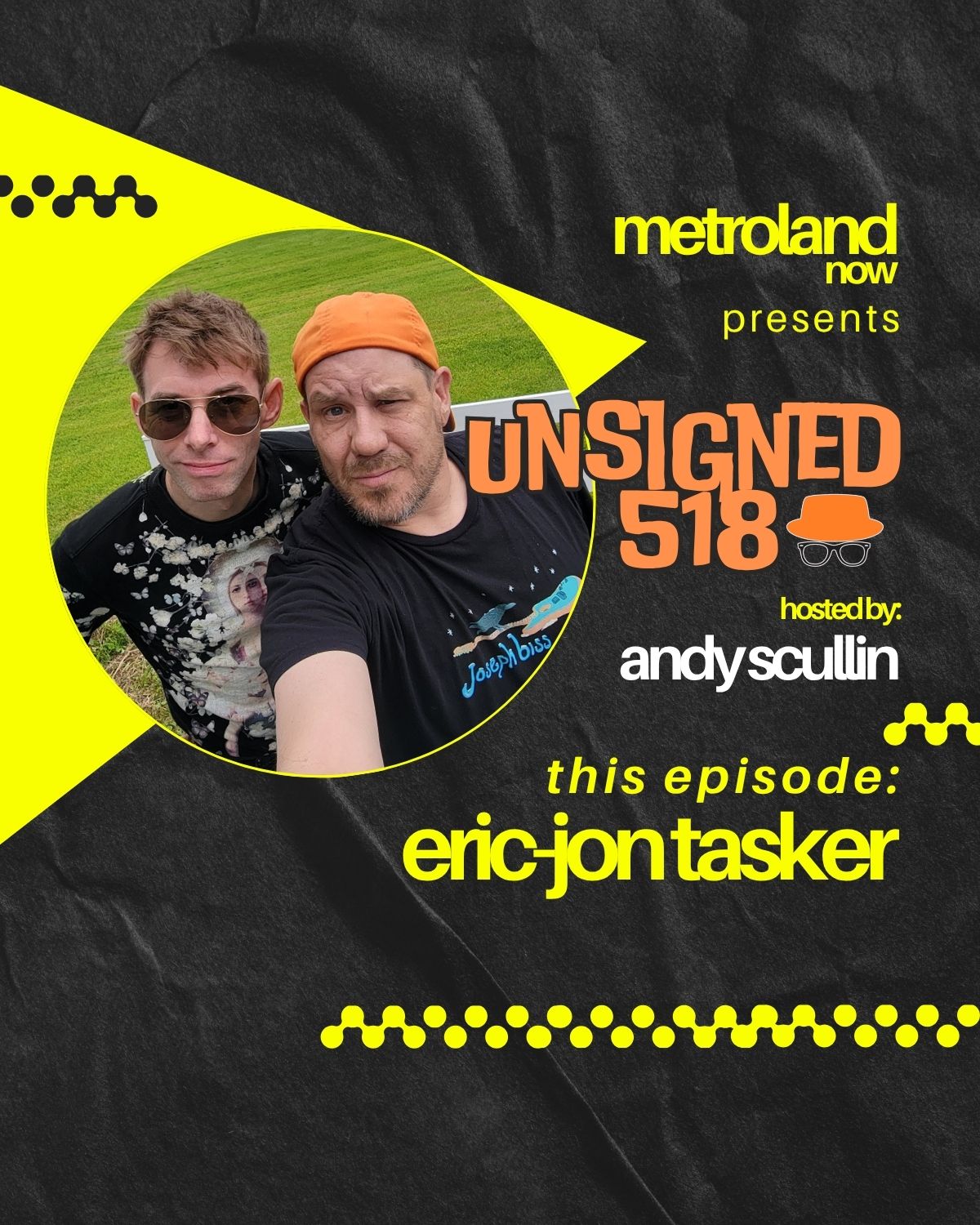
[00:00:22] Speaker B: Andy Scrolling wearing his orange hatch unsigned 518 I'm here with Eric John Tasker. How's it going, man?
[00:00:32] Speaker C: Good, how are you?
[00:00:32] Speaker B: I'm fantastic. And you know, and we've met before.
I mean, we've run into each other several times. I remember one time it was Tulip Fest, like a couple years ago. I was wandering around lots and you were like, hey, what's up? Yeah, like, friendly face. It's awesome. But yeah, so we've known each other for a while, but we've never actually, like, sat down and talked. So this is like really the first. First time. And, you know, obviously I'm, you know, familiar with your music, with what you've been doing in the area, but I want to. I want to basically open it up for you to tell, you know, folks that may not know who you are or your name, you know, basically to your chance to kind of tell us your relationship with music or just kind of whatever. So I guess, sure, let people know what's up.
[00:01:22] Speaker C: All right.
Well, I.
[00:01:24] Speaker B: No pressure, no care.
[00:01:25] Speaker C: All right.
The whole cake and poodle, I did. I did music for a long time. I had a career back, like late 90s, early 2000s, and did music for maybe about 15 years and then sort of like walked away. Not walked away from it, but stopped doing it for a while. And then I moved here to upstate New York. And once I moved here, I just. I started meeting people and couldn't get away from music. And once people started finding out that I, you know, had done stuff, could sing, had some recordings, they're like, well, why don't you do that and play shows and stuff? And I. My response was always kind of, why?
And I still don't know why I'm doing it again. But I have started doing it again and the response has been positive, pretty positive.
[00:02:07] Speaker B: And when you say you, like, walked away, was it like, because, I mean, I know, like doing something professionally. I mean, and I've never been a professional musician, but I've talked to enough of them to know that it's not quite the same as the hanging out with your buddies, playing in the garage or playing local gigs. You know, there's a certain amount of pressure that can build. And was it something like that where you were like, this is a lot And I want to step away from it. Or did it just kind of happen to.
[00:02:39] Speaker C: Well, it did start out, you know, just hanging out with buddies, making music. But I was with the same guys for 11 years.
[00:02:46] Speaker B: Oh, wow.
[00:02:47] Speaker C: And, you know, we all pretty much had the same vision of where we wanted it to go, you know, wanted to the label and everything and the famous and whatever.
And then, yeah, we started having different visions at some point. Well, after we. While we were recording the first album, the drummer came up to me and said, I want to be singing half the songs on the next album. And I was like, well, okay, but I'm the lead. Lead vocalist. He.
[00:03:11] Speaker B: What am I gonna do?
[00:03:12] Speaker C: Yeah, right.
What if maybe how about you get your own band and I'll play guitar for you?
But he's doing really well for himself now, and he's a phenomenal singer and great artist in his own right. But it was. It just kind of threw me off a little bit. But as the years went on, we did another album and sure enough, he was singing more. Not half, but everyone sort of started having input in the songs. Where I started out being the lead songwriter and vocalist. And by the time we ended up splitting, there were four different people writing songs, contributing and singing. And it just kind of wasn't the same band anymore.
[00:03:46] Speaker B: Right. And so, I mean, was it almost like you didn't want to do it without the core people that you'd been doing it for more than a decade, or was it. You needed a break, like all together, do you think?
[00:04:01] Speaker C: Kind of ended poorly.
[00:04:04] Speaker B: Okay.
[00:04:06] Speaker C: It was like a bad breakup. I thought. I thought I was gonna do it the right way and say, you know, that shit hurts. Yeah.
I was like, you know, I'm gonna go off, I'm gonn and I'm gonna support all you in whatever you do. And they did not take it well.
And they.
They kind of came. Came for me. I'll be very vague about that.
But it just got so messy so quickly, and it was like all not political, but I just didn't want to deal with that side of it.
[00:04:37] Speaker B: So is it almost like there was that Sting left over and you didn't want to.
Almost like a relationship, you know what I mean? Almost like I got fucking hur. Hurt and I don't want to do it again. Like, was that why.
[00:04:51] Speaker C: I think a little bit later it was that. But right at the outset, once we kind of split, it was, you know, if you have a breakup, like, who's. Whose friends are who's. You know what I Mean, right. It was like, can I get a gig there? No, because I'm. You know, it wasn't really that bad, but it was. It was such a weird thing to navigate. Weird water.
[00:05:12] Speaker B: And I guess after, like, that long, like. Yeah, you know, it's a. That's a long time to be in a. In a band. 11 years.
[00:05:19] Speaker C: Yeah. Yeah.
[00:05:20] Speaker B: And. And for it to especially be ending. Not. Not. Not great. You know what I mean? It's probably a shock, not only to everybody within the immediate circle, but even, like, fans that have no idea what's going on or what's happening.
[00:05:36] Speaker C: I think a lot of still don't.
[00:05:38] Speaker B: Right.
[00:05:38] Speaker C: I'm. Still don't know what happened, but it was. I mean, it was two. It was management, and because we had a team that I'm currently unsigned, so that is still.
[00:05:47] Speaker B: Oh, what a great place for you to be.
[00:05:49] Speaker C: I know. So I'm. I fit the parameters here. And I don't know that I do ever want to be signed again, but. But it was. It was that area too. Like the agents and the management.
But that. That's all the past.
[00:06:03] Speaker B: Right.
[00:06:03] Speaker C: Right.
[00:06:04] Speaker B: And now. But I mean.
And I don't know what, you know, other scenes are, like, so much like. But I think here it really. There is a scene that allows control of the. The artists to have the control.
[00:06:18] Speaker C: Oh, yeah.
[00:06:19] Speaker B: For everybody to, like, just be like, I'm gonna do this.
But I also do this, and I also do the edits, you know, Like, I've never seen anything like it. To be able to just be like. Like myself. I literally just fucking decided I was gonna be part of the scene. Like, I was. I'm just gonna step in and be like, hi, I'm here now. I'm part of the scene. And everybody was like, yeah, cool. Come on in, man.
[00:06:43] Speaker C: A number of people just do that. Because you can.
[00:06:46] Speaker A: Yeah.
[00:06:46] Speaker B: And like, there's not, you know, a lot of scenes. It's like everybody's gatekeeping.
[00:06:50] Speaker C: Right.
[00:06:50] Speaker B: This and that. And I never met a more helpful scene.
[00:06:54] Speaker C: Yeah, I looked into, like, just because I came from Boston, it was a bigger scene.
And we did a lot of stuff in New York, but so the city. I mean. And when I came here, I started. Or when I started doing music again, I was inquiring about, like, are there management places? Are there like booking agencies? And everyone's like, no, none of that.
[00:07:11] Speaker B: And I was like, yeah, no, you just put it together.
[00:07:14] Speaker C: Yeah, Yeah. I. It reminds me of, you know, when I started doing music, we had to kind of do it all ourselves until we had people doing it with us.
[00:07:22] Speaker B: And it, like, gives you that free. And especially, like now, like, with, you know, like the online distribution, you know, like distrokid and. And whatever. The other ones are like, oh, it's all different. Word.
What do you need a label for? Like, honestly, unless you, like, really wanted to, like, tour and really wanted to build it. But if you're like, ah, you know, I just want to make and put out music and have people hear it. Yeah, you can do that.
[00:07:46] Speaker C: Yeah.
[00:07:46] Speaker B: And there's a lot of scenes where you fucking can't. There's no room because everybody's trying to get to the top. You know what I mean? And it's like you can't be heard in a stampede of people trying to get to a stage or whatever.
[00:08:00] Speaker C: No, here I think, too, a lot of it is live. Like, if people can do it live, audiences are drawn to that.
[00:08:09] Speaker B: Yeah.
[00:08:10] Speaker C: And I've kind of always tried for that. I'm still working on my voice, trying to, you know, be pitch perfect. I can't do that. But people resonate with authenticity, I think.
[00:08:19] Speaker B: Oh, ab. Yeah, absolutely.
[00:08:21] Speaker C: That's all I've ever been trying to do.
[00:08:23] Speaker B: Yeah. I mean, you know, to talk about, not to veer too far off. Well, I mean, I guess it's right directly on topic, but. But the Eddies, like, that was.
You stunned a lot of people with that performance because, like, you know, and I don't know if people just didn't know what to expect, but, like, you know, I think they thought it was going to be a little more a subdued performance.
And like, when that shit kicked in, like, it was like, oh, yeah, wow, geez. You know, like, a lot of people are like, hol.
And like, you know, my immediate circle, like, I was sitting, like, with my band and we were all like, doing the, like, wow.
[00:09:01] Speaker C: Well, that's. That's giving me chills. That is good to hear.
[00:09:03] Speaker B: It was awesome. And like, that, like, something like that, like, having that, being able to perform at that caliber, like, at that show on your own terms, how did that feel?
[00:09:19] Speaker C: Incredible. I used to play bigger stages back in the day.
And so once I came here and no one knew me, I could tell people things, but they're all, yeah, yeah, yeah, whatever, whatever. I was like, I gotta show. I gotta show them. So when I. I think I went to Eddie's three, maybe four years ago with Haunted Cat, and when I saw, you know, the bands that were playing and I was like, I know it would go over really well here.
So I was like, I just gotta figure out a way how to get there. So. So, yeah, once. Once I got invited to do it, I was like, oh, good, this is gonna. I hope. And so not. Lots of times things don't go the way they're supposed to go. Almost all the time. Things never. But for some reason that day, almost everything went the way it was supposed to go, and it just came out the way I wanted people to hear it. And that was. That was such a good experience.
[00:10:11] Speaker B: Yeah. I mean, it was, like I said, a stunning performance. There was a lot of people that were just like, wow, you know, God damn, that was wild.
[00:10:20] Speaker C: Good.
[00:10:21] Speaker B: And. And, you know, you said, like, obviously, like, playing bigger stages, do you feel like, what. I guess what would be, like, the difference in feeling between being on the big stage, but almost like being at someone else's behest, I guess, or a smaller stage, like having your own, you know, your own thing. You could do whatever you want, say whatever you want, play wherever you want. Like, what do you find? What are, like, the pros and cons to those?
[00:10:55] Speaker C: What do you mean, being at someone else's behest?
[00:10:57] Speaker B: Like, because, you know, like, being signed by someone, I guess. Like having.
Having to do what someone tells you.
Someone's like, hey, you're playing. You're playing here. You know, you're doing. And you might be like, I don't want to fucking do a tour in Alabama. And they're like, you know, there you go, like. Or, you know, but you' getting to play, you know, these prestige, bigger places, I guess. What would be the.
The pro to the. Having to be able to write your own ticket, if that makes sense. No.
[00:11:29] Speaker C: Yeah, it does. You're giving me flashbacks I hadn't thought about.
I mean, because there'd be so many times I'd, like, get in the boss of the van, and I just didn't want to do it that day. I didn't want to do it.
[00:11:39] Speaker B: And you're a human being.
[00:11:41] Speaker C: Yeah.
[00:11:41] Speaker B: And that's hard.
[00:11:42] Speaker C: Yeah. And there were songs where, like, don't say this, don't say that. Can't say that word. And I was like. And at the time, I was like, whatever, fine, I'll change the words. But now it's like, especially now, it's like, who cares? Like, they wanted me.
Some of my bandmates wanted me to change my lyrics to be, like, heterosexual love songs instead of instead of gay love songs. And I'm like, but that's. That's not my experience.
[00:12:04] Speaker B: So they wanted you to just be inauthentic for their sake.
[00:12:08] Speaker C: And I did.
[00:12:09] Speaker B: Right.
[00:12:10] Speaker C: And I did do that. So, yeah. So I'd, you know, be getting on the bus, going to sing these songs that I didn't really, you know, that were representing me. So now, actually, it's funny that you bring this up now. I have a show coming up.
Well, imminently. It'll be after the stairs, probably, but it's like an hour, hour and a half, which I wasn't expecting. So now I get to sing a bunch of songs that I've never performed before live, that and some other songs that I'd written. And I get to change the pronouns and change it to be more authentic to who I am. So I'm excited about that. Nice. So I don't know if I answered pros and cons, but that's the pro
[00:12:49] Speaker B: right there that you can be like, no, I'm not changing who I am for you for any reason.
[00:12:55] Speaker C: Like, yeah, you know, I mean, it's still. Still a little scary. And I don't know why. Why that is. But,
[00:13:02] Speaker B: yeah, I don't know.
I mean, do you feel like, you know, I don't know if you are, but are you at this point, still not chasing fame, but, like, are you. Are you trying to get to an elevated level, or are you kind of happy where you are and just singing songs and making music?
[00:13:23] Speaker C: I don't know. I think if that comes, fine. But now I'm just interested in recording music, putting music out and playing more shows.
[00:13:31] Speaker A: Right.
[00:13:31] Speaker B: See, to me, I'm, like, the opposite. I'm terrified of not, I mean, fame. Yeah. I guess I'm terrified of it. Like, terrified. Like, I would hate it.
Yeah, I would hate it. Like, I'm. I'm scared even. Just, like, that's one of the reasons. Like, I don't do a video podcast. Like, I don't want to put. You know, I was in radio for a long time, and nobody knew who I look like.
Like, back in the early 2000s, you know, when radio websites refer. Like, there was always. I always had a picture of someone, a stock image as me, and when people would see me out in person and be like, hey, are you the guy that I hear on the radio? Be like, no, I am not.
You know, and, like, so that shit scares the shit out of me. So for me, this type of scene and this, like, local scene gives me that outlet that I've needed for decades, but I've been scared to put my heart into it because I wouldn't like, where that road led, if that makes sense. Like. And this is, like, a different path where I do get to put my heart and soul into music, but understand that, you know, several dozen people are going to hear it and that's it.
[00:14:44] Speaker C: Yeah.
[00:14:44] Speaker B: And that's fine. Like, that's good for me. You know what I mean? Like.
[00:14:49] Speaker C: Yeah. I don't necessarily think that I want maybe fame, but not that I'm chasing anything.
At the Eddies. I was out in the hallway, and someone came up to me. I'm sorry. I'm so sorry. I don't remember her name, but she. She went to the same college that I did. That's when I started in Boston. She came up to me just to say, were you in a band back in the day? And I was like, yes, I was. And she said, because I was out in the hallway and I heard your voice. And I was like, I know that voice. Where do I know it from? It sounds like the old band. And then she came in, and sure enough, it was me. And so to get recognized for my voice, not even, I don't know, for anything else, that was a cool feeling. So if that's what shame feels like.
[00:15:32] Speaker B: But I don't know if that. I think that's the, like. If you're talking, like, tip of the iceberg, that's like one single, like, shaved ice cube off a tip of the iceberg of fame. You know what I mean? That's the good shit.
[00:15:45] Speaker C: Yeah. Right?
[00:15:45] Speaker A: Yeah.
[00:15:47] Speaker C: I don't want the. Maybe not the flip side.
[00:15:49] Speaker B: And then, like, underneath it, they're standing
[00:15:50] Speaker C: outside your house 24 7. I don't want. I don't want that.
[00:15:53] Speaker B: But, I mean, I was on, like, fucking bullshit terrestrial radio in Vermont in, like, the early 2000s, and I had a stalker, and she didn't know what I looked like.
You know what I mean? Like, it was scary as hell. And I'm like, this person doesn't even know what I look like.
[00:16:11] Speaker C: Yeah.
[00:16:12] Speaker B: And they were stalking. They were, like, stalking me. We had to, like. It was, you know, it's a story for another time, but it was wild.
[00:16:19] Speaker C: And that's the weird part.
[00:16:21] Speaker B: And that's the weird part.
[00:16:22] Speaker C: What I would, like, is, for me, I. You know, songs are always connected with experiences. Lots of times, you know, where you were the first time you heard it, or it's, like, connected to a special moment.
So for some of my songs to be that for people, that would be a great feeling.
[00:16:37] Speaker B: And they absolutely are. You know what I mean? Like, they Are like, you know they are.
[00:16:43] Speaker C: I hope so.
[00:16:44] Speaker A: Yeah.
[00:16:44] Speaker B: No, you know, they are. Yeah. So like you're. You're success.
[00:16:50] Speaker A: Yeah.
[00:16:50] Speaker B: But, you know, speaking of that. That music, I. Let's hear some. Some of your recorded stuff. So what. What are we going to play?
[00:16:58] Speaker C: Well, let's play the song that I played at the Eddies.
Quick story about this. I had a little songwriting deal, so I had to turn out two songs a month.
And this came kind of at the end of that where I'd, like, written a lot. Written a lot. And I started just challenging myself with, like, concepts and conceits. And for this song, I wanted to try, like, the fewest notes, the fewest words and really play with, like, rhythm and melodies and things like that. And this is what came out of it. Can't stop thinking about you.
[00:17:30] Speaker B: All right, cool. Well, let's check out Can't Stop Thinking about yout, Eric John Tasker. And they'll be right back.
[00:18:06] Speaker A: Take it slow.
I'm not going anywhere.
You got me.
My heart's on fire can't stop thinking about you can't stop thinking about you I can't stop thinking about you can't stop thinking about you can't stop thinking about you I can't stop thinking about
[00:18:48] Speaker B: you
[00:18:52] Speaker A: I turn you down.
Turn it off now I'm the one who.
You got me going crazy.
Can't stop thinking about you can't stop thinking about you I. I can't stop thinking about you can't stop thinking about you can't stop thinking about you I can't stop thinking about you can't stop thinking about you can't stop thinking about you I can't stop thinking about you.
You.
I can't stop thinking about it.
[00:20:39] Speaker B: All right, that was can't stop thinking about you Eric John Tasker. And, you know, we were talking a little bit while the song was playing about, you know, your future kind of writing more songs and performing more. But you also mentioned something that I thought was interesting but was the thought of. Of WR for other people. Like, what's. What's. What's that?
[00:20:59] Speaker C: Yeah, well, I.
I hadn't mentioned, but I've written some musicals or on my way to finishing some musicals.
And so I'm. I always kind of come at songs from, like, a character's point of view or from, like, not necessarily my own point of view, but, like, if I were this person, how would I feel? So a lot of those are in female voices, specifically this one play that is called A Little Death. But so coming Up. There's a lot of songs that, you know, I. I like that I've written, but aren't necessarily for me. So I want to see if I can find other people that maybe that would like them, that would want to put them on an album and additionally just write new material for people that need stuff. Because everyone's always recording around here.
[00:21:47] Speaker B: Right. And, you know, how do you, like, when you say writing, like, from a character? Like, I think that's really. I don't consider myself, like a songwriter. Like, I've written a couple songs here and there, but it's fucking hard to write and.
[00:22:02] Speaker C: But, like, hard to write a good song.
[00:22:03] Speaker B: Right. All right, fair enough, Fair enough. But how do you choose, like, a character to write? You know what I mean?
How do you embody someone that doesn't exist and write a song from their point of view?
[00:22:23] Speaker C: Well, I went to school, my degree is in acting. So I always have to take a script and apply it to myself. So in sort of the similar way, I take maybe the character of the song and put them in a situation and figure out maybe what the conflict is, what they want or the motivation, and then, yeah, that's what dictates how the song goes.
[00:22:45] Speaker B: So you almost approach it as an act. I mean, not even almost like you approach it as an actor kind of.
[00:22:51] Speaker C: Yeah, like I become like the narrator. The quote, unquote narrator in. In the lyrics. Narrator of the story of the person in that. In that song.
Yeah.
[00:23:01] Speaker B: I mean, that's another conversation altogether is acting. Because acting's fucking hard too.
I think people realize I just finished
[00:23:08] Speaker C: a play in Latham at Curtain Call Theater.
[00:23:12] Speaker B: And is that acting something you've been doing?
[00:23:15] Speaker C: No, I stopped acting to do music.
And I did the first play since 2001. I did that first play in December of this year. Past year.
[00:23:24] Speaker B: Do you think having, like, an acting background matches with a performance?
[00:23:32] Speaker C: Yeah, that's why I feel so comfortable on stage, I think just from doing it so much. But a lot of that came from the acting and the training.
[00:23:40] Speaker B: Yeah. Because I. I just like. Because I'm pretty not. I mean, not shy, but, like, I'm a little, like, not super confident on. On stage. Like when we first started playing. Because I've only been in a band that performs live for five years.
[00:23:57] Speaker C: Yeah.
[00:23:58] Speaker B: And like, before that, I had never really done. Oh, well, I played in some cover bands, but when you're playing bass in a cover band, they're basically like, shut the up and stand in the back.
[00:24:07] Speaker C: Yeah.
[00:24:07] Speaker B: You know what I mean? So I would just stand in the back and play the bass, but I would basically pretend, all right, you're, you know, you're a rock star. You're a 22 year old fucking. You have a ton of energy. You're like, go out there. And that's how I would approach performances and be like, I'm someone else now. And it worked.
[00:24:29] Speaker C: Yeah, that was your character. Yeah.
[00:24:31] Speaker B: And it, like, really worked.
[00:24:33] Speaker C: Yeah, that's all.
[00:24:33] Speaker B: That's. That's what I do. I'm like, no, no, my characters. And I'm like, super confident. And I've been doing this my whole fucking life. And yeah, and it. It works.
[00:24:43] Speaker C: That's. That's the key.
[00:24:44] Speaker B: But I'm a shitty actor, though.
[00:24:46] Speaker C: Oh, well.
[00:24:47] Speaker B: I'm pretty good when I don't have. I've been in a couple of, like, no budget horror movies.
[00:24:51] Speaker C: Oh, nice.
[00:24:52] Speaker B: And I'm really good in the ones where I don't have any lines. I played a masked serial killer and I didn't have to say anything.
[00:24:59] Speaker C: Awesome.
[00:25:00] Speaker B: Like, I was great in that.
[00:25:01] Speaker C: I want to see that one.
[00:25:02] Speaker B: Oh, yeah, you can. Also. It's getting. It's getting, like, distribution and like. Yeah, I'll tell you all about that. That's a story for another time, because I'll go down a rabbit hole. But anyway, so you want to write select songs for other people and is that something that you want to have the songs? Because I don't even know how that works. Like, would you write the songs and then shop them around to be like, hey, you know? Because I know, like, who's that? Linda Perry from yeah, for an. On Blonde. Like, she writes songs for everybody.
[00:25:31] Speaker C: Yeah.
[00:25:31] Speaker B: And I think what she does is she writes the songs and then says, you know, who wants it? Or, hey, do you want this? Or whatever.
[00:25:39] Speaker C: Well, lots of times artists, when they're recording the new album, they also go out and solicit and be like, who has songs? And Linda Perry's like, here's seven I got for you.
[00:25:47] Speaker B: I didn't know that. Searching for song. That's a good idea.
[00:25:50] Speaker C: I mean, sometimes they have just like, they book like whole freaking buildings and just have production teams sitting, all making different songs. And then Rihanna comes in, listens to this one. No, she goes into the next room, literally, and she's like, yeah, I like this one. I'll sing these vocals. And then she moves along.
[00:26:05] Speaker A: Wow.
[00:26:05] Speaker C: It's like, yeah, that's like a. Yeah. Factory. Kind of how they. So I don't. I'm not gonna do that.
So I do, I do.
[00:26:12] Speaker B: You're like, I have a factory it's connected to. You know, I'll pump out songs all day.
[00:26:18] Speaker C: Mine will come from, like, personal. I mean, if someone asked me to, I might do that. But mine, the way I want to do it now is I have personal relationships with people.
Like Aaron from Metroland sang in the musical that I did last year, one of my songs. So if.
If Aaron ever wanted to record that, I'd give a thumbs up. So it would be. It would come out of things like that. Just genuine personal relationships I have with people who I know are, like, recording artists and maybe looking for material. Right.
[00:26:48] Speaker B: I mean, I might. I might hit you up.
[00:26:51] Speaker C: Yeah. I got, like, 60, 70 songs and only maybe 20 of them recorded.
[00:26:56] Speaker B: Oh, wow.
[00:26:57] Speaker C: Yeah.
[00:26:57] Speaker B: That's fucking wild. And, like, how would that process go? Like, do you have, like, demos of them or.
[00:27:02] Speaker C: Yeah, I've demos of all them. Do you know Mikey from Sugar Hold?
[00:27:07] Speaker B: Yeah, of course.
[00:27:07] Speaker C: Yeah.
I recently hit him up because I was, like, going through my songs, trying to figure out what to play, and I heard this one song and I just. I saw Mikey doing that song, and I was like, I gotta ask him about it. So I sent it to him, I pitched it to him.
I don't know if they're gonna do it. I don't. I haven't heard anything about it, but it's like that. It's like, if I hear a song, one of my songs, and I know a person, I'm like, oh, that'd be great with this person. Yeah.
[00:27:32] Speaker B: And that's. Right. And you know what, it's funny, too, is because, like, there's almost like, this onus on, like, smaller bands to, like, be songwriters and performers. And again, I'm. I admit I'm. I'm not a songwriter. I am in a band with people that are. Which helps. You know what I mean? But, like, me, myself, I am fucking not. But I would really like to branch out and be able to play, like, you know, solo acoustic stuff or, like, have, like, my own. My own songs. And I think even having songs that you, like, someone had written is gonna almost, like, give me tools to write my own.
[00:28:16] Speaker C: Yeah.
[00:28:17] Speaker B: And maybe it starts with getting songs from someone else, but eventually it could. Yeah, I know. Now I'm just thinking out loud.
[00:28:26] Speaker C: In that case, it could also be a collaboration because I have a lot of songs that are written, but a lot of songs are, like, half written, and I don't know where to go with them. So I could, like, be like, do you want to work on this? You want to collaborate on something?
[00:28:36] Speaker B: Yeah. Hell yeah. We got to talk.
My brain is spinning. But you know, speaking of songs, we're kind of running out of time. Unfortunately, I am up against it. I have a heart out. Gonna go shoot a music, but let's hear another song. What do we want to play?
[00:28:53] Speaker C: This one is now called Two Friends. It was originally called Jack because I wrote it about someone named Jack that I had a thing for. But I had a partner at the time, so I changed the name of the song to Two Friends and now it's Two Friends. Now it's Two Friends, but it'll always be Jack.
[00:29:11] Speaker B: All right, cool. Well, let's. Let's listen to Two Friends, Eric John Tasker, then we'll be right back to wrap it up.
[00:29:32] Speaker A: Someday I'll have you for my own. Trust me when I say that I won't leave you alone.
I'll take whatever you will give. But there's only so much bullshit that my heart can forgive.
And if I don't mean nothing to you Please explain these things that you do. Cause if you ask me one more time to come back up to your place I take it out on your face in the summertime you will be mine forever. Do this alright.
Two friends Alexis and Francine on any given day are not particularly mean but they say if you hurt my heart they'll beat your ass without your eyes and tear you clever car But I won't let you than get to you.
Even though you treat me like I do it's cause I'm stupid and I let you sell myself a female grit
[00:31:12] Speaker C: always doing the things I do to
[00:31:14] Speaker A: get through so self deception may continue in the summertime you will be mine forever Doing this alright if we have the side like we go on and on and on and on and on and then you take your love away. We go on and on and on and on and on and then you take your love away. We go on we go on we go on and on and on and on and on and on we go on we go on we go on and on and on and on and on and on.
You can be the jack in the box, the bottom to my top. You can be the jack in my bean star.
You can be the jack in the box the bottom to my top. You can be the jack in my bean star the big bear. You can be the jack in the box the bottom to my top you can be the jack in my bean star.
You can be the jack in the box from bottom to my top you can be the jack in the green star. We go on.
And on and on and on and on on and on and on and on and on and after everyone you say we go on, we go on we go on and on and on and on and on and on we go on we go on we go on and on and on and on and on and on Because.
But I love you. Yeah. Yes, I do Yes, I do Yes, I love you Even though I know it's wrong.
Yeah.
[00:33:47] Speaker B: That was two friends. Eric, John Tasker, and I want to thank you so much for taking time out of your day to come up and do this. Even though, you know, the GPS sent you on a wild goose chase for what, whatever reason. But, you know, we made it and we're here. But before you go, I want to give you a chance to say what I refer to as your gratitudes. So the microphone is all yours.
[00:34:07] Speaker C: All right.
I guess first and foremost, Drew from Haunted Cat and everyone in the band. Drew's been really encouraging of me to get out there and do my own stuff.
Excuse me.
And Shane, the super dark people, everyone there, Tex, Rachel, no fun.
Tom has been nice enough to let me do some stuff at the Jive Hive. Mikey has been really instrumental in, like, helping me facilitate some things. Thank you, Mikey.
And you, Andy. Thank you for doing this. Thank you for having me up here.
[00:34:43] Speaker B: Hell, yeah. All right, well, he is Eric John Tasker. I am Andy scullin. This is unsigned 518.
I'll see you on the road.
Unsigned 518 is produced and hosted by me, Andy Scullin. New episodes are available every week wherever you stream podcasts. If you'd like to help support the show, please like and and subscribe wherever you are listening. Or you could buy me a
[email protected] unsigned 518.
If you would like to advertise on the show, send me an
[email protected] and to be a guest on the show, reach out to me through Instagram.
Signed 518.
Take care of one another and I'll see you next week. Andy Scullin and Scullin.