Episode Transcript
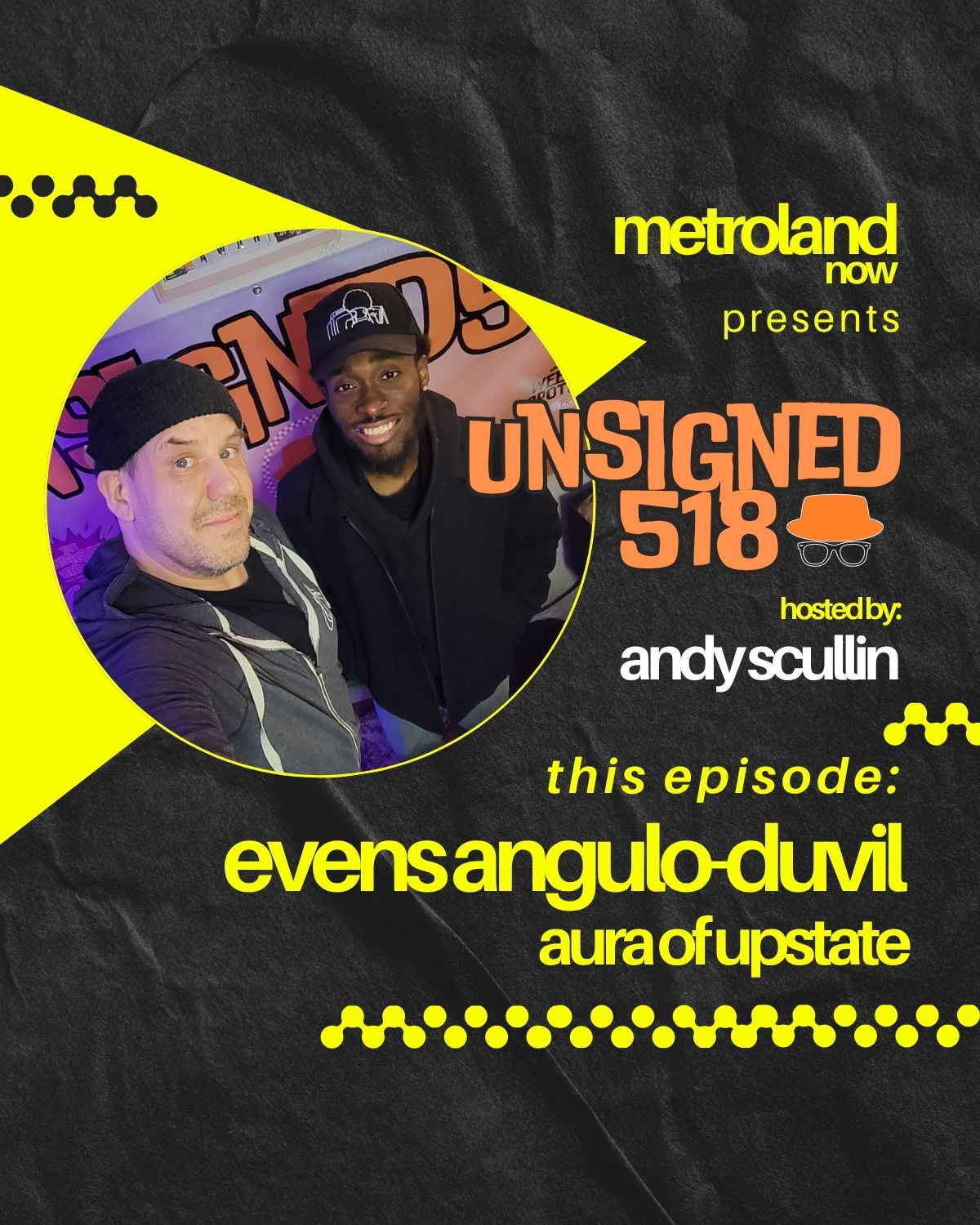
[00:00:02] Speaker A: Welcome to unsigned 518. I'm here with Evans, Angolo Duville. Did I get that right?
[00:00:08] Speaker B: You got it right.
[00:00:09] Speaker A: Yeah.
I was horrible with pronunciations. I feel terrible.
But, you know, I've been following you on social media for a while, so, like, I'm familiar enough with what you do, like, with Aura of Upstate, but I kind of wanted to, I guess, like, start the conversation for my listeners, maybe people who aren't familiar at all, just, like, kind of give the not elevator pitch, but you know what I mean? I guess just kind of tell us a little bit about Aura of Upstate.
[00:00:43] Speaker B: Yeah. So it started about two and a half years ago, almost three years ago, at this point, where I was scrolling through Instagram one day just looking for what the next phase of this filmmaking career of mine would be. And I saw a post from the Art center in Troy, and they were taking submissions for grants from local artists, but the criteria was that they had to incorporate upstate New York in some way.
And every project that I had worked on before, it was, you know, something that didn't have anything to do with home or with me personally.
So I struggled at first coming up with an idea, but then I remembered one of my favorite animated shows of all time, Midnight Gospel.
And with that show, they took a real podcast and they turned into an animated series. And I thought that concept was so dope, so I thought of doing the same thing, but with my hometown, with my neighborhood.
So I pitched the idea of the ORV up State, where I would interview people within my community and then take snippets of our conversations to create an animated film.
And I submitted that, and it got accepted.
And that's kind of where this all started.
I also included creating a documentary following my journey of bringing it all together.
And the only reason I really did that was because I really wanted the grant. So I wanted to do it to ensure that I got the grant, even though I had no experience with doing any type of documentary at all.
[00:02:23] Speaker A: And when you get, you know, once you realize, you know, that you have the grant, that you're like, all right, I'm doing this. And you said, you know, you had no experience with making a documentary, but you've got filmmaking experience.
[00:02:37] Speaker B: Well, animation experience. Yeah.
[00:02:39] Speaker A: I mean, yeah. So is that like.
I don't want to say like an apples to apples thing, but, I mean, that had to have at least helped with the confidence, you know, like a little bit of confidence going in, or were you just like, fuck, what am I gonna do?
[00:02:55] Speaker B: Like, yeah, when I. When I got the grant. The first, the initial feeling was excitement. Just cause like, you know, I got some funding to continue pursuing this, but immediately I was just like, dude, I don't know how I'm gonna put together a documentary, let alone a podcast. I had no experience with making a podcast.
My only experience was with animation. That was the only kind of area that I felt confident in.
So when I got the money, the first step was just figuring out how do I start a podcast. So I did more research than I needed to on like what, what I needed to. To start a document or start a podcast. I feel like I over complicated it, but I learned that I needed like an audio interface, two microphones.
Everywhere that I was doing research, they were saying that audio is the most important. So make sure you get some good microphones. Yeah, I needed a camera.
Unfortunately I got a shitty camera, which sucked, but I got a camera and I used Audacity, which is like a free software.
[00:04:04] Speaker A: Every single unsigned 518 episode, every single weekend spotlight episode, every podcast that I've ever produced is Audacity.
I've been using it for like literally fucking 25 years.
[00:04:17] Speaker B: Yeah, it's great. It's been, it's been out for that long.
[00:04:19] Speaker A: Oh, it's been out for a very long time. Yeah. Because like I started in radio in the early 90s and I remember, you know, when like Pro Tools was first becoming a thing and like, whatever, like Audacity. I mean, Audacity is probably. Yeah, probably been around since like the early 2000s. That's fine because I was using a long time ago and that program is amazing. Yeah. And it's always been free and like they're free. Plugin.
[00:04:43] Speaker B: We're like, you know, sponsor us.
[00:04:46] Speaker A: Yeah, yeah, sponsor the podcast.
[00:04:47] Speaker B: Sponsor Unsight518.
[00:04:49] Speaker A: Yeah, yeah, yeah. But it is a great program. Yeah. So yeah, that's all you need is a couple microphones and interface and Audacity and you know, like in a story to tell, I guess, or at least like something to focus on.
[00:05:04] Speaker B: Right.
[00:05:04] Speaker A: And that's it.
[00:05:05] Speaker B: Right? Yeah, just about.
But yeah. So I ordered the equipment and then the next step was kind of figuring out who I was going to interview because I had been living in upstate New York since I was like 9 years old, but I didn't have a car first off. And anytime where I was out of school, I was always like traveling. I was always either going back to Boston because I have family in Boston or visiting family around the country, or I was traveling outside of the country to visit Family, because I have a foreign background. So I never really got the opportunity to really explore upstate New York until after college and I started finding pockets and started getting to know people. But I didn't really know too many people, so I just kind of like, interviewed who I knew who I thought would make a good interviewee.
[00:06:01] Speaker A: Right.
[00:06:03] Speaker B: So I did five episodes, which totaled in seven guests, and from there I just started figuring out how to edit the podcast. Never edited it. It was all very, very new to me.
It was all very uncomfortable, but I knew it was good for me because I always hear that, you know, you grow the most when you're uncomfortable or you put yourself in uncomfortable settings.
[00:06:29] Speaker A: Absolutely.
[00:06:30] Speaker B: So I figured out how to do that, got the podcast ready, started releasing the podcast week by week on. On YouTube so people could listen to it.
And then from there, I listened back to all the podcasts and tried to figure out which clips within the audio from each podcast I wanted to then put into the animated film.
[00:06:54] Speaker A: So, like, the animated stuff is real people in real interviews, nothing scripted? No, it's. And, you know, we were talking a little bit before we got rolling, how you were like, I don't, you know, I was like, I'm not a planning interviewer guy. And you're like, neither am I. So, like, they're conversations, pretty much. You're getting interesting people or people that you want to have a conversation with.
Recording them.
[00:07:19] Speaker B: Yeah.
[00:07:20] Speaker A: Releasing them as a podcast and then highlights from that become an animated short.
[00:07:26] Speaker B: Yeah, essentially, pretty much. Yeah.
[00:07:28] Speaker A: Fucking brilliant. And like, people always say, like, to have a podcast, you just need to have a hook that people aren't doing. And I think that, you know, that right there is something that I. Nobody else is doing. I mean, some people might be doing, but yeah, it's so interesting, I think.
[00:07:45] Speaker B: Thank you. Yeah, I. Yeah, I was that dude in college who was always telling my friends that they should start a podcast, but, like, secretly I always wanted to start a podcast, but, like, I feel like the podcast fear is so saturated. So I was like, if I'm going to start a podcast, like, what am I gonna do to, like, set it apart from other things?
And I felt like I kinda, like, I kinda like, found my niche in a sense, with being able to combine animation with it and also make it about upstate New York. Because one thing I mentioned is that in terms of upstate New York, we don't really do the best job of promoting ourselves.
[00:08:28] Speaker A: True.
[00:08:29] Speaker B: You know, and I felt like podcasts, like, the more podcasts that we have just within upstate New York. It's helpful on our own behalf because it just gets us speaking and it allows even.
[00:08:39] Speaker A: Just like in this, you know, Albany area.
[00:08:43] Speaker B: Yeah.
[00:08:43] Speaker A: Even right here. Like, you know, some people think that, you know, me being a podcaster, that I'm like, kind of like, I don't want any. I want to be the only one. And it's like the exact opposite. I'm like, I want there to be 20 different podcasts on local music and 20 different podcasts on local art.
[00:09:03] Speaker B: Right.
[00:09:03] Speaker A: 20 different. You know, I would love that.
[00:09:06] Speaker B: Yeah. And then it. If more people are creating, it allows us to collaborate more and more beyond each other's shows. It just like, it just boosts us all up together.
[00:09:15] Speaker A: Yeah. 100. I mean, there, there's a.
The very first episode that I did of unsigned 518, Mikey Baish was my guest. Was, you know, said something about, like, the, you know, raising tide raises all ships type of mentality that I have around here.
[00:09:30] Speaker B: Right.
[00:09:30] Speaker A: That I do think is a little bit unique. Like, in other metro areas, you don't quite see that as much, but there's so much more that can be done. And I think, I think just like, if you have anything to say, just fucking start a podcast.
And if it doesn't work, then it doesn't work. But, like, you're not going to know unless you try. Unless you do it. Yeah. And you might do it and be like, oh, my God, this is the most. And like, for me, this is super fulfilling.
Even if nobody listened to this.
[00:10:07] Speaker B: Right.
[00:10:07] Speaker A: You know, this is what's fulfilling for me. Meeting new people and, like, having them come to my house and it enriches me and, like, I feel more connected. And it all started because I was just like, I'm going to just start a podcast. Actually, Spotify was sending me emails, being like, hey, you know, it was just some bullshit marketing thing, but it worked. They were like, you should start a podcast. It's super easy. And I got an email and I was like, yeah, I'm going to, but I'm not going to do it through Spotify.
[00:10:41] Speaker B: Yeah.
[00:10:43] Speaker A: So, like, how do you choose who you talk? Like, you know, is it something that you set up ahead of? Like, do you see somebody in the news and be like, oh, that's an interesting person? Is it more just, like, not in the public eye people? Or, like, how do you choose who you talk to?
[00:11:04] Speaker B: Well, for season one, I didn't really know too many people, but I, I guess my, my, my, my selection is just kind of like, go with the Flow, you know, I don't really try to. I just kind of see what, what the world brings me.
And I met two individuals from Collective Effort over in, in Troy, New York, and Patrick Harrison, Jamal Mosley and I had been to a couple of their events before and I really enjoyed like the environment, what they were really trying to do just for creatives and just people in, in the area. I thought that was really, really dope.
And I just vibed with them as individuals from the conversations that we had prior. And I just felt like they would be perfect guests, you know, as business owners.
And I was, I was walking by Lark street one day and I saw the skate shop Seasons and I'd always driven by it, but I wasn't really sure what it ever was, but it always caught my eye.
And as I was looking for other people to interview, I was just like, why don't I just go in and ask them, introduce myself and just ask them if they want to be on the podcast. Like the, the least they could tell me is no, right? You know, and like I was kind of nervous going in because like, I didn't, I didn't, I didn't know them, I didn't know how they were, but I just asked them and they were definitely down.
And I had been to the Lo Fi bar a couple of times before it became the Larkin, and I really enjoyed the vibe there. It was kind of like this 70s basement type of vibe and they had really, really good drinks.
So I reached out to one of the bartenders and asked if I could interview one, one of the owners there and they were like, sure.
And like, I guess what I, I guess I tried to base it off of like what I was already priorly exposed to and just felt like a good energy from. Because that's what one of the big things I try to stress more than just like, you know, where the guests are in terms of like hierarchy within like the social climate. It's just like what's the energy that they give off? Because, you know, it's important to protect your energy and like what type of energy you keep around you and you do.
[00:13:31] Speaker A: Like you're a one man show, right?
[00:13:34] Speaker B: Like for season one? Pretty much, yeah.
[00:13:36] Speaker A: Cool.
[00:13:37] Speaker B: Yeah, I did it all by myself.
[00:13:38] Speaker A: And, and is that because, I mean, I personally, like, you know, before we got rolling again, I was like, I'm a producer first and a host second. And like that was my background is I always did the behind the scenes stuff and someone else did the talking and, and starting this, like I almost did it as, like an anti corporate radio so that I can choose who I talk to.
And like, you were saying, you know, you protect your essence or whatever. Like, and sometimes when you're talking to people through other people, like, if you're. If I'm like, oh, I want to talk to Evans, and it's like, oh, well, sure, you got to talk to this person who will talk to this person who will talk to this person to see if you're available.
[00:14:20] Speaker B: Right.
[00:14:20] Speaker A: You know, and like, once you get that, like, it, like a little piece of soul loses it, like, each time. So, like, having, you know, the. The I'll have my people talk to your people thing.
[00:14:31] Speaker B: Right.
[00:14:31] Speaker A: Is weird to me. So, like, I like that you're like, no, I do everything. You choose who you're talking to. You choose when you're talking to them. And like, I think that's another thing that people need to know is that you can just do whatever you want.
[00:14:47] Speaker B: Yeah.
[00:14:47] Speaker A: And people will listen.
[00:14:48] Speaker B: Yeah.
[00:14:51] Speaker A: So, you know, you were talking about, like, the short film in the films.
How long is the.
The film?
[00:15:00] Speaker B: The animated film is 9 minutes and 42 seconds.
[00:15:04] Speaker A: Cool. And how many different, like, clips of, like, how many people are in it? Like, how many?
[00:15:11] Speaker B: So I include. For season one, I included all seven guests. So all seven guests are in the animated film.
I tried to give everyone about, like, a minute and 30 seconds worth of audio within the. The animated film.
[00:15:26] Speaker A: And I mean, to me, because I've always just been an audio guy, like, how do you, like, do you draw something first? Do you choose the audio and then draw something around it? Like, how do you choose what visuals go with what audio clip? I guess
[00:15:45] Speaker B: for me, the first thing I drew was my character within it.
And then after I had done all the podcasts and I figured out all my guests, I usually draw the characters first and my sketchbook, and I just make a bunch of variations because I believe in having, like, a really, really messy sketchbook and just getting all the ideas out. I don't think it's supposed to be pretty.
And then once I have my characters figured out, then I listen back to the audios that I selected over and over and over and over again until I kind of mapped out the scenes and then started drawing, like, thumbnails of the. The shots that I'm gonna have in the. The podcast or in the animated film and then make the flushed out storyboards and then move on to, like, the animated film.
Huh.
[00:16:36] Speaker A: And so it's almost like you have a.
Like you have the audio Laid out. Yeah. And then you have, like, a little bit of an idea of how the visuals are gonna sync up with that audio. And then as you go, you just fucking fine tune it.
[00:16:51] Speaker B: Yeah. I usually like the way my brain processes things is like, more.
I'm inspired by film, obviously. I feel like every filmmaker is, but not as I get more inspiration from music than I do from film. So I'll just listen to music or play music in the background or while I'm driving, and I'll just, like, think certain scenes out in my head over and over and over again until I find something I like. Or if I don't, then I'll try to put on different songs that convey different emotions, and that'll help me kind of like, map out the scene in my head that I want. And then from there I'll just kind of start drawing it out and, like, flushing it out until, like, I find what I like.
[00:17:32] Speaker A: That's so interesting. Like, I. I've never been an art. Like, my hands are not where any, like, art flows. Yeah, well, I guess I've been. I play instruments or whatever.
[00:17:43] Speaker B: That is definitely art. Then.
[00:17:44] Speaker A: I've always tried to, like, draw and write letters and, you know, like, do. And I was always terrible at it, and it was always, like, really frustrating.
But so when once, like, the episode, you know, the seasons are out and you've got the short film. So now you have what, season one is out. Season two out now, or.
Yeah, take your time. I'll edit the space.
[00:18:13] Speaker B: Okay.
[00:18:14] Speaker A: It's not live radio,
[00:18:26] Speaker B: So. Yeah, so season one is. Is out. It's all out on my YouTube channel. And season one, just to clear. Just to clarify, because there is some confusion when it did come out. So season one in totality is the five podcast episodes, the documentary and the animated film. So in total, there's seven episodes technically of season one.
And I'm currently trying to make season two. Season two is currently in production.
While I was on tour with season one, I was also shooting season two of the podcast, so that's currently underway. We shot a majority of the podcast for season two.
I now have a.
I've now started to garner a bit of a team now, so I'm not doing everything by myself like I did for season one, which I really appreciate. Like, I have a.
One of my high school friends offer to be my cameraman, so he's been helping me shoot season two of the podcast.
I made a Kickstarter to get raise funding for season two that failed, but it did find me a Producer who has been willing to help me out with season two, and he's been a huge asset.
His name's Bubba Willis. Shout out, Bubba. And shout out my cameraman, Sean Brown.
But he's offered to help out with the documentary for season two.
So we're slowly building that right now.
[00:20:02] Speaker A: And before, were you doing all the shooting yourself as well?
[00:20:06] Speaker B: For season. For season one, I did everything by myself. Everything by myself. I remember I bought a. I bought, like, I bought this shitty tripod that kind of, like, broke on me. And there's like a.
There's a.
There's a shot in the documentary where I'm, like, putting the. The tripod together and, like, the tripod's broken, so it's not. It's not working. But I was like, let me just put in the documentary. So it looks like I'm just putting it together.
But nah, I ended up having, like, to just stack the camera on, like, a bunch of, like, books that were in my book bag. So it was just kind of like, at eye level with us.
[00:20:44] Speaker A: Anything. Anything to make it happen.
[00:20:46] Speaker B: Yeah. But now my friend Sean, who, like, he has, like, a really nice camera, and he has, like, a lot of, like, quality equipment. So like, now everything looks already from, like, just visually, the podcast for season two, it looks like there's an improvement, which I. I'm happy about.
[00:21:02] Speaker A: I always say, like, with any, like, creative endeavor, like, again, you know, just make the steps do it. Yeah. You know, thinking about it isn't gonna help, but, like, you. When you start, when you just start with just doing it, the improvements that you see just hit harder, for sure. I mean, like, even, like, on this show, like, you know, before I got my nice Sennheiser mic and I was using a shitty microphone that had, like, an on off switch, like, look like, I mean, you know, was like this bullshit mic.
[00:21:34] Speaker B: Yeah.
[00:21:35] Speaker A: And when I got an actual mic, like, you know, I don't think anybody else would notice, but I'm like, oh, my God, it sounds so good.
[00:21:42] Speaker B: Right.
[00:21:42] Speaker A: You know?
[00:21:43] Speaker B: Right.
[00:21:44] Speaker A: Yeah. You get that. That step up and just having a
[00:21:47] Speaker B: cameraman, like, it's a huge help.
[00:21:49] Speaker A: Yeah.
[00:21:50] Speaker B: Huge help.
[00:21:51] Speaker A: So the YouTube channel. Yeah, let's plug that a little bit, and I can even drop it in the. The show notes so people can find it. But what's the YouTube channel?
[00:22:02] Speaker B: So the YouTube channel is the name of Mike, my. My business, my LLC. It's called Daydreaming Artwork Studios on YouTube.
[00:22:09] Speaker A: Cool. And that's where. Where all the episodes and the documentaries and everything.
[00:22:13] Speaker B: Yeah.
[00:22:14] Speaker A: Cool. And I'll. Like I said, I'll. I'll link to that.
[00:22:17] Speaker B: Thank you.
[00:22:18] Speaker A: Link to that in the show notes. So let me think I'm gonna edit. Edit this out. We're already at the time.
[00:22:26] Speaker B: Gotcha. Figure out a
[00:22:32] Speaker A: kind of an end conversation.
Oh, maybe the show. You're showing it a no Fun, right? Yeah, let's talk. Let's talk about that a little bit.
[00:22:43] Speaker B: Okay.
[00:22:48] Speaker A: So, you know, you're. I know you're showing the. The film at no Fun. What was it? April?
[00:22:56] Speaker B: Yeah, I'm showing April.
Yeah.
[00:22:58] Speaker A: So tell us a little bit about. About that. What's. What's that gonna be like?
[00:23:03] Speaker B: So I took a little hiatus from the tour just because I was honestly burnt out from trying to manage and do everything on my own.
But a lot of people were reaching out to me, asking me if I was, like, interested in doing a screening here or there.
But I just needed a little break. Also, the weather was horrible, so I knew no one was going to come out.
But one of the owners from no Fun had reached out to me about, you know, if I ever wanted to do a screening there, just to let them know.
And with season one being out now officially, it's not really like an exclusive event anymore because it's out publicly. You could just watch out. You could just go watch it publicly.
I was asking myself, what can I do? Or what can I include with it, include within it? That would make it a little bit more exclusive. So people weren't just coming to watch something that they could just watch on YouTube.
But I kind of wanted to change how I promote it from a screening to more of an experience because it's an event that's, like, hosted by me.
I provide an introduction. I talk about, you know, what went into making this film. And then I screened the. The documentary, and then I screen the animated film. And then after that, I provide. I talk about, like, my experience of, like, what it really took to get to this point and, like. Like the struggles for real.
Especially, like the last year, I really dive in deeper. So you just have, like, a deeper understanding, like, what the War of Upstate actually is beyond just, like, watching it.
And then I have, like, a Q and A session, and then I'll be showing you guys, like, a sneak peek of season two to cap it off.
[00:24:55] Speaker A: So, I mean, even just the fact that you'll be there and you'll be accessible and people can talk to you, ask you questions, and I think that's, you know, reason enough and that that's kind of A people that have already seen it, that would be, you know, more incentive, more incentive to go watch it again. I would, I would feel like that's,
[00:25:16] Speaker B: that's what I had to, to. To learn cuz like I don't know, this, this, this project has been so.
I don't even have the words for it. Cuz I was so you. I always thought that, I always had confidence that if I was given the opportunity to make a show that like I could make something engaging that people would, you know, connect with in some way. But I, I never expected that it would be a show that would be so like deeply rooted within me and like my personal life and like my upbringing for real.
And people kept on telling me that people connect with the project because of like you, like. Yeah, they, yeah, they're there to watch the film, but they're mostly there to like, you know, see you and like experience what you have to, to share with people.
[00:26:06] Speaker A: Absolutely. And then the fact that you'll actually be there.
[00:26:09] Speaker B: Yeah.
[00:26:09] Speaker A: Is like the ultimate, you know, so any fan of it, even if they've watched it several times, are gonna want to come out to, to be a part of that. It's funny and it's cool that you can, you know, like you said, can make something that is just something you want to make and have a connection with so many people. You know, like that's a unique thing because a lot of us struggle with, with that, you know, making something and then be like, well, it didn't go anywhere but you know, you still got, you still have to have to do it. But I think cutting out any expectations is where shit happens. You know what I mean? When you're just like, I'm just gonna do this because I want to. That's where it is. If you're like, I want to do this because I want it to hit, it's not, you know.
[00:26:57] Speaker B: Yeah. I think my approach, my approach had been let me make something that I think is dope. Let me make something that I think is cool. Let me make something that I am going to have fun making. And then after I do that, then let me find the audience for it. I think that should be the approach. I think people like, obviously you want to have the audience in mind, obviously.
But I think you should start off with whether or not this is something that you enjoy and that you genuinely like. Because people are going to see whether people are going to like read through the authenticity if you don't really care about this project or if it's just like a I don't know, like a cash grab or whatever you're trying to make out of it. Like, if you genuinely care about it, then people. You'll find people who, like, generally care about it with you.
[00:27:44] Speaker A: Yeah. And I mean, I've even said that about some bands that I've seen, you know, Like, I've seen some, like, big national bands that I really love and really love their music. And then I see them live, and I'm like, they don't look like they even want to fucking be here. Yeah, like, they're hitting every note. They sound amazing, but none of them look like they want to be here. Like, you know, you got to do. You gotta.
[00:28:05] Speaker B: I mean, did you catch them at the beginning of the tour at the end? Because they might be right.
[00:28:08] Speaker A: Yeah, that's true. But, like, I don't know. I just, I, I, I love the just doing what you want to do and people, the people will come. Like, there will be an audience because you're authentic and, and especially if you're someone who has a network of people that you connect with. You know, you're.
We just met an hour ago, and I feel like I've known you for a while. Like, you're an easy person to talk to. And, like, yeah, that shit helps.
[00:28:35] Speaker B: That's good.
[00:28:35] Speaker A: You know, it really helps because when you're like, oh, the human being behind it.
Awesome. Yeah, I'm gonna delve into it a little more. So that is April 12th. No fun. What time is 8pm 8pm Cool. And I'll, you know, make sure to link to the YouTube page in the show notes and everything.
So, you know, before we go, I usually give everybody an opportunity to say what I refer to as their gratitudes, which is just, you know, if you want to shout anybody out, thank anybody, say hi to anybody, mention anybody.
Microphone is, is all yours.
And, yeah, take as much time. Like I said, I'll edit.
[00:29:18] Speaker B: Okay, I'll edit the silence.
I'mma shout out upstate New York for real. I'm a shout out upstate New York because I've received so much, like, love and support and, like, positive energy from the community.
Like, it's been surprising, honestly, like, how supportive people have been and how open people have been with, like, their time and their space. And at every single screening, at every single one, I always start off by saying, like, thank you for your time, because, you know, you can always get money back, you can always get an assortment of things back, but you can't get your time back. So I'm always very, very appreciative that people were offering their time to me. Like offering this hour and a half, two hours to just be in the space with me and, you know, watch something that I put so much like blood, sweat and tears into creating. And like, I.
It's a. It's an experience that, you know, I hope that they don't forget, but I know I'm never gonna forget because they. They.
They're allowing me the. The time and the opportunity to show them, like, what I've been dreaming about, which has always been to make my own show.
So shout out to upstate New York for giving me the opportunity.
[00:30:41] Speaker A: Awesome. Well, thanks, Evans. And you know, it's funny. Cause I usually say the same thing at the end of my show. You say. I usually say, thank you so much for taking time out of your day to do this with me.
So we're on the same wavelength. Even there.
[00:30:54] Speaker B: Awesome.
[00:30:54] Speaker A: Time is a very important thing. But I. I really appreciate it. So go check out or of upstate. This is unsigned 518.
I'll see you on the road.