[00:00:01] Speaker A: He was born on a Saturday in 73 he loves punk rock music fighting the 13 jabbing the dazzle Jazz rock Now on the beat guitar with a short wind radio Bat his motherfucking envy scrolling look at motherfucker cuz here he
[00:00:21] Speaker B: comes Andy Sculling wearing his orange hat welcome to Unsigned.
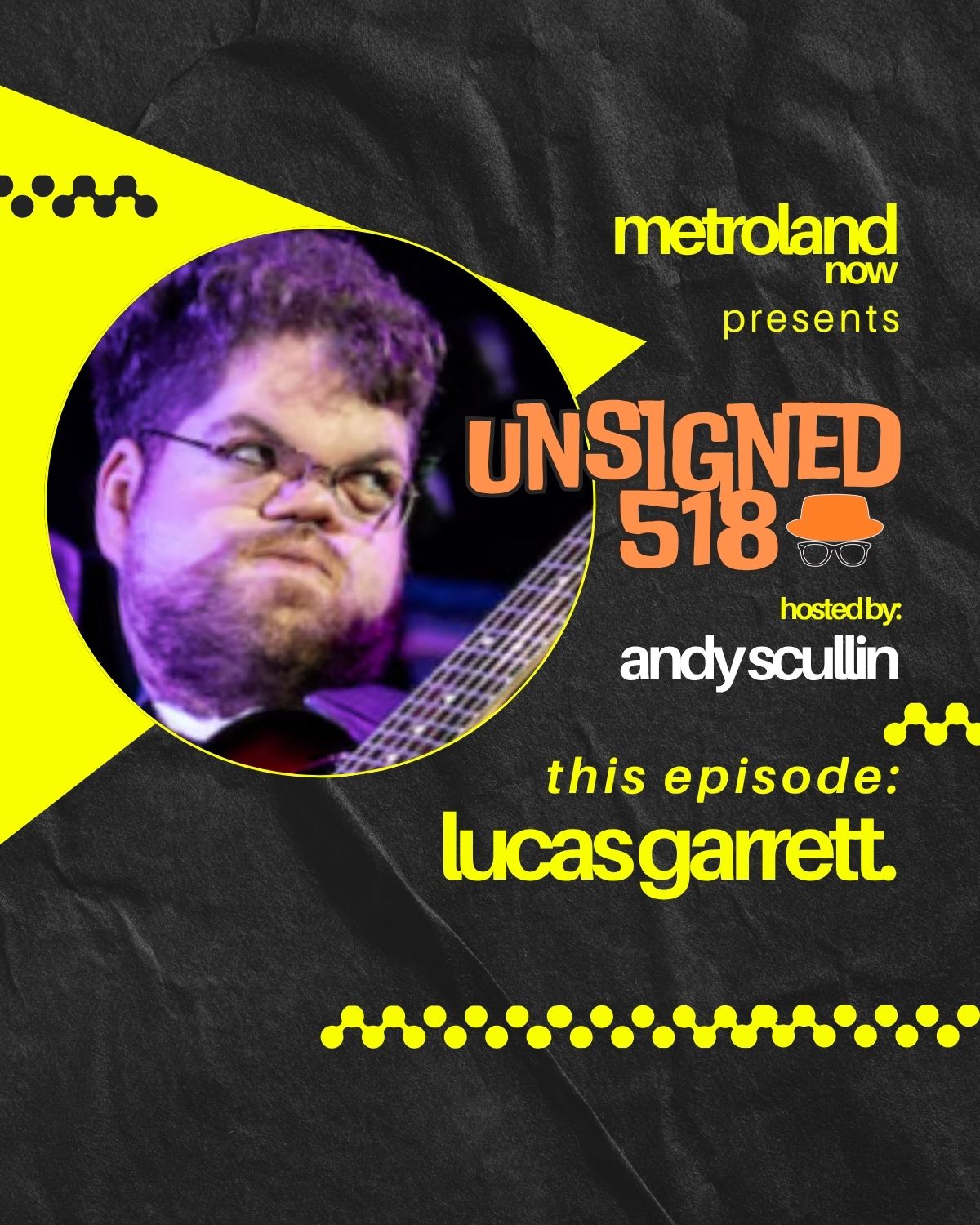
I'm here with Lucas Garrett. What's going on, man?
[00:00:32] Speaker C: Hey, Andy, thank you for having me on your show again.
[00:00:35] Speaker B: Yeah, absolutely. And, you know, and I was saying before we got rolling that, you know, being that you've been on the show and I think people know who you are at this point, we're just gonna kind of do like a catching up. And I was gonna try to figure out when you were on the show last, but that was a lot of research. So I think it was like a year ago, maybe.
[00:00:58] Speaker C: At least.
[00:00:58] Speaker B: Yeah, it was at least a year.
[00:01:01] Speaker C: I had not even started writing the album out yet. Oh, wow.
[00:01:05] Speaker B: Okay. Well, cool. Well, that's. I mean, there we go. That.
I don't even have to ask what you've been up to in the last year. So, like, I guess I put out
[00:01:16] Speaker C: the EP on February 20th.
[00:01:19] Speaker B: Okay.
[00:01:21] Speaker C: And it was an inside joke in the studio that I am not at liberty, but it felt very appropriate for the title. And you know how this goes. By the time I was done making that album, I already had the next album written, but it's not recorded yet.
[00:01:41] Speaker B: And that was the. The one that you just released?
[00:01:45] Speaker C: Yep. And then the time that we got done releasing it, I'm like, well, I have all the other songs that didn't make it on the album. So I'm gonna go back and record that probably five or six more songs and put that out before the end of the year. That isn't planned right now, at least. All right.
[00:02:05] Speaker B: And that. So you've already put, what, in February you put an EP out?
[00:02:09] Speaker C: Yep. And then Karma, and it had five songs on it.
[00:02:13] Speaker B: All right. And then you'll have another. I mean, with all this, all the songs, you think it'll be a full length by the time.
[00:02:19] Speaker C: Yeah, that's what makes that. And I'm working with Alec Lewis as a co producer.
[00:02:25] Speaker B: Nice.
Love. Love Alec, man. Such a. Such a good dude.
[00:02:30] Speaker C: Yeah.
[00:02:30] Speaker B: And a good producer.
[00:02:32] Speaker C: He.
[00:02:32] Speaker B: He. Yeah, he did. I can't. You know, I can't remember now. I feel like. I feel like Old Man Sculling. But Alec did produce and engineer one of Shortwave Radio band songs, and I can't remember what it was.
[00:02:47] Speaker C: Eerie.
The one that mentioned. Eerie. And under and down and all those people.
[00:02:52] Speaker B: Oh, wait, actually no, it wasn't that one, because that was Dave Taio. It was Plastic. It was the song Plastic. Yes. Alec produced.
[00:02:59] Speaker C: Okay, well, you're working with. You're working with Dave Tayo. I'm working with him too. He's a guy. Yeah.
[00:03:06] Speaker B: And such a fucking sharp producer. And like, I learned more from more about like music production and theory and song structure, doing a couple singles with Dave than I could have in like a two year long class. You know what I mean?
[00:03:25] Speaker C: Like. Right, yeah, no, he's a great guy. He's the drum and bass engineer on the album.
[00:03:31] Speaker B: Oh, okay, cool.
[00:03:32] Speaker C: And so he invited me to his studio before it was even like done.
And I knew right then I'm like, I gotta make a record here. Yeah, it's. It was just awesome. And he and I are very similarly. Type A personality is gonna be pretty obvious. I'm a type A.
And it was just great to work with him, you know?
[00:03:59] Speaker B: Yeah, totally. And like that studio, you know, not to go super off topic, but like how he built that from the ground up and the soundproofing in that and just like the attention to like angles of corners and how thick a wall is and like all this, like, it's the mind blowingly perfect recording studio.
[00:04:24] Speaker C: Yeah, he's killing it over there. Yeah, right.
[00:04:27] Speaker B: Yeah. That's where our first three songs were done in that studio.
[00:04:32] Speaker C: And it's funny, like a lot of the people at the Evies, like all work with one another, you know, like, it's cool. It's a great scene. A lot of the people that were nominated, you know, I'm thinking of like Nocturne and people like that.
A lot of them filter through people like Dave Tile. You know, it's like we're all kind of working with the same crew.
[00:04:56] Speaker B: Right, right, right. Yeah, the Eddie's was fun. It was, it was really fun. And like, it's cool to like going in, you know, like, this was the band, my band's first year that we got nominated for anything. And going into it, the pressure was off because it was like, I know all the other people in the categories that were nominated. You know what I mean? So it's like, ah, well, if we lose, at least it's gonna be one of my fucking friends that wins.
[00:05:23] Speaker C: You know what I mean?
[00:05:24] Speaker B: So like, nobody really loses.
[00:05:26] Speaker C: Yeah, it's just I went into it thinking that I wasn't gonna win.
Of course, like, I'm happy for everyone that did win. Yeah, yeah, yeah.
As soon as I didn't win, even though I was expecting him still, like, oh, you know.
[00:05:43] Speaker B: Yeah, I mean, there's definitely that bit of disappointment, I guess, but it's not like.
It is weird.
[00:05:53] Speaker C: I wasn't expecting to win, but I was still disappointed.
[00:05:56] Speaker B: I was like, the fucking exact same way, dude. Like, I was like, there's no way we're gonna win. There's no way we're gonna win. Then we didn't win. And I was like, man, that's a bummer, you know?
[00:06:06] Speaker C: Yeah.
[00:06:07] Speaker A: Yeah.
[00:06:08] Speaker B: But the, you know, the Jagaloons won in. In our category and we fucking love those dudes. Like, I love those dudes, not only musically, but, like, you know, we've. We've kind of got, like, a friendship with them. And Ryan, our guitarist, used to work with Jeff, the drummer of the Jagaloons, like, you know, for years before the band. So, like, you know, I was like, it's fun. Fun that they won and it's fun.
I. I commented on their post, you know, like, at least we lost to friends. And they were like, yeah, we crushed you.
[00:06:42] Speaker C: I love that.
[00:06:42] Speaker B: You know, just busting our balls.
[00:06:45] Speaker C: They were just, like, somewhat unnecessary drama from everyone even. I'm like, oh, my God, guys.
[00:06:52] Speaker B: Yeah. You know, I didn't.
I, like, I heard of, like, the aftermath of it, but, like, I didn't really.
I'm not really privy to what actually happened. I just. I just read a lot of the comments about, you know, things maybe not being super close.
[00:07:10] Speaker C: Even people that are like, don't be dramatic. We're also being dramatic. I'm like, the irony is, like, right there.
[00:07:18] Speaker B: Yeah, I wanted to. I was gonna, you know, because me, I like to joke around and I don't take things too seriously. I was gonna try to make a post the next day, like, congratulating the Dragonloons and doing it through tears.
Like, I was, like, gonna make myself look all dramatic and like, you know, my face red. And then I was like, no, because there's probably some people that are actually that fucking bummed out. And I don't want to, you know, I'm like. I don't want to feel like I'm, like, making fun of making fun of them.
[00:07:46] Speaker C: Yeah, I was just.
[00:07:48] Speaker B: I just wanted to make fun of myself.
[00:07:51] Speaker C: Yeah, it was tough, right? With social media, you never know how something is going to land correct.
[00:07:57] Speaker B: Yeah. Yeah.
[00:07:58] Speaker C: And that's like one of the, you know, you talk about, like, what. What has been new. I'm like, okay, so I don't know that you're aware of this, but I made some stupid video like a month ago. Right. I mean I've been playing guitar. Not stupid video. I don't mean it like that.
[00:08:14] Speaker B: Right, right.
[00:08:14] Speaker C: I've been playing guitar for a while. I made this little video and like a three chord song. Nothing wrong with this record song at all. You know, some of my favorite songs that records on. But I, I, I put the video up and it like got a million hits and I'm like, what's that about? And it was like a Tom Weights cover.
Who I love, by the way.
Now I have all these people on my channel that aren't around here and now I have to like be very careful about what I say online because I was joking with my father the other day. I'm like, you know, I think I made it because I have haters now.
[00:08:58] Speaker B: Yeah. And I mean, and it's true because it's all context. You know, everything is context. And you know, people that know you have a context, they know your sense of humor, they know, you know, people that don't know you aren't going to
[00:09:12] Speaker C: have that same context in England and Ireland and Texas. And they don't know who the hell I am. And I don't know who they are either. You know, it's like, okay, well I'm glad that you're supporting my music, but now I actually have to run this like a business page, you know. Yeah.
You don't want to offend the wrong person.
[00:09:35] Speaker B: Correct. And you know, although sometimes I like offending the right people. That's fun. Like every, every once in a while I'll put up like a post, you know, a pro trans post or something, you know, that basically says like if you, if you transphobe, don't fucking listen to my show type of things. And then I'll get like five or 10 messages in my inbox. I'm unfollowing you. And I was like, yeah, fucking good. That's like why I, you know, that's why I did that because I don't want you following me. Get off my ass.
[00:10:07] Speaker C: It's weird. Like I had this one guy that was like maga, maga. And you know what?
No. Yeah, like, if you like maga, like never, like, okay, you can be Republican, that's fine.
But even still that a little bit tenuous at this, at this point, you
[00:10:28] Speaker B: know, like it's a little fucked up to just.
[00:10:31] Speaker C: Yeah, but it's like I'm not a Democrat, but I am registered as a Democrat because they're Better than the other people we have right now.
[00:10:43] Speaker B: Yeah. I just try, like, I know it's like, trite to be like, I'm not political. But like, I, like, you know, I'm pretty old at this point. I'm in my 50s, you know, and like, so, like, when I look. I look back to, like, when I first, you know, was of voting age and like, learning about all that. Like, to me, politics was always policy.
Like, I was like, I don't care about politics. Cause I don't care about how policies are made. But like, now that is not what being political means. Or I don't. You.
[00:11:16] Speaker C: Yeah, we're not politics as usual anymore.
[00:11:19] Speaker B: Correct.
[00:11:19] Speaker C: You can't. You can't be like, well, I don't really care.
[00:11:22] Speaker B: Right. Because politics are now taking human rights.
[00:11:26] Speaker C: Yeah, yeah.
What the fuck are you doing? But you don't care about what's going on.
[00:11:31] Speaker B: Correct. Yeah. Like back, you know. But, you know, when I was younger, I was just like, I don't. I don't care how the taxes are spent. You know what I mean? Like, that's what I thought of when I thought of politics. I didn't think of, oh, yeah, someday somebody, they're going to be making policies that are going to try to hurt my friends. You know what I mean? Like, that's not politics. That's like,
[00:11:51] Speaker C: it used to be boring and now it's just like, oh, God,
[00:11:54] Speaker B: yeah, I would fucking love it for it to be boring again. You know? That's it. Like, I used to always be like, I. I remember when I had no idea who, like, the Director of the FBI or the Secretary of Defense was. You know what I mean?
[00:12:08] Speaker C: Like, yeah.
[00:12:10] Speaker B: When I didn't have to care.
Yeah. Because I. Yeah, it sucks. I hate it.
[00:12:17] Speaker C: Yeah. So I've been on the Instagram thing and I've been trying not to be upset with it. Right. And I, like, make a video and, like, people love it. But then there's like comments like, oh, that swear or this swear or that swear.
And I don't want to say what they are because they're not appropriate. Correct.
[00:12:40] Speaker B: Yeah.
[00:12:41] Speaker C: But it's like, come on, man. Like.
[00:12:44] Speaker B: And I think a lot of that has always existed.
Right.
[00:12:49] Speaker C: I would rather you tell me I suck or that I can't lie, but, like, don't call me a slur.
[00:12:57] Speaker B: Yeah.
[00:12:57] Speaker C: You know, and it's hard not to respond to that, but I try not to because that's not going to do anything.
[00:13:05] Speaker B: Right. When you're dealing with someone on that level, if you Give anything back. They're just gonna to consider it ammunition type of thing, you know?
[00:13:13] Speaker C: Right.
[00:13:14] Speaker B: Yeah.
All right, well, you know what?
We are kind of relatively limited on time, so I think we should talk about some music and maybe play a tune I know we were going to hear. I know one we were going to hear. Were we going to hear Michigan first, or do you want to put that in again?
[00:13:30] Speaker C: That'd be great. Yeah.
[00:13:32] Speaker B: You want to maybe tell us a little bit about the song before we play it?
[00:13:35] Speaker C: That'd be great. Thank you. And sorry for the Ramble.
[00:13:38] Speaker B: Oh, no, no, no. I mean, I'm the fucking king of Ramble,
[00:13:42] Speaker C: but okay, so Michigan was written about an old high school friend of mine, and someone texted me about a year ago asking, oh, where. Where are they at these days? And I'm like, I don't know. They're in some state that starts with an M. And I.
I said that. I'm like, holy. That's the lyric right there. And I just wrote the song around that and not really about that person, but it is about the topic that I usually write about, you know, love and love lost and that kind of thing.
There's a lot of gratitude as well, that is inherited into the song because it's not really like a love lost episode. It's about realizing that even if something didn't work out the way you wanted, you still owe a lot to everything that has happened in your life. The failures and the successes.
[00:14:43] Speaker B: 100%.
[00:14:44] Speaker C: That kind of what the song is about.
[00:14:47] Speaker B: That's awesome. I love that. All right, well, let's. Let's listen to Michigan Lucas Garrett, and then we'll be right back.
[00:15:07] Speaker A: Staring through a wind of pain and then once in life saying your name.
Now you're in a state with m mother Minnesota or myth Again.
You send you mind when Andrew an enemy of my life will join you.
Okay then my friend left you away and then the time to slow down in the headspace.
Wondering when we were new all the voices I met.
What never happened with you.
Tell me how you never mind all the problems that we would find.
Okay, then I guess I will try giving you credit But I know your eyes.
Change reaction.
Always wondering what we want to do all the places I live.
Will never happen without
[00:17:36] Speaker C: you.
[00:17:41] Speaker A: Without you the sky blue without you My heart can rel what you do in my strange reaction.
Always wondering what we want new all those places I live it won't ever happen.
There's no point in my end and all of them.
Without you without you Without you.
[00:19:07] Speaker C: All right?
[00:19:07] Speaker B: That was Michigan, Lucas Garrett. And so that was, you know, off the EP that came out earlier.
Correct? Or was that released as a single?
That was an ep. Okay. So in that same session, I guess you had been working on other stuff that's going to be an album coming out later. Is that kind of like how you do things? You usually do a bunch of batch songwriting?
[00:19:35] Speaker C: No, no.
And really we're crushing the labview records I made.
I wrote them as we were recording them, which was a little bit nebulous, Right. Because you have studio time and you're like, I don't have a fucking song.
So that was always great.
But now I am taking these songs that you're hearing on the new album and the one that will be released hopefully by the end of the year again. Hopefully. You know how things go. Oh yeah.
But I've had these songs for a while now and, you know, we're just playing them out live a lot and letting the songs kind of tell me what they mean as we play them out more and more, you know.
[00:20:32] Speaker B: And like when you're in. In a studio, like kind of writing songs as you record them, do you feel like that pressure gives you something that you need to get through? Like that brings out something that you wouldn't have if you just had fucking all the time in the world type of thing?
[00:20:49] Speaker C: Yeah, yeah. No.
It started years ago. When I made my first record.
We got done with the album and we were listening to it and I'm like, there's not enough material on this.
So I went out and in the control room into the lake common area. That was there. It was actually Candy Ambulances old house.
Yeah. That's where I learned a lot about record making.
We were all part of the same DIY scene back then.
So I made my two records with Candy Ambulance, Jesse Boldeck, and we got until the end of the first one, I'm like, there's not enough on here.
So I grabbed my guitar that was in the control room and I just went into his living area in the basement and I just wrote a song and I'm like, you know what? Let's record this. And ever since then, up until the last record, that was kind of how in game it.
[00:21:58] Speaker B: So, like the pressure feeds the creativity.
[00:22:02] Speaker C: Yeah.
[00:22:03] Speaker B: And then you said this one, the latest one, you know, where you have a big batch of songs and that's kind of different. Like what. What spawned what spawned that thought? Or was it just, you know, floodgates
[00:22:15] Speaker C: were open and you wanted to try something New, you know, and I'm doing a lot of live shows in the area, and I'm like, you know what? Let me play these songs out.
Let's. Let's see what these songs feel like out.
And then when it came time to record it, it was very easy, especially with, like.
Because I'm on the whole record. All the guitar you hear, that's all me on the record.
And probably some of the most ambitious playing that I've done.
And it's amazing what in practice will do. When you practice, you actually get better at your instrument. I don't know. He knew that.
[00:22:57] Speaker B: Yeah. I'm a. I'm a big fan of just.
[00:23:01] Speaker C: Yeah.
So by the time we recorded it, it was very easy, and. And, you know, I might have done a few retakes of something, but a lot of what you're hearing in the album, it was just like, boom, there it is. Right?
[00:23:17] Speaker B: It's, like, written and recorded kind of at the same time.
Whereas you had a chance, like you said, when you play them live, like, the song kind of lets you know what it needs, you know, and you get that, I guess, from audience stuff or just how it feels to you, like.
[00:23:35] Speaker C: Right.
[00:23:36] Speaker B: And do you.
[00:23:38] Speaker C: There was a lot of wet mistakes on the record.
Not that I ever let any mistake in. I mean, the recording process. I didn't have too many. Oh, I didn't play that right. I need the new again, you know, because by the time I'm playing it to record it, I.
[00:23:54] Speaker B: You've played it beginning to end so many times because, I mean, people may not know. Some people listening may not understand that a lot of the times when you're tracking a song, you're not necessarily playing the song from beginning to end all the way through. Like, you do it in pieces. But to your point, if you know the song beginning to end and have played it beginning to end many times, the efficiency in the studio is just, like, you know, 100%. Because I've done it both. You know, both things were recorded songs that I've played, you know, 70 times with a band live.
And then with that album, like, with TJ and James, like, playing the bass on that Damsels album, those were.
That. That was the first time, you know, I was learning it as I was recording it. Because the song.
[00:24:45] Speaker C: That's not always easy as, you know, to do it, like.
[00:24:49] Speaker B: Yeah, yeah. So doing it both ways, like, it's cool that you.
Oh, you know, being that deep into doing it one way been like, all right, I'm gonna switch it up and try. Try doing this. And, like, I didn't know if it was a conscious decision or it just happened to be that you just had a shitload of songs.
[00:25:07] Speaker C: It wasn't. But I'm going to do it like that for a while from now on. Because, you know, when Alex.
Because he was also an engineer in some of the songs.
[00:25:19] Speaker B: Yep.
[00:25:20] Speaker C: In fact, he engineered all the guitar work. He's an amazing guy.
I kind of told him what I wanted, you know, I'm like, okay, let me try it. All access, you know, I won't give it to all the recording jargon, but it was a very.
It was a very symbiotic relationship that I really enjoyed.
And by knowing the song as well as I did, it allowed me to not even think when I was recording it. It's just like, okay, here it is. You know? And it allowed him to say, well, why don't you try it like this?
I never had to learn the part again. I just moved a few notes around. It was a lot easier, you know.
[00:26:06] Speaker B: Right. And because you've got such a bass relationship with the music, it's easy enough to, like, mold it a little here, a little there than it would be if you were with a whole new composition. Because I don't know if you're the same way. But I know, like, in the beginning of songwriting for me, I have to get something recorded, even if it's in my phone quickly, because I forget fucking melodies all the time. You know what I mean? So if you're in that position where that song is new, you could be in danger of losing that initial melody or feeling behind it, I guess.
[00:26:42] Speaker C: Yeah, absolutely. I agree 100%. And, you know, there are certain songs of mine that are my favorite, which I won't get into because I want everyone to have their own opinion.
I don't want to be like, oh, this is my favorite song. Listen to that one. I will say that on my favorite songs, I've never forgotten the melody, not once. But there are many songs that we play out that people like that aren't my favorite, that I need to, like, consciously remember what the melody is.
[00:27:18] Speaker B: Right.
Yeah, it's a real problem because I struggle with that a lot. That's why I'm like, I have to get it somewhere tangible, even if it's my phone. Because even if I've been playing the song over the course of five or six days, and then I'll sit down on the couch, pull up the acoustic guitar, go to play it, and then I'll Be like, fuck, how did that one go? Then I'll have to use the audio to fire it up again.
I thought maybe it was just me,
[00:27:45] Speaker C: but I guess I relate to that a lot.
There are certain songs where I'm like, I know the melody right away, and that's the easiest song maybe in the world when that happens.
[00:27:57] Speaker B: Right. I love it.
[00:27:59] Speaker C: There's a lot of time around it, like, mumbling around the kitchen while I'm working on the day. I'm like, you know, I. A lot of these songs that were on the new record wrote themselves very quickly, but a lot of the time, it's not like that. A lot of times I'm like, I don't like new lyrics. You know, I don't like that melody or that no. 1 sound right there, you know, or the.
[00:28:25] Speaker B: Everything's going well. And then you get to a point and you're like, I don't know what to do next. You know what I mean? Like, I don't know how to make a bridge. Like, what bridge is gonna work here? You know, like. Like that.
[00:28:34] Speaker C: Oftentimes when I get to that point, I'm like, okay, there's no bridge in this side.
[00:28:40] Speaker B: Yeah, same.
[00:28:42] Speaker C: I can't think of anything. No bridge, right. Yeah. I mean, it's.
[00:28:46] Speaker B: I'd rather have no bridge than a bridge that just doesn't fit, you know?
[00:28:50] Speaker C: Right.
[00:28:51] Speaker B: Absolutely. Well, I think we should play another song. So what do we want to. Want to play next?
[00:28:59] Speaker C: This song is going to be look at Us, and it is the closer of the record, Bad Karma.
And on it, you will hear delightfully high harmonies from Alec Lewis.
And in wonderful. We actually.
We were at the piano. I'm like, okay, if I'm singing this note, what note are you gonna sing? And then we tried a bunch of stuff, and it came out really nice. I am. I am. The bass harmony, obviously makes sense.
[00:29:34] Speaker B: When you said high harmony, I didn't think you were gonna say it was you doing it.
[00:29:39] Speaker C: Well, I couldn't sing it.
[00:29:40] Speaker B: Yeah.
[00:29:41] Speaker C: It just sounded better when he did. Right.
[00:29:44] Speaker B: I can't sing high harmonies to save my life.
[00:29:48] Speaker C: The. The song Michigan that we played earlier, that's all my vocals.
All right. Yeah.
[00:29:55] Speaker B: So quite. So quite a range then. Because you're. You're what, baritone?
[00:30:00] Speaker C: Yeah, I'm a bass baritone. Oh, bass baritone.
[00:30:02] Speaker B: Okay.
[00:30:03] Speaker C: I'm a little bit lower than Frank Sinatra.
I sing a lot of his stuff for fun too. Right.
But anyway, yeah, look at us in the song.
[00:30:15] Speaker B: All right, cool.
[00:30:15] Speaker C: There's saxophone on it, too, which Is sexy.
[00:30:19] Speaker B: Yeah, that is.
All right, well, let's check out look at us, Lucas Garrett. And then we'll be right back to wrap it up.
[00:30:36] Speaker C: And look at us
[00:30:40] Speaker A: we captured the moon inside our smiles.
And I wouldn't like to hold you for a while.
And you you can't see any problems left your own Z.
But maybe that how you know.
You.
Chose me.
So here we go.
Like a couple of years.
I want you to know.
Nothing else more that broken me.
Waking up.
Next to you is so wonderful.
And sometimes I feel so no more.
But I love you.
I want you to know me Nothing has ever felt more than.
[00:34:06] Speaker C: The message
[00:34:11] Speaker A: in our kitchen Gives me a smile.
It's in the sign of what you're the stories you tell.
Love dreaming so, Sam.
[00:35:20] Speaker C: All right, that was.
[00:35:20] Speaker B: Look at us, Lucas Garrett. And Lucas, you know, thank you so much for taking time out of your day to do this. I really appreciate it. You know, and usually I would do the Gratitudes here, but you have some live shows coming up. So before we do the Gratitudes, why don't you tell us what's coming up for you?
[00:35:37] Speaker C: Well, I'm really excited and thank you, Andy, for not only having me on today, but for all the great work you do. I love the podcast and I love what you're doing.
[00:35:46] Speaker B: Thanks, man.
[00:35:48] Speaker C: Anyway, I have a lot of shows coming up locally this summer, including my first residency at a bar in Lake George.
I will be at middle of June, four times between May and August, so that will be really nice. The first date is May 30th at the window. And then you can find all the other shows online at my website, lucasgarrett music.com so we got a lot of cool shows.
I'm playing when Julia, also up in July, James Mullen, you, we all know him that show, it'll be really great.
So, yeah, check out the website and come out and see me live.
[00:36:46] Speaker B: Awesome.
So, yeah, for Gratitudes, I don't know, is there anybody you wanted to say hi to or shout out or.
[00:36:54] Speaker C: I'm saying hi to everyone listening. And for those that did not know me, but know me now, it's really been great making music for all you. And the kind words that I've gotten about the music have been awesome.
I'd like to thank Dave Tile, Troy Pole, Alec Lewis, Sam Zucchini, Thomas Carvey, and amazing.
And you know, my mom and dad, they're great. Everyone that has helped me is awesome. And people like you that have artists like me on their show.
So thank you to everyone that has helped me.
Awesome.
[00:37:42] Speaker B: All right, well, he is Lucas Garrett. I am Andy scullin. This is unsigned 518.
I'll see you on the road.
Unsigned 518 is produced and hosted by me, Andy Scullin. New episodes are available every week wherever you stream podcasts. If you'd like to help support the show, please like and subscribe wherever you are listening. Or you could buy me a
[email protected] unsigned 518 if you would like to advertise on the show, send me an email at unsigned518mail.com and to be a guest on the show, reach out to me through Instagram at unsigned518.
Take care of one another and I'll see you next week.
Andy Scullin.