[00:00:01] Speaker A: He was born on a Saturday in 73 he loves punk rock music fighting
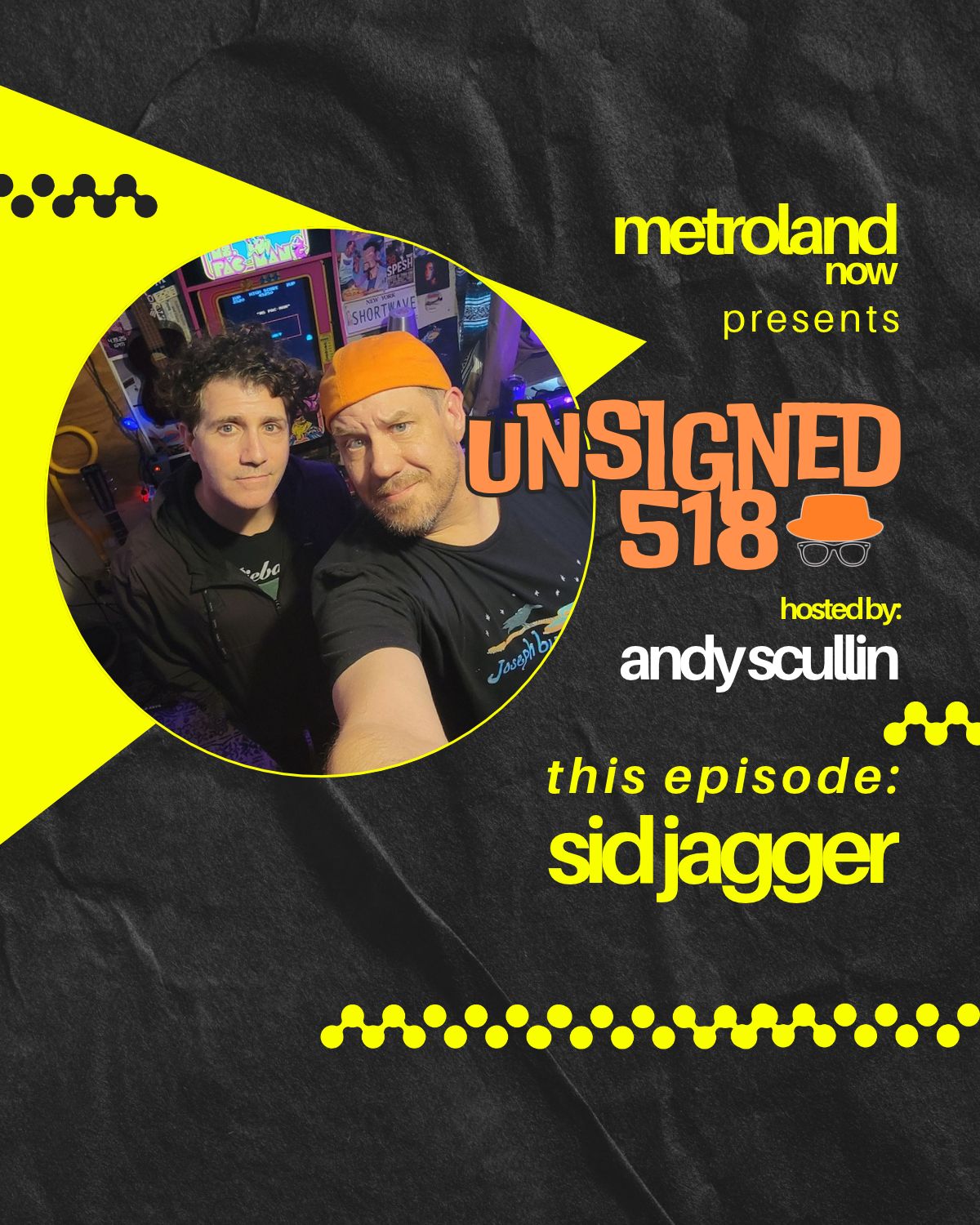
[00:00:06] Speaker B: the 13 cabin in the dazzle Jazz rock Now on the beat Guitar with a short wind radio bass his motherfucking envy scrolling look at motherfucker. Cause here he comes Andy Sculling wearing his orange hat. Welcome to unsigned 518. I am here with Sid Jagger of Her Heads On Fire. What's up, man?
[00:00:33] Speaker A: Hello. How are you, sir?
[00:00:35] Speaker B: I am fantastic. And you know, those that. That don't know or aren't familiar with Heads On Fire, Her Heads On Fire would certainly know. Garrison would certainly know saves the day. And Her Head's On Fire is made up of members of both of those. And for those that again, may not know you were the singer of Garrison, but I think everybody would know that Sid Jagger's a unique enough name where people would know that.
[00:01:01] Speaker A: I would hope so.
[00:01:02] Speaker B: Yeah, I've actually been the last couple days been. Been going back to Garrison and digging into the catalog and fucking rocking it out and I remember it from. From back in the day and so it's kind of cool that you're hanging out here.
Anyway, we're not going to talk about my Starstruckness. We're going to talk about Her Heads On Fire and the new LP that is coming out, I guess start maybe from the beginning of like the conception of the album.
But just tell us a little bit about it.
[00:01:33] Speaker A: Sure. Well, we're always, we're always writing. So we've been a band for I guess since 2021.
And this will be our third full length and the fourth one is 80% written because Jeff Dean, the guitar player, my songwriting partner, is just constantly making material and sending it to me. And you know, we go through like right when an album comes out, we'll go through like a phase of writing.
You know, we always like sort of write 14 songs to record and then 10 make the album. And then whatever doesn't will be B sides and things like that. And then we always try and do like a holiday single and you know, just have songs because I love songs and I. And or like cover tunes and this. So they come in batches and so Jeff gets excited about writing a batch of music and then I will get, you know, 10 to 12 to 14 songs within about a month, usually with drums on them.
And then I have free reign to do whatever I'm going to do vocally. And we don't even communicate like there's no. He doesn't say this is the chorus or so I. Sometimes I Have it flipped where his verse is, my chorus, or vice versa, and then I write it and then finally goes to the bass player, and he sort of is doing the driving and harmonizing at the same time.
So we write a group of songs usually over the course of three months, four months, and then he's a recording engineer as well. So I fly out to Chicago and we record, you know, a couple days, do a record, and then back to playing shows and living our lives and,
[00:03:13] Speaker B: you know, writing the songs. Like you said, he, like, kind of writes them and, like, demos them out and, like, sends them out when you get them. Are you thinking of them in a batch? Like, you know, he. You said he kind of writes, like, in a. In a batch. Are you. Do you write in a batch or do you look at each thing kind of individually, or do you try to create a theme within them?
[00:03:32] Speaker A: I can't help but batch them only because I'm working on them all at the same time. They come in. Right. So I do take them apart and sort of treat each one individually. But whatever. Sort of whatever my psychosis is at the moment, which is, you know, lyrically what I'm going to be writing about, it's all going to be kind of different facets of the same moment.
[00:03:54] Speaker B: So, like, episodes of the same overarching story.
[00:03:58] Speaker A: Yeah, because, I mean, that's the whole idea. Like, it's a record in time, you know, and so that's what. And sometimes, you know, it's one of those things where you don't even realize, like, until, you know, I don't even realize, or maybe I'm beginning to realize what, like, Garrison albums were about lyrically. And it's been 20 some odd years.
You need space and time. I'm not somebody who's like, oh, I'm gonna write a song about, you know, I'm not like Elvis Costello, where it's like a writing exercise, where it's like, well, how many references to. Like, I'm gonna call this chemistry class, and how many references can I make to chemistry about a love song within a song?
I think that stuff's amazing, and I love that methodology, but that's not how I do it. I just sort of riff with melodies and ideas and just syllables, you know, just like gibberish. And then once I get that, I'll maybe get one line that's hooking me in and I'm like, okay, well, that's it. And then I write everything around that.
[00:04:52] Speaker B: And so, like, almost like, I know, like, some people, when they're writing like acoustic lyric, they'll like even just scat lyrics that have nothing to do. So it's kind of like that you're just putting something down, finding the them. Then you'll rework all of that to fit the theme.
[00:05:06] Speaker A: Yeah, I mean, because essentially at the end of the day for me, it's music and sound that's turning me on. And the lyrics are super important and I love them. But that comes. That's another process in the same way that like, you know, there's filmmaking, then there's editing and there are different art forms and you, you know, you.
There's a time for each, you know, and so I try to focus more on the melody first and, and then once I have something that I'm happy with, then I can put the lyrics and sort of thread them in around the do, do, do do that I've written, you know.
[00:05:36] Speaker B: And you know, I want to ask you, like, with kind of like the modern way of releasing music, how everything is like singles, you know, like, how important do you think the album is? Like, because I'm someone that I listen to albums, you know, I'm fucking old. Like, I like to listen to an entire album. Like, I like singles, but I'm an album guy. Like, where do you think the album fits in in like today's single driven short attention span society?
[00:06:05] Speaker A: I don't think the album most of the time matters, but I'm an album guy too. And when I grew up listening to music, you know, I was listening like sort of arguably the. The heyday of the album, which would be like, you know, late 70s.
[00:06:22] Speaker B: Yeah.
[00:06:23] Speaker A: You know, like Pink Floyd. The Wall was like the first record,
[00:06:25] Speaker B: my favorite, almost my favorite album of all time.
[00:06:27] Speaker A: It's beautiful, you know, and, and so. And then I love the idea of like concept records and I've done or dabbled with that in the past. But I like albums. I like flow. I like. I used to make mixtapes as a kid, you know, and I like a composed piece of music. Now that's a big ask these days to say, like, hey man, sit down and for 34 minutes listen to a record from point A to point B and don't do anything else.
[00:06:55] Speaker B: But the thing is, is I feel like because you say that's a big ask. And I'm thinking how many, how much time do people spend in their car?
You know, like, if you, like, if you want to check out an album, like when Social Distortion just put an album out and I've listened. I've not one Time listened to a single song off that album.
I started from the beginning. I listened to it all the way through. And a lot of the times it's when I'm in my car and, like, I just. I don't know, there's something about the way that just the single. To me, it feels like watching one episode of a TV show and then never watching another one.
[00:07:32] Speaker A: Right.
[00:07:33] Speaker B: You know what I mean? Like, you get, like, that little thing, but how can you not be interested in what else is there?
[00:07:39] Speaker A: Like, I love it all, man. I love the arc of the artist. There's somebody that I dig.
I want to know their early work. I want to know all the B sides, unreleased tracks. I want to hear what they're doing now and then. I'm lucky enough to have friends and peers that I can still check in and see what they're doing, you know, like, if you know Kurt from Converge, you know, like, we've known each other since, like, around high school era, and I love that he's still making music. I'm not a huge metal guy, never was, but I've always appreciated his work because he's a great person.
So I always want to check in, you know, Ed. Old bandmate of mine, like, whenever he's writing stuff, I'm like, send it to me. Send it to me. Because I just want to hear. I love knowing what people do. And I. Yeah, I agree with you. I don't. I don't know many song titles on albums because I listen to them as a whole.
[00:08:28] Speaker B: Yeah.
[00:08:29] Speaker A: You know, so if you say track three, I'm like, oh, now we're talking.
[00:08:31] Speaker B: Right.
[00:08:32] Speaker A: But if you say blah, blah, blah, I'm like, I have no idea what. Unless.
[00:08:34] Speaker B: Unless it's like, the name is like, the refrain or the chorus or whatever, like something that contextualizes the Beatles.
[00:08:40] Speaker A: She loves you, you, man.
[00:08:43] Speaker B: But, yeah, I like. And when you talk about, like, Pink Floyd, the Wall, because, I mean, we have to be somewhere in the same age range. Like, I'm 53, 52. All right. Yeah. So, like, the Wall was probably the first album to me that made me feel something like. I guess, like. And it was that you couldn't just listen to, you know, anybody who's just like, oh, Pink Floyd. Yeah. That we don't need no education song. You're like, that's one part of the story, you know, like, that it doesn' Mean anything unless you take in the rest of the album, you know, it really doesn't. And people that sing along with it and have never Heard the rest of it. It's like, I don't know, maybe I'm just being like, grumpy old man, but, like, I'm like, it's really weird.
[00:09:27] Speaker A: I mean, we could do a whole
[00:09:28] Speaker B: podcast just because it starts and ends with that same AM radio song.
[00:09:32] Speaker A: Like, starts and ends with that. Most of the songs. I mean, when you look what they were coming out of, like these epic long songs like Wish youh Were Here, like Shawnee and Crazy diamond or Animals Like Dogs and Sheep. Such long fucking songs, right? And then even. Even Dark side, like, the songs, the singles are like seven minutes long. They're making, like, all the songs are like one and a half minutes, two minutes. And because they're just sketches, they're just ideas. And I was lucky enough to. I joined a band after Garrison that made a record with Bob Ezrin, who to me was like, one of the first. My first, like, musical heroes. And, you know, we got to talk to him about making that record. And it was such a trip to have, like, inside information on this thing that I fell in love with in the eighth grade, you know, and. And it's so. It's like a true full circle moment for me. Yeah. But, yeah, getting back to your original question, like, albums are, I love, not just a collection of songs and what the artist was doing. I love. I love production.
I love, you know, the vibe, who's recording it, what does it sound like? I love the artwork.
You know, I love. It's like. It's an adventure. It's a ride. And that artist is gonna take me on a ride for, you know, 35, 40 minutes. And I'm willing to take that ride, you know, if I dig what they do.
[00:10:46] Speaker B: And I mean, I'm still, you know, again, being Old Man Skull and like, I'm still a vinyl guy, like, out in the living room. Like, we have vinyl and record players and I have, I mean, a huge collection of records. Like, mostly like 70s and 80s, but also a lot of current shit. And like.
And again, that's something.
Just when you put the needle down and you walk away, you know, it's just gonna play that story. And then you have to engage again by standing up, going, flipping the record, putting the need. There's something about it that gives it a deeper connection than a fucking playlist that's just randomly throwing shit at you, you know, they don't make any sense together.
[00:11:27] Speaker A: Well, also, I think in the Audis, you know, things changed a bit where people no longer. You were listening to music, but it was always while doing something else.
[00:11:35] Speaker B: Right.
[00:11:35] Speaker A: Like I will listen to music while I'm playing a snowboarding video game or, you know, while I'm watching something, I'm
[00:11:42] Speaker B: listening to the house or like.
[00:11:44] Speaker A: Right. And there's always an activity that isn't the music and that my favorite thing to do is sit down with a good friend and sit down quietly. Yeah. And listen to an album from start to finish and then discuss it the same way you would with a film, you know, and. Yeah, I think that's a bit of a lost art form.
I mean, it is. I mean, the way we listen to music is a bit of a dinosaur thing and that's fine.
I can appreciate the era of singles. Like, I'm a huge Beatles aficionado as well. So all the early stuff is just singles, really. You know, it wasn't until later that they're making quote unquote albums. But single culture is cool. I get it. I get the short attention span theater of our modern world.
But.
And we definitely have songs that we consider what the singles are gonna be for a full length, you know, once. Once it's done. But we don't. We write the full length first and then pick and then we're like, yeah, we talk to the record label and say, well, what. What do you want the first single to be? Well, I'll go with this. Okay, sure.
[00:12:42] Speaker B: And I mean, I'm sure they have their reasons, you know, for what makes. Makes a single. But do you think just the fact that you're not even thinking, like, you're not thinking about the single when you're writing it, you know, you're just writing songs.
But I don't know. I guess I don't know what I'm trying to say, but, like, is there something about what's chosen as the single that. Are you like, yeah, whatever, or are you like, maybe not so much with this, you know, like, how important to you is a single when you've thought about it as a full album? I guess that's my question.
[00:13:14] Speaker A: Well, I have opinions, right. Because it's music and it's going to get out there and it's how you're represented. But in a way, my opinions are a little bit suspect because I'm too involved in the music.
So even though as an artist I'm gonna say I think this should be the single, I really need somebody else to be on the outside to be like, oh, no, are you crazy? It should be this song. And the idea behind the single, right, is you're you're gonna cast the widest net.
So what. What song is gonna have the most appeal so that if somebody hears it on the radio, they check out everything else you have, you know, and hopefully everything else you do is up to par. You know, the single shouldn't necessarily be your quote unquote best song, but it's like, it should be the one that is going to instantly resonate with people.
[00:14:04] Speaker B: And I feel like that has almost been a detriment to some bands. Like, some bands that have had like that one song that hit with, you know, the, the. The crowd, like the mass audience, but is nothing like their music.
[00:14:19] Speaker A: Yeah.
[00:14:20] Speaker B: And then they just fucking adapt to that.
[00:14:22] Speaker A: Oh, yeah.
[00:14:23] Speaker B: You know, and that. They're like, all right, yeah, we do ballads now.
[00:14:25] Speaker A: You know, I think about that all the time. Like, imagine if you're doing, like, imagine if you're Jane's Addiction. Right, right. And you make these dark, like, nothing. Shocking, beautiful.
[00:14:33] Speaker B: One of the best albums of all time.
[00:14:35] Speaker A: And. And you. You make these dark, cool, Zeppelin, Sabbath, goth inspired songs.
[00:14:42] Speaker B: And then you do Ben Cart stealing.
[00:14:44] Speaker A: Everybody knows you for Ben Cart stealing, but psychologically, as an artist, like, imagine what it must feel like for them. They must be like, wow, I guess we do this other stuff. Okay. But people really like the Ben Cod stealing. Like, maybe they like the goofy funk song about silly stuff. Maybe we should do more of that.
[00:14:59] Speaker B: And like, it was such. That song is such a fucking departure from everything. I mean, like, nothing shocking itself is about fucking, you know, murders and bodies, you know, disembowel bodies. And like, it's about a fucking serial killer. Like, it's about the shocking things you see on tv. And then they're like, no, I stole a fucking razor for my girlfriend. And everybody's like, yeah, I love that shit.
[00:15:21] Speaker A: Yeah.
[00:15:22] Speaker B: He's like, I'm talking about, like, addiction and death and murders and like.
[00:15:26] Speaker A: Well, you see it. I mean, like, even. Even like the Goo Goo Dolls, right? So their first records are kind of punk, for sure. Kind of. They're very punk. And. And then, you know, they're writing more and more sort of palatable music and they understand songcraft better. And then once you write a song like Iris, it's like, how do they.
And they are. They. They actually are really good at that.
[00:15:48] Speaker B: Right.
[00:15:49] Speaker A: So they're going to continue to do that. They're not going to go back and be like, oh, we're going to write another punk record for kicks. Like, because at this point, they're a company.
[00:15:56] Speaker B: Yeah. And I remember, like, an interview with Billy Corgan.
[00:15:59] Speaker A: Yeah.
[00:15:59] Speaker B: And he was talking about Bullet with Butterfly Wings and how that song was basically like kind of like a fuck you to the industry to be like, stop telling me to write these kind of songs. And he's like. And then it became a hit.
Like, everybody's like, write more of that. And he's like, what the fuck do you mean? Like, you know, he has all these other things that, you know, are deep and artistic and fucking great. And the song that was kind of a flipping. Like everybody latched onto it, kind of kind of pissed him off.
[00:16:27] Speaker A: Because that. I mean, in a way that. That. The thing about that that resonates is the. The rock and roll ness of it is it's just like, yeah, fuck it, it's fine.
[00:16:34] Speaker B: Yeah.
[00:16:34] Speaker A: You know, and. And there's something about rock and roll that should feel immediate and it should fly by the seat of its pants. And that's, in fact, going back to Her Head's on Fire. Like, one of the things that I love that we do is we have this batch of songs, we write it, and then because Jeff's a recording engineer, he sets a date and we go in and record it, and then it's done. You know, there's no. Like, my favorite moment in the studio is when we're about. I'm about to sing a track, and as the drums kick in, I'm like, I don't even remember what song this is. Oh, right, it's this one. And then I'm singing. And that, to me, is the immediacy of that.
And what you can capture in those moments is what. The essence of rock and roll. I think we can.
Especially in my younger days, we would write a song to death and you suck all the energy out of it, and you're like, well, great, and it's perfect now, but it doesn't have any energy.
And that's not the point.
[00:17:32] Speaker B: Right? Yeah. I mean, and not even just on albums, but playing live. I think mistakes are wonderful.
I know people are like, what are you talking about? But I think it's great, like, when you're. Because it's something different and it. It's.
I mean, and I don't mean like, oh, yeah, I've completely fucked everything. But, you know, making it. Whoops, I made one little wrong note. Still, playing on is great because it's something different. Like, think of when Nirvana did that Unplugged album and there's fucking feedback that they left in the song. You know, like just a squelching. And I'm like, but that's that song now, you know, that's that version of that song is that little, little difference.
And I think, you know how you said you record songs to death? I think that can hurt people having too much time to sit with something, oh, I could do this different, I could do that different. And as soon as you said, like, oh, yeah, go out to Chicago, record for a day or two and then I'm done, it was like, all right, well, then there's probably not a whole lot of patching up things because you're not there anymore. You know, you're like, no, I do this now. I'm a tour. And yeah.
[00:18:43] Speaker A: So all the records, like, all the vocals are done in one day. And then, you know, maybe we have the next day to do some backing vocals. And then I.
I bludgeon Jeff Dean with shaker and tambourine and all the auxiliary percussion because it's so awesome. And he's like, no. I'm like, yes.
[00:19:00] Speaker B: I mean, that's what makes.
Yeah, I love it. My. One of my buddy Dave Tyer, who produced a couple of our songs, he calls that the salt and pepper.
[00:19:09] Speaker A: Absolutely.
[00:19:09] Speaker B: Be like, oh, you know, the song's done, we just need to add the salt and pepper. And that's just egg shakers and tambourines.
[00:19:14] Speaker A: Sometimes salt and pepper. You listen to some old Beatles tracks and like, the tambourine is the loudest thing.
[00:19:17] Speaker B: Yeah.
[00:19:18] Speaker A: And that's the thing that's making you move, you know? And yeah, I think that that stuff is.
And it's really hard to play. And people.
[00:19:25] Speaker B: Tambourine.
[00:19:26] Speaker A: Yeah. One of my favorite things to do is make a drummer play auxiliary percussion.
[00:19:29] Speaker B: Yeah.
[00:19:29] Speaker A: And if. I mean some of them, like Drew Thomas, who I've worked with a lot, he's a master at it. He's great. But almost every other drummer I've worked with, when put in that position to do Shaker is just like.
[00:19:38] Speaker B: Because it's not just staying on beat. You have to finesse all those things. Because anybody can stay on beat, but it sounds like shit. You have to finesse it. And especially with the tambourine, you've got 30 hi hats that you gotta control at once, people.
[00:19:53] Speaker A: You think it's easy, but it's like, no, that's real hard to do.
[00:19:55] Speaker B: Yeah. Yeah.
Abby in my band plays the tambourine sometimes and she beats the shit out of her thigh.
Like when the show's done, she'll just have this huge crescent shaped bruise. Like, I don't know, like that's Rock and roll, man.
[00:20:10] Speaker A: There was this great, like, screamy metal band. I want to say metal, but they're kind of like in the vein of Dead Guy, and they were from Boston, and I can't remember the lead singer's name, but she was this tiny woman, and she would, like, wrap duct tape around her leg, smart, like, over and over around her thigh, and then just smash the tambourine the whole time. And, I mean, that's great showmanship, you know, I was just like, that's so fucking cool to watch. Yeah.
And, yeah, it was great. She must have had taken out of her leg, I'm sure. Yeah.
[00:20:45] Speaker B: So I guess getting. Getting back to the album.
[00:20:47] Speaker A: Sure.
[00:20:48] Speaker B: So when is it released?
[00:20:52] Speaker A: I should know that, right?
[00:20:53] Speaker B: Probably.
[00:20:53] Speaker A: I should totally know that. And I know it's in July, and I want to say it's July 17, and I want to say it's July 17 because that's the same day the Quicksand record comes out.
And I'm trying to get in touch with Walter so we can do, like, a Blur Oasis thing, and we can just lose miserably. It's gonna be like Quicksand versus a band you've never heard of.
[00:21:12] Speaker B: Quicksand was one of the first live bands I ever saw.
[00:21:15] Speaker A: Fantastic.
[00:21:16] Speaker B: And I had never heard of them, but there was this brand new band that had an album coming out. I was working at a radio station. This is 92.
And there was this new band called Rage against the Machine.
[00:21:29] Speaker A: Oh, yeah, those guys are.
[00:21:30] Speaker B: They were. They were going to put out an album, and they had sent an advanced copy to the radio station that I worked for that were a bunch of softies. And we're like, hell, no, we're not playing this. And I was like, can I have this CD? And I became obsessed with the CD. Rage against the Machine was playing at UMass at the Mullins center, and I went to see them, and they were opening up for this band, Quicksand, that I had never heard of.
[00:21:53] Speaker A: Who.
[00:21:54] Speaker B: I mean, manic compression and dive became just like my shit. So the fact that you're like, oh, yeah, I know Walther. I'm like, oh, cool. That's. Yeah.
[00:22:04] Speaker A: Well, I mean, the thing about music, right, and I've said this before, is, like, in the real world, there's six degrees of separation. In the music world, there's two.
[00:22:14] Speaker B: Right.
[00:22:14] Speaker A: Everybody knows everybody. And if you move to particular cities where. Because I was originally from outside of Boston and I moved to New York City in 01, and, you know, you just. It's just a matter of time. There's only so many people in that city that play the music that we play. You know, guitar, rock, hardcore, post hardcore influence guitar, hard rock.
And, you know, you just eventually start, you know, you meet people, you know, and it's like anything. I mean, sure, there's some, you know, Albany and Troy luminaries that, you know, when I just went to go see.
Have you seen any shows at the new EVR office? No, they did shows. Walter actually just played there with Jeff Caudill and Kate108. They did an acoustic show. So anyways, Equal Vision Records, their warehouse is in Troy.
[00:23:03] Speaker B: No shit.
[00:23:04] Speaker A: And they're doing shows now.
And those guys I saw, I'd never met him before, but I saw Ray Capo of Youth of Today at a trampoline park with my child.
We were at Get Air at the Crossgates Mall and with my son and my daughter, and they're bouncing around and I'm looking at this guy and he's looking at me and he's like, do I know you? I'm like, I don't know.
And he said, you look familiar. I'm like, I play music with Drew because Drew used to play in Youth A Day in Bold and all that stuff. And he's just like, that's how I know you. I'm like, cool. I'm like, you're Ray. And he's like, yeah. I'm like, great. And then we just bounced away.
[00:23:38] Speaker B: That's fucking funny.
Yeah. That's wild. Yeah. So I mean, you got to know Sergio then.
[00:23:45] Speaker A: I. I've met him a few times, but I don't really know him because he.
[00:23:49] Speaker B: He played with like, Deftones. Huge.
[00:23:51] Speaker A: Oh, yeah.
[00:23:52] Speaker B: I love Deftones. And I actually, like, basically liked when I. I'm so mad at them for the way they treated. The way they treated Sergio that, like, I was like, all right, I'll still listen to you. But because he was. When he joined that band, like, it was like my favorite thing. And they did him so dirty by, like, not ever saying, oh, he's a full time member of the band. Like, that's a. I could do a whole different podcast.
[00:24:17] Speaker A: That's such a weird thing because, I mean, Deftones were responsible for Quicksand's first reunion in like 97, you know, and they basically invited them. They said, specifically, we want you guys. It came out.
[00:24:26] Speaker B: Yeah. Because that's why they had him join the band.
[00:24:28] Speaker A: Musically, you listen to. And it's just like, you guys are obviously fans, you know.
[00:24:32] Speaker B: Yeah.
[00:24:32] Speaker A: And and once Sergio joined, it had more of that vibe. Yeah, I don't know. I don't know the story behind that. But Sergio, I've met him, but he's. He's typed my friend Chris. I don't. I'm not really. Yeah, I don't know.
[00:24:42] Speaker B: Well, if you ever see him again, be like, yeah, Andy from unsigned 518.
[00:24:45] Speaker A: I'll let him know.
[00:24:46] Speaker B: Very mad at Deftones.
[00:24:48] Speaker A: He's in your corner, man.
[00:24:49] Speaker B: Yeah. He's ready to throw it in culture 100, 100%.
But, yeah, that Quicksand show was probably the best show I'd ever seen because, like, the Mullen center at UMass, the stage was literally like a foot high. Like, it was not like this huge stage. So I was like, right there, and it just. I mean, it changed my life. It was like one of the first. Well, not the first concert because I had seen, you know, like, I went to maybe something with my dad at a state fair or something, but it was like the first show that I was like, I'm going to see this because I want to.
[00:25:21] Speaker A: They're, you know, I mean, they're part of the.
You know, they're like the. The Mount Rushmore. Right? It's like, you know, Fugazi and Quicksand for the music that we do.
You know, the. The post hardcore stuff. I mean, they kind of wrote the book and it's like, it's your starter kit. Like, you can't, you know, it's like you can't pretend to play, you know, heavy rock metal and not know Sabbath.
[00:25:44] Speaker B: Right?
[00:25:44] Speaker A: It's like, if you're gonna do post hardcore, you got to know Fugazi, 13 songs and repeater, and you got to know Quicksand, Slip and Mana Compression. It's like. It's just, you know, you have to.
[00:25:53] Speaker B: Wait. I called it Dive, didn't I called it what?
[00:25:56] Speaker A: Dive.
[00:25:56] Speaker B: I called Slip dive. Oh, Slip is the one with the guy diving on the COVID You confused it with.
[00:26:00] Speaker A: You confused it with our local bar.
[00:26:02] Speaker B: Yeah, yeah. Like, it has a guy diving, but it's called Slip. Yeah, but, yeah, great. Great. Shit. And again, I'm fanboying a little, but
[00:26:11] Speaker A: there's nothing wrong with that. No, they're a fanboy. Myself, you know, who I just geeked out on.
I was at a show and I know I'm going off on tangents. I apologize. But we played out in Chicago with J. Robins Band, and I've known Jay because he worked with Garrison, and I love Jay. He's wonderful. Like, he's the textbook meet your heroes because he's the best guy in the world.
But Alan from Shiner.
And I was introduced because I was like, oh, you know, I might be able to help him out with the booking agent. And we're talking and I just. I couldn't help myself. I was gushing, you know. I was just like, yeah, man. I'm like, I think if you call me about this, I'm like, by the way, your solo record's phenomenal. It's really, really good. He's like, oh, thanks. I'm like, shiner stuff. Life and times. I'm a fan of everything you've done. I couldn't.
I'm just. I'm. You know, like. You know the term. The Punish. Punisher.
[00:26:56] Speaker B: Yeah.
[00:26:56] Speaker A: Yeah, that's me, man. Like, I. If I'm enthusiastic about something, I can't shut up about it.
[00:27:02] Speaker B: Me, too. And, like, I. I go deep into shit. Like, it's so. Like, you were talking about lyrics, how lyrics are important. I study lyrics so much that, like, I feel like my perception of them is the definitive version.
[00:27:16] Speaker A: Yeah.
[00:27:16] Speaker B: You know what I mean? I'll be like, oh, well, this song is about this and this song is about that, you know, and it's really just my opinion on what it's about. But, like, I'm like, no, I'm pretty sure that's what it's.
[00:27:28] Speaker A: That's.
[00:27:28] Speaker B: That's my weakness. But, yeah, I would fanboy hard on a lot of.
A lot of things. And I've gotten the chance to, like, talk to some people that, you know, I mean, you being one of them that are above my echelon. And it's. There is something endearing about fanboying, I guess, like, because you're saying, I respect you and I respect what you do, and your art is important to me. So, like, we need to come up with a better term than fanboy.
[00:27:57] Speaker A: Yeah, that's because you can't. You know, it's like in the. In the. In the. You know, in the art world. Right? So if somebody, you know, almost everyone's dead, but if they're not dead, you know, you say like, oh, you know, your work speaks to. Blah, blah, blah, blah, blah. And you can. You can be academic about it. Right. But nobody wants to hear that. Like, nobody wants me to come up to, you know, Walter and be like, you know, I think. I think your work was drawing from both fugazi and influenced by hip hop at the same time. Although hardcore obviously, you know, had an influence because you Also write one of the Semler records. You know, I could do that, but that's just going to come off as ridiculous. So I'm just like, yeah, you fucking. Your stuff's good, man.
It is. We have no. We have no proper language for.
You know, how do you properly acknowledge someone's rock album? You know, like I said, my. My wife and I sat next to Paul McCartney at a.
a bar years ago.
And I won't go into the whole story, but, like, my dad was just like, did you say anything? I'm like, no, of course not.
He's arguably one of the most famous human beings on the planet. Like, he's not. There's nothing that I'm gonna say, you know, that's gonna matter because, you know, he's him. I actually want to give him a gift by giving him some privacy.
[00:29:04] Speaker B: Right.
[00:29:05] Speaker A: You know, but it's like, yeah, I've got nothing to say to Paul.
You know, I mean, if we had coffee, if we're having Thanksgiving dinner together, well, that's a different situation. But I can't just walk up to somebody and be like, oh, man, you know?
[00:29:19] Speaker B: Yeah. Paul McCartney went skiing at Bromley Mountain, like, I don't know, maybe 10 years ago, and just, like, was hanging out in the small town, going into the. Into the shops, going into whatever it is, like, and the ripple that left, you know what I mean? Like, for, like, years, people like Paul McCartney was here.
[00:29:41] Speaker A: But it's also a body of work. I mean, like, where do you even begin? Because you're like. You say, oh, hey, man, when I was, like, 10 years old, the early Beatles stuff, like, was so important. And, like, those songs are embedded in my musical DNA. Well, that's one aspect, right? And then you get a little bit older and you're like, oh, you know, man, like, the first time I smoked pot, I listened to, like, Sergeant Peppers and blah, blah, blah. And that was really monumentous to me. Blah, blah, blah. And then maybe you get into, like, filmmaking. You're like, oh, actually, you know, like Richard Linkler on A Hard Day's Night. Like, you know, not Richard Linkletter. What's the guy that name Richard Blank on the guy that made Hard Days Night. But anyways, you're like, that's so brilliant and so interesting at the time. And then you're like, oh, you get a little bit older and you're like, jesus Christ, you're a motherfucker of a bass player, right? Oh, my God, like, what you did for bass. Oh, my. You know, and you could Go.
[00:30:25] Speaker B: Not only that, but singing on top of, like, these fucking impossible bass lines.
[00:30:29] Speaker A: You know, it's when someone has had, like, a musical output on that level that is sort of had the ripples the size that they have, like. Yeah. You just don't know where to begin.
[00:30:40] Speaker B: Yeah.
[00:30:40] Speaker A: Whereas, like, Shiner, you know, I can. I can be like, alan, we happen to be talking about this, and I'm just gonna be like, I'm. I know your work more than most people know. I like your band better than you like your band.
[00:30:49] Speaker B: Yeah. I mean, there's like. I'm a. I'm a huge no Effects and Defense and Descendants fan. Like, those are, like, my two favorite bands. And if I met any member of either of those bands, I probably wouldn't be able to speak.
[00:31:02] Speaker A: Yeah.
[00:31:02] Speaker B: And, like, I speak professionally, you know, And I'm supposed to be, like, pretty good at, like, interviewing people, but I literally would just be like, I don't want to say anything.
[00:31:09] Speaker A: Yeah.
[00:31:10] Speaker B: Because I'll say something fucking stupid. So I would probably just be like, you know, if I got the opportunity to interview them, I'd probably be like, nah, I'm good.
[00:31:18] Speaker A: I don't get starstruck too often. Maybe. Maybe the whole, like, New York thing and whatnot. But, yeah, when I first saw Paul McCartney, I went cold.
[00:31:25] Speaker B: Right.
[00:31:26] Speaker A: I was just like, when you. Since I was a little boy. You're so important.
[00:31:31] Speaker B: Yeah. And that was like, that, you know, Beatles music, like, for me.
[00:31:35] Speaker A: Yeah.
[00:31:36] Speaker B: Was the only music that I had access to because my mom was a Beatles fan and we had all their records, and I had a little storybook record player, so I could go upstairs, grab a Beatles record, go downstairs, put it on my little storybook record player and listen to the beat, and that was the only fucking music that I had. So, like, Beatles were music until I was, like, old enough to discover my own.
[00:32:02] Speaker A: Beatles actually are music. They are the Shakespeare.
[00:32:05] Speaker B: Right.
[00:32:05] Speaker A: Of it all. So even if you do. I try and think about this all the time. Like, even if you do something diametrically opposed to what the Beatles did, you're still working in their shadow because they
[00:32:14] Speaker B: diametrically oppose themselves all the time.
[00:32:16] Speaker A: Yeah. You know what I mean? Like, so it's. And they did so many things from the perfect pop song, from, like, you know, Angel Bird Can Sing or something to, like, you know, the Revolution 9, you know, or. It's just like. It's so fascinating the amount of work they did in such a small span.
[00:32:34] Speaker B: Even the recording methods.
[00:32:36] Speaker A: Yeah.
[00:32:36] Speaker B: Are you. You know.
[00:32:37] Speaker A: Yeah. And so so it's, it's, it's, it's the, it's the Bible quote, unquote. So everything else is based sort of afterwards. There's before the Beatles and after the Beatles. As far as, like, music is concerned, at least in the guitar rock world.
[00:32:50] Speaker B: Yeah. I think for me it starts at Beatles. Yeah. Like, I don't really know it. Like, I, I know like some like, you know, 50s stuff, but like, it's really like, you know, she loves you and I want to hold your hand and shit like that. That was my introduction to music.
[00:33:05] Speaker A: It's really fun to, you know, just as an experiment, go back and listen to a lot of stuff that was coming out at the time and you hear that not only are the songs good, but George Martin's production, you know, and it's so big sounding and like a lot of people are. A lot of, you know, the British bands were taking sort of the, the American blues rock sound and making it into these pop songs. But the sound of those records, you know, especially if you listen to them in mono because that's how they were originally, you know, done and recorded and mixed.
They're powerful. Like, Ringo is an animal, you know, and if you listen to, like, he's, he's, he's above the. Again, I could go on and on.
I spend a lot of time thinking about drummers and where they're kickfoot, right? And so if you're on top of the beat, like Ringo, it makes you want to dance.
If you're behind the beat, like Bonham, it's a little sexier, groovier, you know, and so. And then there's like people that are right in the middle of the beat, which would be like Dave Grohl. And he's right. So. So those, like, when I think about drummers, it's all about their kick drum and, you know, Ringo, the energy of the Beatles, a lot of it comes from his kickfoot, huh? Yeah.
[00:34:14] Speaker B: I'll have to, I'll have to go back and like, I've never thought of it that way.
[00:34:17] Speaker A: I spend a lot of time doing this.
[00:34:19] Speaker B: That's awesome.
So I don't really have like a ton else, but you know, to kind of go back to the album because those that are listening now, I'm kind of doing double duty. And you can read all about the upcoming album in the July issue of Metroland. But I guess, kind of. How would you wrap up, I guess in closing any closing statements about the album, about the album release, any aspects you're especially excited about or.
[00:34:51] Speaker A: Again, I didn't realize this while we were making it, but it's. It's definitely more of a raw record than the previous two, and I think has a little bit more sort of grit and aggression to it, although dynamically, it's also wider. Whereas I think the early stuff, you know, it's. It's very, like, kind of loud and in your face the whole time. Kind of like a whoosker do idea to just bludgeon you with sound.
This has a little bit more dynamic shifts, but it's. Especially vocally, it's a little bit more raw.
Maybe I was tired when I recorded it. I don't know.
[00:35:28] Speaker B: Yeah. And you recorded the vocals in one day, which is fucking wild.
[00:35:32] Speaker A: Yeah, I mean, it is wild, I guess, but it's not that hard if you do the homework.
You know what I mean? So it's like if.
[00:35:40] Speaker B: Come in prepared.
[00:35:41] Speaker A: Yeah, man.
I've always, always, always worked with people that are better than me.
So, like, you know, all the musicians that are in my bands are always better because I want to learn, and I have too much respect for them to not bring my A game and do the homework and come in and be like, yeah, I'm gonna bust this out. You know, I'm gonna wow you. That's the person I want to impress first. I don't think about impressing audience or anything like that. I think about impressing my bandmates, and that's it, you know? And then we go from there.
[00:36:16] Speaker B: I love that.
All right, I'm. I think I got everything I.
[00:36:20] Speaker A: Cool.
[00:36:20] Speaker B: I need. Is there anything you want to add in closing or.
[00:36:24] Speaker A: I don't know. We're gonna. We're gonna go down Play Fest in Games of Florida.
[00:36:28] Speaker B: Oh, wait, yeah, let's. Let's talk a little bit, because you're doing the Foo Fighters.
[00:36:33] Speaker A: Yeah.
[00:36:33] Speaker B: Cover set. That's awesome, dude.
I love. Like, I'm a. Like, I'm a huge fan of COVID sets.
[00:36:39] Speaker A: Like, it's so much fun.
[00:36:40] Speaker B: I love doing it. We're doing My Band Is Night Cool. So I spent the last couple weeks learning 25 emo songs.
Yeah, it really. You know, the funniest thing is talking about is learning how to sound like you're half crying when you're singing.
[00:36:58] Speaker A: You know, I did. My buddy Tom Mullen used to do. He does a thing called Washed Up Emo, and he was doing some of the first emo nights as a DJ. Maybe like 2010, 2011. Right there and there he started, and he invited me down to do One and I'm going down. I'm like, I got my playlist all set, and I think I'm gonna be, like, really cool. And I have, like, ass factor 4, universal order of Armageddon. I think I'm being, like, generous with no knife. And I have all these bands, and after about, like, five bands, like, the room is dead and I'm just bumming people out. And then he goes, let me just put this Taking Back Sunday song on.
And then the room lights up in the list.
[00:37:39] Speaker B: Yeah.
[00:37:39] Speaker A: And then I was like, oh, you guys think about this term differently than I do.
I'm older than everybody here. To me, it's pop punk. But okay, I get it, right? I'm gonna do my homework and do
[00:37:51] Speaker B: better next time I say that we're expanding the definition of emo because we add a bunch of pop punk in it, like, for sure. But, like, when I think of emo, I think of Far and Jonah Batranga. Like, that's like my.
For, you know, because that was, like, music that made you think, but also made you sad.
But, like, in a good way, you know?
[00:38:16] Speaker A: Like, I don't think there would be Deftones without him.
[00:38:18] Speaker B: Oh, definitely.
[00:38:19] Speaker A: He's got a new record coming out on Iodine.
[00:38:21] Speaker B: Yep. He co wrote Deftones biggest hit, Be Quiet and Drive. And he. They did a bunch of work. Yeah, but, like, hey, like, that's what I think of when I think of emo. But, like, you're right. Like, the younger generation is a little more fun, you know? Like, yeah, it's emo.
[00:38:37] Speaker A: And I'm like, yeah, term emo associated with Hoover.
[00:38:42] Speaker B: Okay.
[00:38:43] Speaker A: I know it's Rites of Spring, and I know Brian Baker sort of coined the term, but from my experience, I had heard, you know, because we heard Fugazi, right? Like. And maybe like, 1989, maybe. Yeah, that's now. I'm in the ninth grade. So we heard Fi.
And that's like the Bible. We hear 13 songs and then like, you know, Repeater's the new record.
And at that point, everything, especially coming out of D.C. kind of sounds like Fugazi, right? You know, so this band Hoover are writing, and I'm like, this is incredible, because it's taking the Fugazi thing, but kind of elongating it out in these longer sort of more meandering things. They have, like, songs like cuts like Drugs and I'm like, the first time I ever heard Emojis, Emo core was attached to Hoover.
And so, yeah, to think about Taking Back Sunday, who are great Great pop punk songwriters.
To think of them being called the same Timber Garrison, you know? Yeah. You know, like, I very quickly became a marketing term, and I was just like, I don't know what that means at all. Like, you know, like, alternative.
[00:39:46] Speaker B: Yeah.
[00:39:46] Speaker A: Like, who knows what that. Alternative to what?
[00:39:48] Speaker B: Right? Yeah. Like, I think of, like, you know, Job's Eyes From Far, like, as an emo song. Like, just fucking so sad and, like, slow and sad and heartfelt. And like, his voice, you know, like, you. That one scream that he does where you hear him physically back off the mic and just fucking let it yell. You're like, that to me, is emo. That's a dude that's hurting, not a guy talking about, you know, being the friction in your jeans or whatever the.
[00:40:18] Speaker A: Well, that's what I mean, you know, like, when we. Like, what is the word alternative meant?
Not hair metal and not. Not like CNC Music Factory, an alternative to what was ever on the radio.
But now that's. That's classic rock, man. All those 90 albums, 90s albums are classic rock. It's crazy.
[00:40:35] Speaker B: I mean, you can't call Pearl Jam alternative anymore.
[00:40:38] Speaker A: They are classic Rock Garden is not alternative.
[00:40:41] Speaker B: Nope. Classic rock just means we're getting old. All right. Well, I want to thank you so much for coming out and doing this. This is really cool. I'd been looking forward to it for a while. And I guess before we go, give you the chance to say what I call your gratitudes, which is just like your highs, your shout outs. Anyone you want to thank or say hi to.
[00:41:04] Speaker A: Now I'm put on the spot. I didn't realize I need to have a speech.
I don't know.
I'd like to thank Eric Busta.
Eric Busta was the first person who reached out to me here because we moved up here from Brooklyn during the pandemic, and our kids were going to Waldorf at the time. And we were at my kid's birthday party. He walked up to me, he's like, I heard you play music. I'm like, yeah. And he started talking to me. He was the first musician I met locally, and he's a wonderful guy, and we're still good friends. And so Eric Buster. Nice. That's my shout out.
[00:41:36] Speaker B: Yeah. I've known Booster for years.
My wife knows his wife, and they're, you know, like one of Boost's best. Best friends from college. Was my best man in my wedding.
[00:41:47] Speaker A: Oh, right on.
[00:41:48] Speaker B: That's how I know him. And that's actually. I think how we connected is through him through. Through Small World.
[00:41:53] Speaker A: Yeah.
[00:41:54] Speaker B: And he plays in Stoker.
[00:41:56] Speaker A: Yeah.
[00:41:57] Speaker B: So you guys should check him out. All right, so he is Sid Jagger. I am Andy scullin. This is unsigned 518.
I'll see you on the road.
Unsigned 518 is produced and hosted by me, Andy Scullin. New episodes are available every week, wherever you see.
If you'd like to help support the show, please like and subscribe wherever you are listening. Or you could buy me a
[email protected] unsigned 518.
If you would like to advertise on the show, send me an
[email protected] and to be a guest on the show, reach out to me through Instagram.
518.
Take care of one another and I'll see you next week.