[00:00:01] Speaker A: He was born on a Saturday in 73 he loves punk rock music.
On the beat Guitar with the short with radio back his motherfucking Andy SC Motherfucker Cuz here he comes Andy Sculling
[00:00:25] Speaker B: wearing his orange hat I, I don't want to succeed over my peers. I don't, I don't want to. Like, I just, I don't care enough about like, grifting for attention, right?
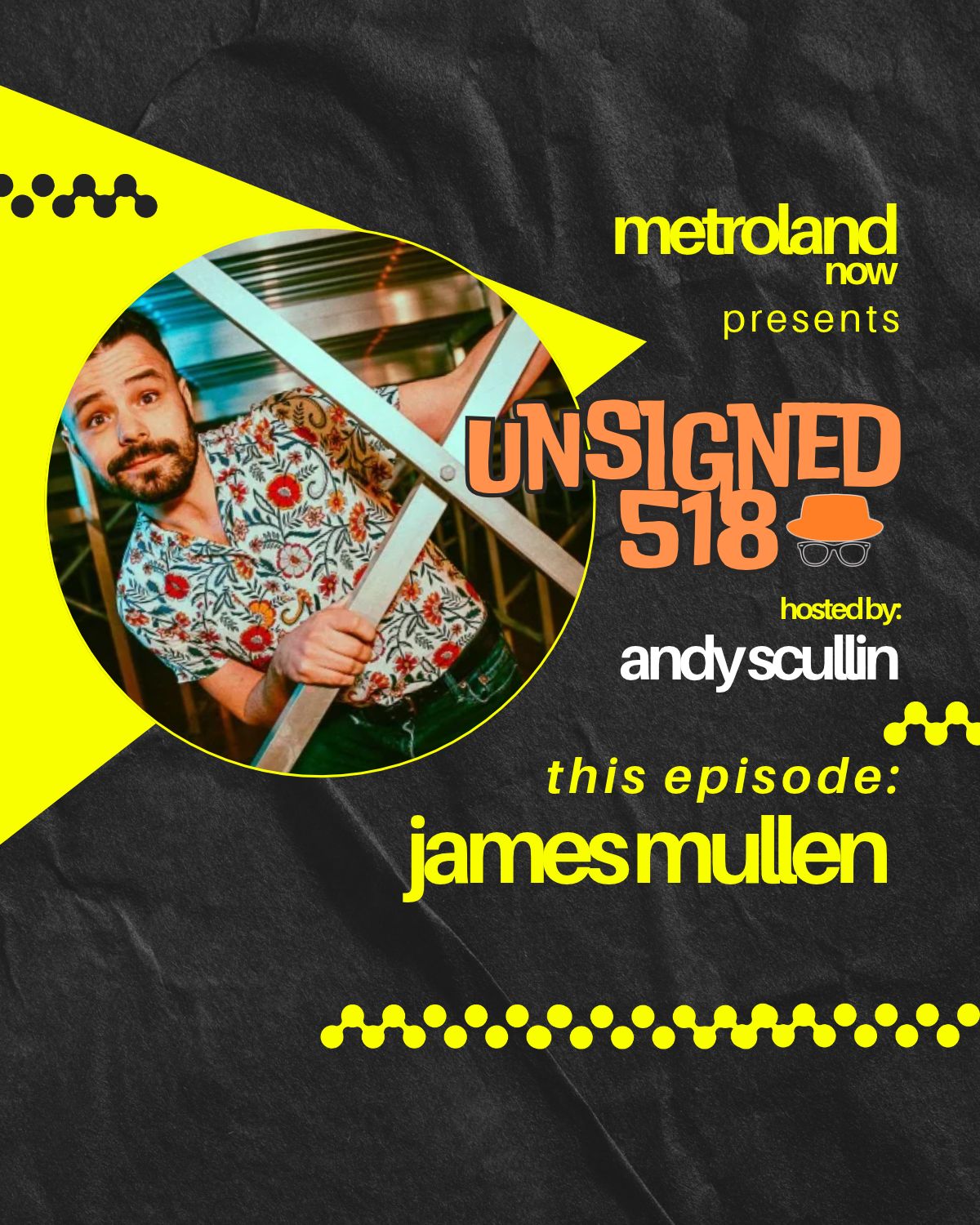
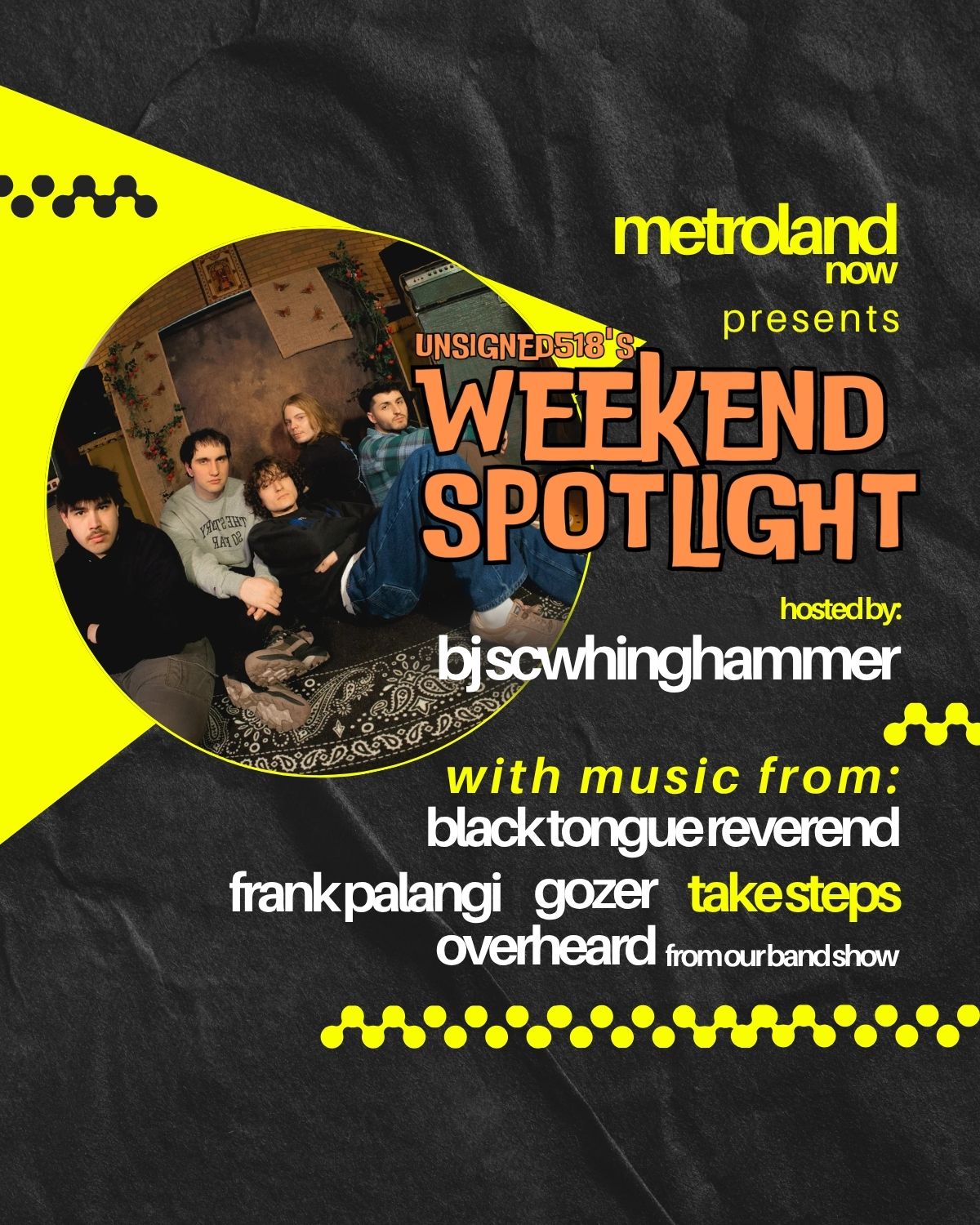
[00:00:35] Speaker A: Like, so with that welcome to unsigned 518. I just like, you know, we. We smoked a joint and drinking some coffee and we started talking. So I was like, I'm just going to hit record organic stuff, roll into it. But I'm here. Everybody knows. James Mullen, Metroland unsigned 518 Weekend Spotlight. And you know, it's funny is speaking of Metroland, I was thinking the other day, meeting one, like, you know, it was. As far as I knew, it was just Aaron, TJ and myself and we were having a meeting because at this point, Rory and Alyssa and well, Kiki was always, always involved. Were, were a part of it. And we were about to have our first ever in person meeting. And I remember it was at the Blake Annex. We pull up.
[00:01:22] Speaker B: Yeah.
[00:01:23] Speaker A: And I get out of my car and I. James Mullen has pulled up behind me. I'm like, dude, what's up? What are you doing?
And you were like, oh. I'm like, you know, got asked to join. Join this thing that, that Aaron's doing. And that's how I found out that you were part of the startup team.
[00:01:40] Speaker B: Yes. It was very clandestine.
[00:01:42] Speaker A: It was.
[00:01:42] Speaker B: I didn't know anybody else when, when I first showed up, except I knew you and TJ would be there and Aaron obviously, but I didn't know anybody. It was, that was the first time I met Alyssa or Rory. And I never met Kiki in person. I was, I was aware. Everyone's aware of work.
[00:01:54] Speaker A: Yeah, I hadn't. No, I had met Kiki in person, but yeah, I didn't know Rory or Alyssa. I don't think I knew. And later I found out who Rory's dad is. And like, I don't know if you know Dave.
[00:02:08] Speaker B: Yeah, we've met. We've met through like some Metroland stuff now, but I do. I knew when Dave covered your guys's song and that's how I met him. That's the only way I knew him before this.
[00:02:17] Speaker A: Yeah, that's how I met him. I got a, A letter in the mailbox that was like, I still tell people the story.
That was like, oh, yeah, you Know this person is. Is doing a cover of your song, and, you know, all royalties will go to you and blah, blah, blah. And then it said, if you have any questions, under no circumstances are you to contact our client directly. So the very first thing that I did was contacted Dave directly.
[00:02:44] Speaker B: One of my favorite. This is one of my favorite stories in local music.
[00:02:46] Speaker A: Yeah.
[00:02:47] Speaker B: Just complete disregard for me.
[00:02:48] Speaker A: Yeah. I'm like, you can't tell me what to do. I'm gonna reach this dude and be like, yeah, that's awesome. So, yeah, I reached out to Dave and was like, I fucking think that's awesome that you're doing our song. And then got him on the show. And, like, he's such a great dude. And he's Rory's dad, which makes sense because Rory is amazing as well.
[00:03:05] Speaker B: Yeah, everybody. Everybody does such great work. It's such a great team to be a part of. I'm just happy to have been able to be there from the beginning.
[00:03:11] Speaker A: Yeah. And how did you.
I mean, you kind of got, you know, like, everybody can write whatever they want. Like, we don't really have, like, a. Oh, this is a. This person. You know, this person covers this shows, and this person, you know, anybody can write whatever. But you did kind of get pigeonholed into the serious news guy. Like, whenever there's, like, got my cap on with a little controversy or, like, you know, something is afoot in the music scene, we always send you on it and you go in heavy. Is that something that you wanted to do from, like, a young age to be an investigative journalist?
[00:03:48] Speaker B: I don't know. I wouldn't say so much that it was any. Like, I was. I definitely, like, have always had an interest in, like, writing and journalism. And it was something like when I was, like, in community college, because I didn't know what I wanted to major in.
It was definitely on my list of stuff that in creative writing, I ended up going with psychology because I decided it was the thing that I, like, could do the most with a degree in, like. Or basically, I thought the other stuff I could do the most in without a degree.
[00:04:14] Speaker A: Right.
[00:04:14] Speaker B: Essentially. And I figured I'd. If I was going to go to college and get, like, a degree, I would do, like, the thing that I couldn't do without a degree. So that's why I tried to, like, go and get my master's in psych, which ended up not working out, and here I am. But so the news front thing actually started because one of the first things I got pitched was about the Albany Cabaret law controversy, which has gone through a whole metamorphosis even since then. I think now it's the accessory entertainment law. But yeah, I just had a great time. I kind of applied a lot of like when I was like going to grad school, like my academic like style of writing, like when I would do research papers on it. And so I kind of brought a lot of like evidence based ties into it. And I think it kind of just went over well and kind of the tone was something that Aaron felt the paper could use.
[00:05:01] Speaker A: Right. And so you like have at least a background in writing or whatever because like I have no.
No background in writing.
[00:05:10] Speaker B: Yeah.
[00:05:11] Speaker A: And like I sometimes feel a little not. Not comp. Not competitive with you, but like there's a little. Because, you know, because I obviously read the paper every, every month and I'm always like, God damn that James. Molly can write, man. You know.
[00:05:23] Speaker B: Thank you, man. That really means a lot. I mean, I've always considered myself a writer, I guess since like a young, not necessarily like childhood, but like since high school for sure. Like I've always been into especially like creative writing, like short stories, poetry, song L.
And I actually like. I tutored writing in college after like my Comp 101 class at SUNY Adirondack. I like worked in the writing center as a reading and writing tutor for a couple years. So I do have like a foundation where I've like, I've been like trained in like styles of writing and like I used to know a ton about citing APA and MLA that I've long since forgotten.
[00:06:01] Speaker A: I didn't even know any of that, that you just said.
[00:06:03] Speaker B: Just like styles of citations and academic writing.
[00:06:06] Speaker A: See, I've always been, I've always accompan in orator. You know what I mean? Like, I've always been able to talk, I was on the radio, whatever, but I'd never written it. And this I also, you know, going back to like Rory and you know, Dana and tj like quote unquote, the. The editorial team at Metroland. Like I've. There's been time, you know, because I always save like my first drafts and comparing my first draft to what goes into print, it almost makes me feel like I didn't write. You know what I mean? Because there's so many.
[00:06:42] Speaker B: Well, you did, Andy. You did write.
[00:06:44] Speaker A: I mean, I guess like I got the, the editorial process with like, it's almost like as an audio editor, it's like they're taking care of the ums and the ahs and the awkward pauses.
[00:06:55] Speaker B: Yeah, they're cleaning it up a lot.
[00:06:56] Speaker A: Yeah, they clean it up a lot.
[00:06:57] Speaker B: But I mean, one thing. One thing that comes up a lot for me and the editorial process is, like, I do tend to repeat phrases a lot. Is something that'll, like transitional phrases. Like, I have a few favorites that I'll lean on heavily.
[00:07:10] Speaker A: And I do the same thing. And they get. They get stricken a lot.
[00:07:13] Speaker B: Yeah, they do. Like, the editorial team at Metroland does such great work polishing the whole thing up, and, like, it really, like, our true voice is able to come through. You don't get distracted by any mistakes.
[00:07:24] Speaker A: Yeah. And it is tough because there are, you know, like, I think in. In certain phrases. You know what I mean? Like, so when I'm writing, you know, and I mostly do, like, album reviews and whatnot, like, I don't do any deep and, you know, investigative. But, like, I do have certain phrases that I say a lot, you know, like. And I'll be reading through. And I'm like, God damn it. I said that word three times in that article.
[00:07:48] Speaker B: No, though. But there's so much, too. Like, now I think it's so important for, like, people to have a voice in their writing that's really them. Like, especially, like, in the age of AI, like, it's. It's necessary for us to be able to be like, that's my personality.
[00:08:00] Speaker A: Yeah.
[00:08:01] Speaker B: In there. Like, you know, like, it's something that's unique and there won't be any.
[00:08:06] Speaker A: What do they call those? M dashes or whatever. Like, hell, that it's AI.
[00:08:11] Speaker B: If it works, I'm still gonna use them. AI is the one that sucks, dude. I'm not changing.
[00:08:14] Speaker A: Yeah, AI.
[00:08:15] Speaker B: I was here first. Damn it.
[00:08:16] Speaker A: Have you seen. There's. On Instagram, there's the guy who. It's called, like, GPT or whatever, and it's a dude who pretends he's Chad GPT. Like, his friends will ask him a quiet, you know, his friend. Yeah. Like, you know, oh, what do you want to do today? And he always does these long pauses and then goes, oh, ah, what a great question.
But it's so fun because that's one of the things, like, when ChatGPT first came around and I was like, oh, what's this new thing? I was like, why does. Why is it fucking placating me? Every fucking answer. You know what I mean, my brother? It's a brilliant question. It's like, shut the. I'll be like, can you just answer it without, you know, kissing My ass. And it'll be like, what a wonderful suggestion. Like, shut the fuck up. And then that's when I was like, I hate this. Yeah.
[00:09:03] Speaker B: We learned very quickly that.
But my brother and I, like, we're like. Because everybody initially was like playing around with this tool before we knew the evils of the industry.
[00:09:11] Speaker A: Absolutely. I mean, I even did some graphical stuff using like an AI thing before it dawned on me that, that it's
[00:09:18] Speaker B: wrong philosophically with anything. I always think, like, you know, it's always like, once you find out, if you don't try to do better now, now you're kind of a dick. Right.
[00:09:27] Speaker A: And again, like, you can, like, you can learn and then be like, oh, okay, you know, like I.
[00:09:33] Speaker B: And that should be our goal, man.
[00:09:37] Speaker A: And like, you know, making flyers and like all of our album artwork. I was doing a lot of clip art stuff. And when they started adding like the AI element.
[00:09:45] Speaker B: Yeah. There is like, you have to be careful because some of those tools, like, you can still use it without using AI've made like recent materials without using AI tools. But, like, I didn't even know their background removal removal tool for photos was AI 100%. Like, so. Absolutely.
[00:09:59] Speaker A: And like, the reason I know is because when I first started using Canva and was first using cutout stuff before they had the background thing, I was literally using a mouse and a cursor to like outline what I wanted cut out. And then one day it was like, you can just press a button and
[00:10:14] Speaker B: there's like open source tools too, you can still use on websites that'll let you do that.
[00:10:17] Speaker A: Yeah. And I mean, you know, basically, I don't know, I've kind of stopped even using Canva like a ton other than, you know, what I do for, like our artwork for the podcast, you know, which is just a template. But I mean, even that template, like, Kiki made that template by hand, you know that really cool. Like yellow triangles and the circle and like, whatever. Like, there's zero AI involved in that. Like, you know, Kiki did all of that. Right.
And.
But it does. It is, you know, not scary, but it's. It makes me nerve. It makes me nervous, like sometimes doing things because I'm like, you can do something and put a lot of work into it and someone will just be like, AI slob. You'll be like, like, it's not like I put a lot of work into that. Like, yeah. And, you know, doing video music videos, like now, like, for other people, like, that's gonna be something that I'M Yeah, I'm nervous about, you know, like.
[00:11:13] Speaker B: But it's also. It's a service that you can offer too, though. Like, in, like, there's gonna be people taking shortcuts, and you won't be. Right. Something that'll be genuine.
[00:11:21] Speaker A: Like, if someone wants something, hey, can you do this? It'd be like, I could, but I can't do it organically, and I'm not using AI and, like, even some filters and stuff. Like, it's like, I don't consider, like, a filter to necessarily be AI because filters have been a. You know.
[00:11:37] Speaker B: Yeah.
[00:11:37] Speaker A: There's.
[00:11:37] Speaker B: There's tech. There's. There is tech that existed before chatbots.
[00:11:41] Speaker A: Right. That's technically AI Filters now sometimes look a. Ish.
[00:11:46] Speaker B: Yeah.
[00:11:47] Speaker A: You're like, it's. It's really just a filter.
[00:11:49] Speaker B: Do I want the train down?
[00:11:50] Speaker A: Yeah. And it's. But I don't know anything like that. Like, I would rather it look bad than look that polished. The AI. And, you know, I learned because I did use some AI stuff when it first came out a few years ago, but then I was like, ooh, this is. Makes me feel bad, you know, so I'm gonna stop.
[00:12:12] Speaker B: Yeah, there's a whole, you know, it's like, you know, the process of getting more information about a thing. Right. Like, you can't know right away, but then once you do, just try to do better.
[00:12:22] Speaker A: Yeah. And, you know, obviously hurts my soul a little bit that. Because what it is, is. And I'll be honest, it was on a short wave, one of our singles for that song, Plastic.
When I did the COVID of it, like, the idea of it was I wanted it to be this beach that was covered in garbage.
And it was like looking out of a car window and seeing, like, the beach covered with garbage. And so, like, the beach covered with garbage.
Sadly, a very real photograph, like, there is no AI in the beach covered with garbage, but the outline of the car. You know, like, it's like the view from the back seat now. Line of the car is AI elements. And, you know, I feel like.
Feel a bit like a dick for,
[00:13:12] Speaker B: like, here you are coming clean, Andy. Yeah.
[00:13:14] Speaker A: Yeah. And we've gone.
[00:13:15] Speaker B: We've gone forward and we're doing better, right?
[00:13:17] Speaker A: Totally. I'm coming clean because I realized, like, oh, you know.
[00:13:21] Speaker B: Right.
[00:13:22] Speaker A: Like, that's. You know, people do that for a. You know, people make art, and I'm on it just as much as if someone made AI music would be on a musician's thing.
[00:13:32] Speaker B: Yeah. And, you know, and that's why I like.
[00:13:34] Speaker A: And I feel bad.
[00:13:35] Speaker B: One of my favorite things about our team at Metroland is that everybody is pretty staunch, is pretty staunchly in the human art made by humans.
[00:13:42] Speaker A: And I've never used AI for any of my writing, not even a little bit other than a word count. Like, I do use, you know, because I want to keep my shit in. In our word count range. So I do, you know, ask AI how many words are in this and it'll say 350. And then I'll go, okay, cool, so I have more to write. Or, you know, 1200. I'll be like, all right, so I got to get rid of some words, but that's it, you know, I don't use any. I don't use it for any. Anything creative. Just I'm not counting the words by hand.
Yeah. Oh, and I guess, like, technically a transcribing would be AI, like taking, like
[00:14:26] Speaker B: note taking of like an audio.
[00:14:28] Speaker A: Yeah. Because I've done that where I've done that interview someone like this, you know, two microphones and interview.
[00:14:34] Speaker B: Yeah. I do all my interviews audio. Because I just think it's a lot more like I like to just have like an organic talk with people without having to focus on writing everything.
[00:14:42] Speaker A: Oh, 100%.
[00:14:43] Speaker B: That comes kind of like when I was studying counseling, I was like, who wants to be like, scribbling notes all the time in, like, a sensitive situation? Right?
[00:14:50] Speaker A: Yeah.
[00:14:51] Speaker B: Just doesn't feel natural.
[00:14:53] Speaker A: It doesn't feel natural. Although, like, maybe a little bit like in a therapy session or something, like, I want my therapist to be taking notes. Yeah.
[00:15:01] Speaker B: It doesn't make you nervous. You say something and all of a sudden they're struggling.
[00:15:04] Speaker A: No, it doesn't. And like, I'm like, new to the whole, like, therapy game, but it's. It doesn't make me nervous. And I found that it's really kind of fun to just be able to be like, you know, it's almost like you look, people say, oh, it's like talking to a stranger and expected to, like, give them all your problems. But I'm like, yeah, you know. Right. They have no. They have no context. They have no, like, no, like, built up idea of who I am, you know, So I can just say, like, this is how I.
[00:15:35] Speaker B: It's a great way. It's a great way to be able to get feelings out there that you feel like you can't tell people.
Yeah. Because there's not gonna be that judgment of, like, how people expect you to be.
[00:15:44] Speaker A: Right. And not even can't tell people. Like. But, like, I'm a. I'm. I'm a contradiction sometimes. You know what I mean? And I know that. And I know, like, that can come off as disingenuous sometimes, but that's just how my brain works. Sometimes I'm like, you know, I love spaghetti and meatballs, and then other times I'm like, I fucking hate spaghetti and meatballs. You know what I mean? Both things are true. But, like. And I don't know why I use that as an example. But, like, sometimes I feel one way about something, and that is my truth.
Other times, same thing, feel a different way.
[00:16:22] Speaker B: Yeah.
[00:16:22] Speaker A: Also my truth. And, like, I told the duality of man. Totally. And I told the therapist that, like, literally first session, I'm like, you know, I'm gonna say things that contradict, you know, that contradict themselves or whatever. And that's, you know. And I think I said, I'm a weird dude, so. And she was like, no, you're not. And I'm like, you' saying that because I'm paying you to say that.
[00:16:47] Speaker B: Well, it's like, you know, it's like, what is weird, right? That's. That's, you know, we. You get to. That's one of the things. Like, when I was doing so, like, full context, like, when I got my bachelor's in psychology, I went on. I went to Syracuse University for a couple of years on scholarship. I was studying school counseling, but I was in a program with other people who are just going to be mental health counselors or social workers. It's all kind of like a.
Like, everyone's in the same program with, like, a couple of classes different. Like, I had to take the DASA course, which is like a. Like. Like a course that everybody who's gonna work in a school has to take
[00:17:17] Speaker A: all of that requisites, but there's, like, little branches.
[00:17:20] Speaker B: We all have the same, like, counseling theory and, like, history of counseling and, like, classes. But then there's like, oh, if you're gonna be a school counselor, you have to take some education courses, like learning classroom management and things like that. Like, and if you're gonna be a social worker, there's other courses that are more relevant. Like, so. But yeah, that was like, a big part of, like, my training was unconditional positive regard, which is, like, just meeting people where they're at without judgment, and that's what counts. Like, what, like, therapy sessions bring to people who are.
That's why, like, it's good for anybody. Not even people who are in crisis. Exclusively. Good for anybody to sit down and talk to a mental health professional.
[00:17:57] Speaker A: Yeah. No, I mean, it really like brightened. It brightened my life and like, you know, not to get into. Into why I needed to.
[00:18:06] Speaker B: We don't get it. Yeah.
[00:18:07] Speaker A: But you know, I got. I felt I needed to fucking talk to something, you know, and it's really put a positive spin on my life. And I mean, even like the shaved head, like cutting my.
[00:18:21] Speaker B: Cutting all my hair off looks great, by the way.
[00:18:23] Speaker A: Thank you. Thank you. Like, I've been thinking about this for years, Watching my hair get thinner. Thinner, watching, you know, and like feeling more self conscious about it and feeling fucking bad about myself.
And like I was wearing the hat and like, just being like, fuck this fucking suck, you know, I'm like becoming a fucking old man. And like, I'm losing, like, you know, it's a part of me that like, I can't get back.
[00:18:48] Speaker B: Right.
[00:18:48] Speaker A: And going to therapy and like, talking, I literally was like, it's fucking hair. Who gives a shit? And then just fucking shaved it off and felt amazing. Immediately I was.
[00:18:59] Speaker B: Instead of like. Instead of like losing your identity, it's like embracing a new part of your identity.
[00:19:03] Speaker A: And like, every time I fucking see myself in the mirror, you know, it's only been four days or whatever since I shaved my head, but every time I look at myself in the mirror, I literally am like, not bad skulling, you know, you look okay. Like, you know, everything.
[00:19:17] Speaker B: The sun also rises, right?
[00:19:18] Speaker A: Like, it's. It like felt like for years I've had like this end of days when I'm like gonna have to shave my head to not look like a. You know, I don't want the horseshoe hair or whatever.
[00:19:30] Speaker B: Yeah.
[00:19:30] Speaker A: And it turns out it felt good. And I honestly think that.
[00:19:34] Speaker B: Liberating, I bet.
[00:19:35] Speaker A: Yeah, yeah, yeah, yeah. I feel great. And, you know, not having to always wear a hat and always cover up, which, you know, it's fine. Like, I still enjoy wearing hats and I like, you know.
[00:19:45] Speaker B: Yeah.
[00:19:46] Speaker A: But it's a different thing than having to use it.
[00:19:50] Speaker B: You've got the power.
[00:19:51] Speaker A: Fucking mass.
[00:19:51] Speaker B: You've got the power now.
[00:19:53] Speaker A: Yeah.
[00:19:53] Speaker B: You wear the hat because you want to wear the hat now, Correct.
[00:19:55] Speaker A: Not because I don't want anybody to see how fucking thin my hair is, you know, And I could see it. It was getting bad, but yeah. So therapy is good.
[00:20:06] Speaker B: Yeah. Personal. Personal expansion. Right.
You get the opportunity to learn yourself a little more every day. Why should we stay stagnant?
[00:20:14] Speaker A: Yeah. And I do enjoy change. I Always have. Like, I've never been someone that's, like, scared of things changing. I'm always like, all right, you know, on to the next. Or like, you know, if.
You know, not to get dark. But even like, if someone passes, like someone that I know passes. Like, it's. It's not like just spend the rest of my life mourning them, but it's more like putting them there now in like a memory space.
[00:20:39] Speaker B: Yeah.
[00:20:40] Speaker A: You know what I mean? It's a different thing than a real space.
[00:20:43] Speaker B: You know, I like to think I bring them with me. Yeah.
[00:20:45] Speaker A: That's what I mean. Like, they go into a memory space and they're still very much a real person, but there's just not anything. There's not new experiences coming. There's just memories left thing. Which, you know, sounds dark, but I mean, again, you know, fucking. I'm 53 years old.
[00:21:03] Speaker B: Like, really, like the wisdom of life.
[00:21:05] Speaker A: Not even the wisdom of life, but just the. The knowing.
Like, I don't know, there's just something about getting old that happens whether you wanted to or not.
[00:21:15] Speaker B: Yeah.
[00:21:16] Speaker A: And if you fight ages. You know what I mean? Like, it.
[00:21:21] Speaker B: Yeah.
[00:21:22] Speaker A: Like, I see people my age that look terrible and like, sorry to all you 53 year olds that look terrible, but I've seen so many people that look terrible and I feel like they're like fighting this.
[00:21:35] Speaker B: Yeah.
[00:21:36] Speaker A: This eight where you can just go into it. Let your body do what it's gonna do.
[00:21:40] Speaker B: I'm not saying you should never fight for anything, but, like, sometimes the path of least resistance is the path of least resistance for good reason. Right.
[00:21:46] Speaker A: Well, I mean, if it's something inevitable, you know, if it was something I can fight and make a change.
[00:21:50] Speaker B: Right.
[00:21:51] Speaker A: Fucking fight.
[00:21:51] Speaker B: But, like, the resistance is futile.
[00:21:53] Speaker A: Correct. And, like, I'm cool with. I just want to be a cool old white man.
Like, as far as demographics that I think are fucking dickheads, old white men are like, number one. So, like, as I slide into the demographic that I hate the most, like, it's. I just want to be the coolest.
The coolest one that I can. So I want to be that cool, like 80 year old, wearing a rainbow T shirt and. Yeah.
[00:22:22] Speaker B: You know, planting the flag in your front yard.
[00:22:24] Speaker A: Yeah.
[00:22:25] Speaker B: In the middle of Bacon Hill.
[00:22:27] Speaker A: Yeah, yeah, yeah, that'll fly. Especially considering there's. There was a Trump sign in the window across the street.
[00:22:37] Speaker B: We walk among them.
[00:22:38] Speaker A: Andy.
[00:22:38] Speaker B: I was north country leftists.
[00:22:40] Speaker A: Oh. And I, like, it's just so funny because, like, how quickly the sweet old people across the street could turn into the people that I like. I'm like, oh my God. Like now when I wave, I'm like, yeah, whatever.
I know I don't like you, but. Yeah.
So what else we want to. Want to talk about before we. Because again, I had no plan. Like, like normal. Should we. Should we move into your.
Maybe your music a little bit?
[00:23:16] Speaker B: Yeah, yeah, we could talk about my music.
[00:23:17] Speaker A: So like, you've kind of in the last, what year it's been since you've transitioned from being like a frontman of a rock band to doing your own thing, which is more guitar slinging, like, you know, folksy street level music.
[00:23:34] Speaker B: Yeah, yeah.
[00:23:35] Speaker A: That's a good way to describe it.
[00:23:37] Speaker B: Yeah, I would say so.
It's funny like, I guess it's like when you hear it, it's.
I let other people describe my music, you know, Like, I definitely have a lane that I like to try to be in.
After having the, the frontman experience, it's such a.
Like playing solo versus playing with a band that's completely equal partners too and not like a backing band in any way. Like when with Seas Atlantis we were like pretty much a true democracy with like a four way split of 25%. If anybody really didn't want to do something, we didn't do it. Kind of stuff. Like, and not that I would ever force anybody to do anything, but I don't have to not do it because someone doesn't want to do it. I just don't have to have them. Yeah, I could do it. I could do it on my own. It's kind of interesting because it's like, like this week, like, you know, rest in peace Dolly Parton, after she passed, Dolly Parton died. I was like, I'm gonna, I was like, I'm gonna play Jolene tonight. And I just learned it. It was that easy because it's just me. So it was nice and simple. Yeah.
But yeah, it was around last November we played our last showdown at LAR hall with a band called Dark side Skinny Dippers, who are from, I believe, Saranac Lake. Really awesome live show. Check them out sometime.
And after that I kind of like, I was just kind of feeling like in a different place mentally where I wanted to do a different style. And I had, I had never stopped doing my solo stuff with seas, but it was more like on the back, back burner. I was doing mostly like three hours in bars playing covers and not really writing new solo stuff. A lot of my writing, you know,
[00:25:11] Speaker A: when you're, when you're In a band. And when you're in a band on top of everything else type of thing, like, people don't understand how much work Right. Goes into.
Even if you only play.
[00:25:22] Speaker B: Oh, yeah.
[00:25:22] Speaker A: Once a month. But you guys were grinding, right?
[00:25:26] Speaker B: And we were. Yeah, we tried to stay busy. Well, because we were kind of. We kind of were doing like the sort of thing where we had a foot in both. And I kind of still do this solo. Or like, we had a foot on both sides of the fence of like, we'll play a few hours of covers, if that's what you want.
[00:25:38] Speaker A: Sure.
[00:25:40] Speaker B: We also write. We also write our own originals and we'll play 45 minutes with three other bands and play just original music.
[00:25:45] Speaker A: Exactly that. Adaptability is a must.
[00:25:48] Speaker B: I love that. Because then you have the ability to throw in one or two fun covers at any show. Yeah, that'll like, really, like.
[00:25:55] Speaker A: Like Short Wave loves playing covers. And the reason we love playing covers, like, we like writing songs and playing our own songs.
But there's something about playing a song and having people in the crowd know the words to it and be excited to hear it, you know, because we try to pick covers that, like, other people don't do. But I will not shit on people doing cover.
[00:26:16] Speaker B: I love to play a song. Everybody knows the way that I play it.
[00:26:18] Speaker A: Right.
[00:26:19] Speaker B: And like, you know, a lot of
[00:26:20] Speaker A: the times we just play it a little faster than oh, yeah. Cuz.
[00:26:23] Speaker B: But I think it's really cool to, like, it's not. I know. Like, I definitely don't think that just by playing a cover, you're sacrificing your ability to be an artist.
[00:26:35] Speaker A: That would just be like watching someone in a fucking Broadway show and watching this really great actress nail apart and then being like, yeah, but she didn't write the lines. So I'm gonna discredit, you know what I mean?
And that's why there's the fucking moniker singer songwriter, you know what I mean? Cause that's saying, hey, this person writes their own stuff, right? And that's cool. That's not the. Everybody now thinks that that's how it should be. Like, you can be a fucking songwriter.
[00:27:05] Speaker B: There's a whole songwriter.
[00:27:06] Speaker A: You can be a musician, like a business, like, model, you know? Like, I'm. And I've said it probably a million times, I'm not a songwriter. Like, me personally, I'm not a songwriter. I have contributed to the writing of songs, but I'm not a fucking songwriter. You know what I mean? Like.
[00:27:26] Speaker B: Like, I'm just not that's another thing about the collaborative process, too, is, like, when I was in Seas Atlantis, it definitely expanded my horizons as a writer myself because I.
You know, everybody gets caught in a style, and it was like having other voices in the room who knew other directions that things could go in. That kind of made me think differently about constructing songs and made me able to, like, be less formulaic as a writer and be like, maybe there should be a bridge here. Maybe there should be. Maybe I don't have to just do standard verse, chorus, verse, chorus structure. Like, formulaic.
[00:27:56] Speaker A: Is.
[00:27:56] Speaker B: It.
[00:27:57] Speaker A: Is. Is a tough trap to get out of. Like, even. You know, just yesterday I was sitting. You know, we're gonna talk about writing some songs, like, Going into the Winter, and I'm like, all right, I'm gonna sit down, and I'm just gonna see what comes out. And, like, everything that I tried to come out with, I'm like, sucks, sucks.
That sucks. That sucks, too. I have a problem. Pretty cool. Nope. That's a song already, like, you know.
[00:28:19] Speaker B: Yeah. I don't know. Not that I would ever be, like, trying to directly rip off chord progressions, but I get less bogged down in.
Is that this song? Because there's just so many that are the same.
[00:28:28] Speaker A: Well, I guess it's the melt. I mean, like, Dave Tayo, like, really opened my eyes up to that. Is that, like. Sure. There's songs that are, like, three, you
[00:28:37] Speaker B: know, but they don't have to be the same.
[00:28:39] Speaker A: But they don't have to be the same at all. Like, the base of it is the same. The root notes are the same. But then you have the melody, you have the rhythm, you have the vocal pattern, you have this and that.
[00:28:48] Speaker B: I bet he knows the four chord song by. Oh, he's awesome. Oh, yeah, that's. That's how I learned it.
[00:28:52] Speaker A: Yeah. I mean, everybody. Yeah, everybody knows.
[00:28:54] Speaker B: Everybody who doesn't know it should look it up.
[00:28:56] Speaker A: Oh, yeah.
[00:28:56] Speaker B: You can learn those four chords and play 30 straight songs.
[00:28:59] Speaker A: And although I am gonna say there, I. I can't pull an example out right now, but in that there are songs that don't fit that bill, that they simplify.
[00:29:12] Speaker B: Oh, yeah, sure.
But a lot of.
[00:29:14] Speaker A: Yeah, yeah.
[00:29:15] Speaker B: But a lot of time, root notes can be, like, very simple, and they'll sound completely different, like, with the rest of the production of the song. Or.
[00:29:23] Speaker A: No, but I meant, like, in some of them, they're not using the correct.
[00:29:26] Speaker B: Oh, really?
[00:29:27] Speaker A: Notes. Yeah, they're saying it's these four when it's actually six.
[00:29:30] Speaker B: They're changing the key.
[00:29:31] Speaker A: Yeah.
[00:29:31] Speaker B: Or something.
[00:29:32] Speaker A: Yeah, there was one.
[00:29:33] Speaker B: Or they're moving chords like some, like.
[00:29:35] Speaker A: Or it's like the whole verse is go.
[00:29:37] Speaker B: I do that. I cheat.
[00:29:38] Speaker A: One, two, three, one, two, three, one. One, two, three, four. One, two, three, one. One, two, three, four. You know what I mean? Yeah. Like switch.
[00:29:45] Speaker B: Right, right.
[00:29:46] Speaker A: Don't do it. But yeah, whatever. It's still cool.
[00:29:48] Speaker B: All right, well.
[00:29:48] Speaker A: And it's still.
[00:29:49] Speaker B: I'll admit. I'll admit to being guilty of that as a mediocre guitar player.
[00:29:52] Speaker A: Yeah, same thing too. I'm. I don't consider myself a great bass player.
You know, like. Like when Nick from Gozer came out and did the rig rundown with me.
[00:30:04] Speaker B: Yeah.
[00:30:05] Speaker A: Like, if ever there's been a.
An imposter syndrome running through my head, it was that day.
[00:30:12] Speaker B: Doing a rig rundown with me right now would be like, here's my acoustic guitar and here's the quarter inch cable and I plug it right in.
[00:30:18] Speaker A: Yeah, I'm just like. I don't like, I've got, you know, this amp and this preamp and I don't really know a whole ton about them. Like, you know, like. But whatever.
[00:30:29] Speaker B: But yeah, getting back to talking about the music a little bit was. So after that, I decided I was gonna. I got like, really into writing solo stuff again for a few months and I came up with eight new songs and I decided that I was gonna record them just at home. I did a bedroom demo style recording of the eight songs. I did like, I used like free software like Audacity to dude record.
[00:30:55] Speaker A: What people are listening to right now is done on Audacity. Every single episode of. Of unsigned, 518. Every single episode of the Weekend Spotlight has been done on Audacity.
[00:31:07] Speaker B: You shouldn't use Audacity to record like no rock music or like hip hop probably.
[00:31:12] Speaker A: There's a lot of limitations.
[00:31:14] Speaker B: But you know, I was just recording. I was doing two channel, just acoustic and vocals. And I looked up ways I could mix and master very like basically.
[00:31:21] Speaker A: And I mean, they had integrated mastering software.
[00:31:25] Speaker B: Oh yeah. They've got a bunch. They've got the tools you need. It's just this, you know, they're not quite as good as pro tools.
[00:31:30] Speaker A: They're not. But whatever I have for doing a
[00:31:34] Speaker B: demo tape, it sounds better than a cassette recorder.
[00:31:36] Speaker A: Yeah, sure.
[00:31:37] Speaker B: You know, which I also have in a recording. But that's. I'll get into that a little bit in a second. But yeah, I recorded it. It's called Bare Bones because of the way it was made. And it's eight songs you could find at mullen.bandcamp.com you could purchase them if you desire. You could just stream them. I am working on assembling a backing band that's mostly in place and hoping to get into the studio to record the same batch of songs.
Completely the opposite style, like with studio polish and all the backing music and everything else. And they'll probably. I'm excited to see what, like, new kind of character that they take on because I expect them to sound completely different.
[00:32:14] Speaker A: Right.
[00:32:14] Speaker B: Like built up like that.
[00:32:16] Speaker A: Yeah, it's a cool way to do it. Like, I like the. The Strip down and I like the going, you know, right from Seas Atlantis, you know, full rock shit right down to like the Strip Down.
[00:32:27] Speaker B: Yeah, those are my roots. I started off well in high school. I was in a band with a couple of the guys from Sees and that was like my first musical experience. But when I was like, first getting into like booking gigs and doing stuff myself was when I was. I was just cutting my teeth, like doing acoustic guitar and vocals at open mics and Glens Falls. I used to go to Rock Hill Bakehouse all the time when they were still on Exchange street, where Kitcha Vibe is now, like across the street from there.
That's now an office building. And they've moved into the Shirt Factory complex, which is their new.
Which is also sweet. I've played there a few times, but I've just been. I was always doing acoustic like Bob Dylany Johnny Cash, some Bright eyes, some Tallest man on Earth. Some like. I got into things like Jason Isbell. I'm like just doing like. Like Dawes Americana roots rock.
[00:33:15] Speaker A: Yeah.
[00:33:15] Speaker B: Kind of stuff like.
[00:33:16] Speaker A: Like I said, like street level guitar slinging.
[00:33:19] Speaker B: Yeah.
[00:33:19] Speaker A: Like stuff that you can play with just a guitar and a vocal.
[00:33:22] Speaker B: Yeah, stuff that. Stuff that I can build up if I want to build it up. But that's like basically right. Just like the nuts and bolts of acoustic guitar and vocals.
[00:33:31] Speaker A: Yeah, I love that.
Well, I'm gonna wrap it up. I think we've got a decent episode and I've got a. I've got a day ahead of me. I'm not even going to tell the. Tell the people why. You know why.
[00:33:45] Speaker B: It's a secret. Top secret.
[00:33:47] Speaker A: We're gonna wrap it up. But before we go, James, is there anything that you want to say to or say your gratitudes or shout outs?
[00:33:55] Speaker B: Yeah. Shout out to Metroland. Follow Metroland. You can read my writing on digital and in print every month with the Newsfront column.
You can follow me on Instagram @mullenallover or on YouTube at the same handle where I don't upload quite as much, but hope to start doing more eventually. I always say that I've got a tour coming up in November with the information for that you could find right on Instagram. That'll be fun.
And thank you, Andy, for having me on and for doing, for having the show and for doing what you do for the local music scene.
[00:34:31] Speaker A: I mean, you do as well. You've got, you've, you've now, you're now running a weekly.
[00:34:35] Speaker B: I guess you're right.
[00:34:36] Speaker A: Local music show too.
[00:34:37] Speaker B: So, like, I forget sometimes that I'm doing that. It's fun. Yeah, it's.
It's always a pleasure to, like, shine a light on all this stuff. There's so much going on in 518 music, and I always like to think it's as deep as any music scene in the country if you take every, like, locale from here up to the Lake George area into consideration. And even if you go all the way up to the reaches of the 518.
[00:34:58] Speaker A: Yeah, I, I 100 agree. And like, yeah, so get out there
[00:35:04] Speaker B: and go to shows.
[00:35:04] Speaker A: Yeah. And for those that don't, don't know, like, because the Weekend Spotlight used to be in the Same feed as unsigned 518.
[00:35:12] Speaker B: Oh, yeah.
[00:35:12] Speaker A: But you now have your own fee.
[00:35:13] Speaker B: That's right.
[00:35:14] Speaker A: So if you follow me wherever you get. Where the did the Weekend Spotlight go? Just look it up and it's unsigned 518. Weekend Spotlight with James Mullen is the full title. All right, so if you type in all of that, it will pull up, pull up anywhere. And it's its own feed and it's, it's doing quite well. So good.
[00:35:33] Speaker B: Yeah.
[00:35:34] Speaker A: All right, brother. Well, he is James Mullen. I am Andy scullin. This is unsigned 518.
See you on the road.
Unsigned 518 is produced and hosted by me, Andy Scullin. New episodes are available every week wherever you stream podcasts. If you'd like to help support the show, please like and subscribe wherever you are listening. Or you could buy me a
[email protected] unsigned 518.
If you would like to advertise on the show, send me an
[email protected] and to be a guest on the show, reach out to me through Instagram at unsigned518.
Take care of one another and I'll see you next week
[00:36:20] Speaker B: and Scarlet.