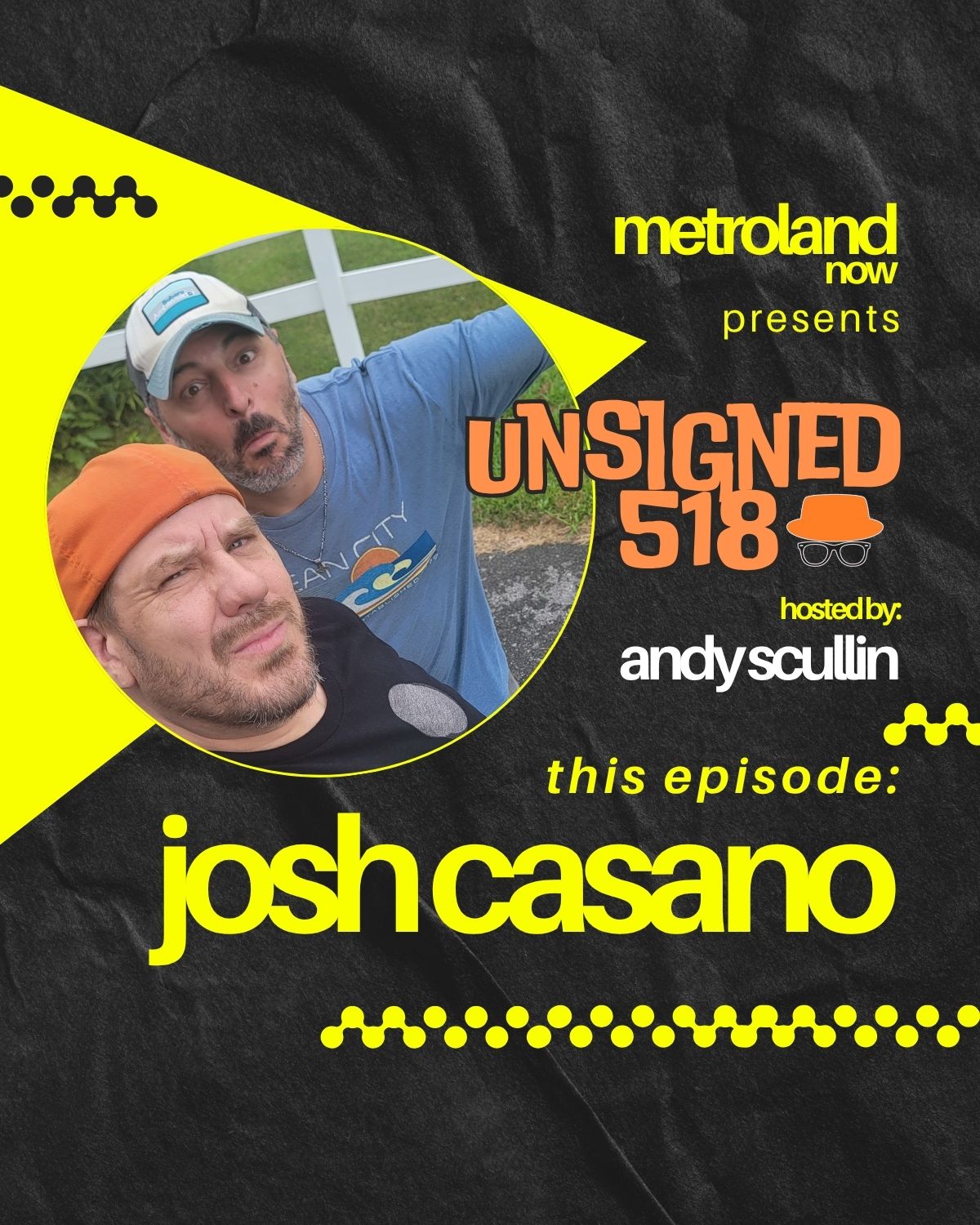
[00:00:01] Speaker A: He was born on a Saturday in 73 he loves punk rock music fighting the 13 jabbing the dazzle jazz on the beat Guitar with a short with radio bat his motherfucking envy SC Here he comes Andy Sculling wearing his or his hands.
[00:00:27] Speaker B: Welcome to unsigned 518.
So I am here.
Well, I guess I would say on the phone because I'm old, but it's a video video style with Jay from Punk for Kids. Jay, what's up, man?
[00:00:41] Speaker C: How's it going tonight? Thanks for, thanks for having me on. I appreciate it. I always love and are thankful to come on and talk and tell my story, so I appreciate it.
[00:00:48] Speaker B: Yeah. And like we, you know, just like, I mean, behind the scenes, people don't really realize like how much goes into a podcast as far as scheduling goes and like how many times you and I, like, we're like, let's try this day. Yes. Nope, we got reschedule. What about this? Yep. Nope, we got to reschedule. And like that happens all the time. Like I would say most, most of the time, you know, because we're out, we're all busy and doing things. So I'm like excited that we finally are here and doing.
[00:01:16] Speaker C: Yeah, no doubt.
[00:01:19] Speaker B: Go ahead.
[00:01:20] Speaker C: I've been looking forward to it all day, so it's awesome.
[00:01:22] Speaker B: Sweet.
So I guess what I want to do, like, is just talk about like a little bit what punk for kids is. Like, we're like kind of on the same wavelength. Like we've realized before we started recording, not only music wise, but movie wise. Like, but like I'm like an old punk guy and I've always thought it was just like a, A music that spoke to like the, I don't want to say like the Outcasts, but it was, it's a music that is inviting to everybody and I, I kind of want to hear what you're doing with punk music and, and punk for kids and like the what it is and how it got started, you know?
[00:02:03] Speaker C: Yeah. So I, I kind of go, I guess how it started. So our son is autistic, so he goes to school year round. So a couple summers ago I'm a teacher, so in the summer it's on me to like take him to and from the school. And it's like I don't like a half hour, like 20 minutes from our house or so. So this one summer I realized whatever the first song he heard in the car ride was a song you had to listen to on repeat the entire way. And, and so you had to Be like super strategic, what you played. And you know, I'm not saying there's like bad kid songs, but like the joke I would say is like, how many times can you hear Baby shark in the 20 minute drive? And it would drive me. It would drive me crazy. So, you know, that whole summer and you know, when I went back to work, I kind of kept going back to two thoughts, right? One was, why aren't there kids songs that I wouldn't mind listening to myself?
And two, why aren't there like kids songs and the style of punk and sky. Like, it's what I grew up listening to, right? Like I was. Went to shows growing up and it just, I just found it weird that, that, that in that musical space it was the only genre that was not. Didn't have kids stuff.
So the, you know, the idea would surface every now and then. And then eventually I kind of started playing around with a couple songs he was listening to. He's really into Five Little Monkeys. And I heard a very like Goldfinger, like Goldfinger's first album, like that Scott Punk. I heard it for that song. So I started messing around with these songs. And when I, when I kind of did that, there was like a. A moment that clicked that I'm like, it actually worked out musically really well, right? Like kid songs, super simple, simple chord progression, super simple catchy melody. And you know, it's not a knock at punker Scott whatsoever. But that's why I liked it. It's simple chord progressions, simple melody, and it just worked. So I demoed Five Little Monkeys one night in like two hours. I was home by myself. And when my wife got back, I played it for. And she laughed but like a good, like, chuckle. She's like, I don't know. Like, this isn't, this isn't so bad. So I sent it around to some friends of mine and was like, hey, I got this idea. What do you think? So, you know, the general pulse was, why don't I do some more covers? So I. It started out as just covers. So I did an EP of covers. And then that following Halloween I did another cover and I did my first original song, which was originally Happy Scholeen, thinking everybody in the world will get that joke.
And no one got that joke. And it still baffles my.
I made the same reaction. My wife's like, how's that song going? I'm like, it's going to like people getting that joke. I said, nope, nope. And I teach, I teach high school and like all the Kids are like, what are you, what are you, Scott? What are you talking about? Like, they had no idea. So I, I kind of did another version. Happy Halloween.
And then I was kind of around this time that we were not our so much. Pretty much non verbal to this point. And we were noticing around this time that music was starting to unlock language for him.
So my wife kind of came up the idea. She's like, why don't you try doing original songs? Like I wrote a song for a wedding. I performed like, I know you can write. It's like, why don't you do like original kid songs? I was like, I don't know. Like I'm most certainly. It's ironic now, like I'm not a real kid person.
Just like, I think you should try it. So I really just started a list of stuff so if he came up and said something or you know, something was of interest to him, I kind of started writing songs like that. So like the first one I ever did was Robot Cat from Outer Space. He just randomly said Robot Cat to me one night. So I, I wrote a song kind of based off of that and now it's really turned into every song that I write is specifically for him. Either something that he's interested in or said to me or something tied to our family.
You know, my favorite probably to date still Frankie Mac and Cheese, which came from videos that my sister would send over. Dog Frankie eating Mac and cheese. And she would do like a silly voice of the dog. And he was obsessed with these videos like they were played on repeat. So I wrote a song about that and you know, success. It's. He sings a lot of the songs now, which is awesome. And it's, you know, it's progressed to, you know, outside our family unit, which is still crazy to me that it's allowed me to get on podcasts like this and talk about it and play shows now, which is wild. And you know, and I think what we like about it is, you know, my wife too. Like we love this style of music and you know, a lot of it's just not kid appropriate unfortunately. Like I love Blink 182, but it's very hard for 5 year old to play a lot of, play a lot of Blink 102 and you know, my, you know, through my wife's like, I think it's cool that we can have catchy punk songs that our kids can sing along to. That's safe. Not that their songs are bad. Like I played for him, no doubt. Like I'm not Not going to play those songs. But I also don't want my kid going to school singing like, Happy Holidays.
[00:06:28] Speaker B: That's exactly. Like, as soon as you said Blink182, that's the. I was like, started repeating that over in my head.
[00:06:34] Speaker C: I was like, y. Yeah, would not. Would. There were definitely a call. Be a call for that. So that's kind of what it did. And it's progressed on that. It's. It's garnered me some pretty, you know, cool opportunities the past. Kind of. Since the beginning of the year, I. I've really made a. A more push on social media of just reaching out to people like you. And it's been a really welcoming community for sure. And I think you kind of hit upon it, right? You said it's this inclusive community. Like we. We went to supernova back in the September. My wife I and our son. And you know, my wife was definitely not as much in the sky as I was. And I think she was just really blown away by the weekend of how awesome, how nice everybody was. Everybody was super welcoming. Like, we hit some snags with equipment along the way and like, people would helped you out. Like, we needed a wagon. And I think it was just.
It's such a great community and I think to now write stuff more geared for kids. It's just been. It's been a ton of fun.
[00:07:29] Speaker B: And so, like, playing gigs and stuff. Like, when you.
When you're like, booking gigs, is it something that, you know, you're trying to like?
I mean, I guess they get like an audience of like, young kids, but, like, are you looking to, like, kind of inspire the next generation of kids, you know, with this outlet of music? Like, are you hoping that they'll graduate? You know, kids will be listening to your songs and then we'll eventually graduate into, you know, descendants or Blink 182 or so, you know, like, is that like kind of your hopes or you're not even thinking that way? You're just.
[00:08:07] Speaker C: Yeah, like, for sure. Like, I. I mean, the music, I'm sure like you. Right? I've. I've been listening to Scott and punk since I was like, you know, same 1314. Like, I. The first thing I ever heard was like Green Day Basset Case. And like, it blew my mind. Like, you know, I grew up, my dad would play music all the time in her house. It was a lot of 50, 60 pop, which I still love to this day. But, like, when I started fighting my own music, it was the first few songs I heard in the Radio were was Basset Case and Come Come out and Play by Offspring. It was so different. I was. My parents are playing and from that point over it changed my life in a way to do this. So if I could introduce kids to that stuff. I mean I was older, I was in sixth grade. Right.
[00:08:46] Speaker B: So like I was like 21 when that came out. Like for me it was Operation Ivy.
[00:08:51] Speaker C: Like that, like grew up listening to them too for sure. Right. And then obviously transitioned to rancid and all those stuff and yeah, I guess I, I. It'd be cool. I don't really think about it. And I think the shows are weird in a way because it's definitely a mix of kids and adults. Like, you know, I think that I. When I played Supernova, I think there was probably more adults listening now that I had a big crowd to see me. I didn't. But I think that my music resonates with adults too. Like we played. The first thing ever played was this local event in my town and like the parents are rocking out. I think if you can get like the parents too to be like, oh yeah, this is pretty good. I think, you know, kind of get them to play it. It's I think with how the world works now, right. I think you have to get the parents to buy into it so they start playing it for their kids in a way. Like kids aren't on social like, you know, no five year old hopefully.
[00:09:38] Speaker B: Well, you know, like the way it is, you know, it's like the music is good enough that the parents like it, but the content and the lyrics is appropriate and speaks to the kids. Like you get, you get both of it. Like you said, you know.
[00:09:51] Speaker C: Yeah.
[00:09:52] Speaker B: Kids music that you like to listen to and like that actually remind. There's a, a band around here, a local band called Watch Reggie Run and it's a dad and his autistic son and he makes punk rock music for kids. Like, so I need to like, I need to get. Yeah, that's like you would.
[00:10:15] Speaker C: That's awesome. That is. He can get his kid involved. Like that's definitely be a goal eventually. He's just not at all near that point yet. He's gonna be seven, but he's nowhere near that point. Like he sings along like my Christmas song I did last year was about our elf on the shelf. And I got him to have like say there's like a bridge. And I got him to say yes or no, which was awesome. I was like the first track that he was on and. But yeah, I Would love to get the point where he.
[00:10:40] Speaker B: Yeah, like, when we're done, you know, with this, I'll get you his information because he's, He's a great guy. Whole family's really good and the music's really good. You. And like, it's kids. It's kids songs, but like, it's, you know, from a. From an old punk rocker.
And they're, they're good. You know, they're good songs. They're just simply good songs.
[00:11:03] Speaker C: I think it's. I mean, again, it's my, without a doubt, my favorite style of music, so I think most of it is great. For sure.
[00:11:10] Speaker B: Yeah. And like, I mean, same. Like I grew up, like I said, you know, Descendants and Operation Ivy and all that. And for me it was like.
I think it was discovering that the, the punks were very kind. And like, there was like an old adage that, that we used to joke about, like in high school, back in the 80s, you know, we used to say that that hippies were. Were really shitty people pretending to be nice and. And punks were really nice people pretending to be shitty.
Like, I know, like, that's true, though.
[00:11:41] Speaker C: There's. There's truth to that. No doubt.
[00:11:43] Speaker B: It is definitely true to that because, like, some of the punks that I met, like, when I was in high school, you know, were like, looking dudes, you know, like the Liberty Spikes and the, like, you know, and they were the nicest. They would do anything for you. They were like, so kind and, And I, you know, I, I didn't experience a ton of kindness in high school. Like, you know, like.
[00:12:06] Speaker C: Oh, either did I. I was, I was the, the. I was the band geek. And, you know, we've had our. We found our niche audio.
[00:12:14] Speaker D: I'll never forget that.
[00:12:15] Speaker B: We had, like, you know.
[00:12:16] Speaker C: Yeah, we had a. We had like a battle of bands and we went up. So they were doing like two or three years at this point when we did it. And the, the band that won the previous year were like all the really sick jazz kids. Like the one guy that played Saxon, this guy, this guy Whitney was like, couldn't read a lick of music, but was like, to this day, honestly, one of the best musicians I ever saw. Like, just so good. And they were like, so overconfident and just like.
And we went on stage and we played original stuff and we, we wound up winning this battle of Banjo School. And like, that was.
We got a little bit of street credit after that. We still weren't the popular kids, but people knew who we were. And then we were playing locally the band. And then, like, you know, people started coming to see us play and someone like the quote unquote popular kids, like, started coming out to our shows. And it was not that I wanted to be popular at all because I. I could care less. I still could really care less about that. This.
[00:13:06] Speaker B: I mean, I'm 53 years old. My time for giving a. About being popular is like three decades ago, you know, and it's.
[00:13:14] Speaker C: It's ironic. I. I hated high school. Now I teach high school, so I have to go to high school every single day for the remainder of my. My life. And definitely a different perspective as a. As the adult there, for sure.
It's funny to kind of see it from that. From that perspective and that side of it.
But yeah, I. Again, like you said, I always felt like I could go to a show and it didn't matter what you wore or what you did. Everybody was. There was never any fights. I think that's what my wife and I, you know, I knew it was me that way. But when we came back from supernova, there was like, you know, 10,000 people. There probably was not a sing.
No one caused trouble. Like, in this day and age, have a big fest like that with zero issues is.
[00:13:51] Speaker B: Well, I mean, rule number no, go ahead.
[00:13:54] Speaker C: Yeah, it's like the anomaly that there was no issues. Right? Like any. You know, unfortunately, it happens all the time. It's big events, but, like, no one, like, I had like, my gear out, like, in like the main room where everybody was leaving their gear. Like, you didn't have to worry about it. You knew you could leave your stuff around, no one would touch it. And it was just.
I wish it could be like that all over again.
[00:14:14] Speaker B: And it's just like the rule of, like the mosh pit, you know, like, rule number one is if somebody falls, pick them up, you know, Pick them up.
[00:14:23] Speaker C: That. No doubt. It is no doubt.
[00:14:24] Speaker B: And that's, you know, like, it's not, you know, and from the outside, it looks like it's a very violent thing. Like, people are out to hurt each other and like, you know, and you realize.
[00:14:35] Speaker C: But it's not. Like how many videos you see online.
How many videos have you seen online when someone, like, takes the next level in the mosh pit and like, they're right, they get. It's not tolerated. It's. They are. It's not. It's not tolerated. Like, I saw blink at a pansy art center, like when Matt was in it when they were Doing their end with the state tour. And, like, it's like almost like a fight broke out in the pit, like, by us. And, man, it was over and. And the kid had no business being in the pit. Like 100. Like, he was. He was not. Should not have been in there. He did not know it. And, like, someone hit him and he turned and he was. He was taken out of that pit so fast. Like, they were not. Not putting up with it. But you're right. It's that it is community, and that's. I'm seeing that as I'm moving forward with this project of, you know, it's. I know it's the case, but for people wanting to help me out is awesome. And I'm always be like, yeah, you want me to, like, come on your podcast? All right, that's awesome. But it's just ingrained in everybody in this. That's. People that are really in the scene. Right. I've been in it since you're younger. It's just ingrained in who you are, I think. Yeah.
[00:15:37] Speaker B: Yeah. And I mean, that's like, kind of why I do this. Like, I, you know, I do this because I like to help and like, if I, you know, can help, then. Then I. Then I'll do it, so. And I just like to do it and I, you know, I'm on. I think I'm on, like, year four of this year five.
[00:15:56] Speaker C: Pretty good. That's a pretty good run. It's a pretty good run.
[00:15:58] Speaker B: Like three, 300 something episodes, I think, altogether.
[00:16:03] Speaker C: But that's real good. That's a lot, man. And I. I do, you know, we. You talk. It is a lot of work. I think people, you know, that don't do this don't realize how much goes into it. Just like a song, like, songs take me 30, 40 hours, some songs to put out from start, you know, from start to finish. And I think unless you record and write, I don't think you realize what. What goes into it and how challenging it is at times. For sure.
[00:16:28] Speaker B: Yeah. Yeah. I mean, some doing recording songs is great, and I've been a musician for, like, ever, but I haven't really done a ton of recording until, like, the last five years.
And seeing, like, what goes on, like, in the studio is wild. And it changes, like, how I listen to music too, you know, because now I 100%, you know, like, you can tell, like, you know, I mean, I guess when I was younger, I didn't really think about, like, harmonies and, like, fifths and sevenths and like, all these different voices, you just sing along with the song and then you realize, oh, that same singers is singing seven different parts on this song. You know, like, on this song. So, like, it's, you know, studio. Studio magic, I guess.
[00:17:14] Speaker C: Yeah. And I think it's interesting you bring that up. Like, my wife, she listens to music so differently than I do. Like, I think she usually will be, like, focused on the lyrics first, and I don't. I go to the music for the first time. And she always likes listening or she finds it enjoyable watching me and my one buddy who helps me write sometimes listen to songs as we. We tune into so many different things that she probably wouldn't tune into necessarily. Not knocking her at all by any which. But it's just. It's interesting once you've done that and recorded how you kind of pick up and, you know, drum beats and we zone in on things that she's not even really tuning into until she notices, like, oh, yeah, no, I hear that now.
[00:17:53] Speaker B: And like, even, like simple things like tambourines and hand CL apps, you know, like, just listen to or. Or single piano notes.
You know, like, if you listen to, like, almost any song on the radio, like one or all three of those things are in the song and you don't even recognize it. You know, like, there's just like these fillers that.
[00:18:19] Speaker C: I did a lesson.
Sorry. No, finish your thoughts.
[00:18:22] Speaker B: No, no, no, go ahead. I was done.
[00:18:25] Speaker C: So I. So I teach TV production. And we. Last week, my lesson was on audio, and I was talking, you know, we talked about just general microphone, you know, like different types of microphones, how it picks up the audio signal. And then, you know, we. I go into like, live, you know, live audio, and I go over the mixing board and I put it up on the screen. I talk about pan. And I said, so pan is how things sit in your. Your headspace, right? And I say that, you know, I said, like, any song you listen to, everything that you hear in your song, where it sits in your headphones or your headspace is done for a very, very specific reason. It's not just by happenstance. I say that there are certain things that always are done. Like, vocals usually sit center. You know, the bass drum always sits center. There's certain things that are just how they are. But I'm like, when you listen that song, everything is done. You're hearing it because that's how the artist and producer wanted done. It wasn't just like, let's just throw it together. I think that kids Then kind of start thinking about it a different way. Because I think most kids nowadays listen to stuff.
I mean, I mostly listen to. I don't know anymore what those do.
[00:19:23] Speaker B: Yeah, no Effects with their, like, all their stuff. Like, in my car, I had a speaker blow. So, like, the. The right speaker was the only one working. And like, every single. It made me realize that, like, every single no Effects has one guitar solely out of the left channel and. And one out of the right channel. So, like, like, literally whole entire parts of the song just aren't there. Just aren't there. Because, like, there's not.
[00:19:54] Speaker C: You know, it's funny you say that. And so we do a live show in our school, and our audio board for the music is two. So it's two channels for audio, right? A left and a right. And I told. When I teach it, I said, look, if you only brought up one channel, you. And exactly. You said, like, you lose half the song. Like, you and you. Until you hear it and you don't notice it. And. And sadly, like, kids don't have stereo systems. Like, they're listening to most of music through, like, headphones. And I don't know, I think they're doing themselves a disservice. I think once you playing music through, like, a stereo system that's good is still a completely different experience. And they. They don't want to do it at all. They're like, I'll use my Bluetooth speaker. Like, your Bluetooth speaker is trash.
Trash. Like, you're like, I play. I send stuff to my uncle all the time, and he'll listen to usually on his phone first. And I don't know, a couple, maybe like a couple months ago, I guess he finally had a chance to listen to some of the newer stuff I sent him through his stereo. And he texts me. He's like, holy crap, man. He's like, it's such so different. I said, well, first of all, why you listen to stuff on your phone, right? But unfortunately, you have to. Like, when I. When I'm mixing stuff down, I'll listen to it on my phone or through my Amazon Alexa, because for better or worse, that's where a lot of people listen to music nowadays. And, you know, like, I'll listen to something in my headphones or my. My cars. I think the car is still the best judge for mixing, least for me. But then I'll listen to my. I thought, I'm like, oh, my God, the guitar is so much louder because it's kind of coming through one speaker and Then you ought to go back and like, kind of remix things. So just the way people listen to music is so different now.
[00:21:27] Speaker B: Yeah, yeah. 100. Like, I remember one of the producers we were working with would, would listen, you know, listen to it in the studio and then bounce it to a cd and then we would go out to the car and like, sit out in his car and then he would listen to it and then, you know, so he was like, you couldn't tell just by one. You had to have both and like to tell if the mix you do.
[00:21:53] Speaker C: And I think on the flip side, technology is nice. Like, I can bounce a song. I, I mean, I just use GarageBand. I could balance the song to GarageBand to like my, my phone, like through my, you know, I, you know, Apple music, right. And then listen to it within five minutes of my car. And when I'm, when I'm writing and recording, I would say I get really obsessed with every song. Like, that's all I listen to. Like, I have a pretty substantial drive to work. Like, I drive 45 minutes each way.
But for me it's been really helpful. Like, I'll listen to a song the whole way to work. I'll make notes, I'll. When I'm on my prep for lunch, I'll make all those changes and I listen on the way back. So, like, my songs, I think the last one I had, I like, I think it was like mix 27. I think when I was done with it.
[00:22:32] Speaker B: Yeah, I do the same.
[00:22:33] Speaker C: And it does. Like it matters.
[00:22:35] Speaker B: Yeah, yeah, yeah, it does matter for sure. But like, I do the same thing. Like, I have a 45 minute drive to work each way as well. And like I'm in a band and like sometimes when we learn like cover songs, like my rehearsal quote unquote is like, all right, you know, like we did a, an emo show a few months ago and it was all covers and it was all shit that was a kind of outside of our wheelhouse, you know, like, you know, we're closer to like Ramones or Blink or Dissect, you know, and it was like, you know, my Chemical Romance and Fallout Boy and like, stuff like that. So it was like outside of our normal.
Like some of the songs we didn't even like, weren't even really familiar with. But the way I learned them is I would just put them on loop and listen to them on my way to work, listen to them on my way back. And by the time we sat down to actually play them, I was like, super familiar. With them, you know, so.
[00:23:33] Speaker C: Yeah, it's a. I guess it's a perk of a long drive. All the miles on your car. At least it's for something.
[00:23:39] Speaker B: Yeah, it's a lot.
[00:23:40] Speaker C: I do a lot of miles every day in my car. It's.
[00:23:42] Speaker B: Me too.
All right, so, you know, punk for kids. Where can like people. People listen to you. Is. Is your music out and available to. To be heard and, and consumed?
[00:23:56] Speaker C: Yeah. So everything is online, right? So everything. You can stream all my songs wherever you listen to music. So Spotify, Apple Music, Amazon, wherever that is, everything's always uploaded there.
So that's the best way to, to listen to my songs. And you know, we're in. I don't know when this is going to air, but I, I have a number of hal.
So, you know, you can listen to my Halloween tracks. It. Actually a large part of my catalog is Halloween stuff just because it's a favorite holiday. So I have a bunch of Halloween stuff out right now. And I'm always putting out new songs. I'm. You know, I, I've stopped doing fully, you know, three or four song EPs and just doing single tracks every couple months.
[00:24:30] Speaker B: Nice.
[00:24:31] Speaker C: I just think it's different. It's. Instead of waiting for four songs to get done, if one or two is done, I can release them. But yeah, everything's there.
You can follow me on social media. Like Instagram is probably the best way to kind of get updates. I do play here and there. I do a mix of like a full band show and the last couple things I've done are just like solo stuff. Like when I did Supernova, it was just me and electric guitar and I've done a bunch of acoustic stuff. I have a show coming up on Sunday, but yeah, I'd say anywhere you stream music and then social media, I think is, you know, kind of how you do stuff. Everything's on. It's different now. We used to do press kits and press hundreds of CDs and mail stuff and it's. It's not that way. And I still understand it. I don't understand social media. I don't want to understand it. I don't understand how I spend hours editing a video and it gets seven plays and I do something real quick and it gets like a thousand views and I'm like, I don't. I don't get this.
[00:25:26] Speaker B: Yeah, I don't either.
I don't know.
[00:25:29] Speaker C: It's horrible. It's my least favorite. It's my least favorite part. It.
[00:25:33] Speaker B: It's mine as well. Like anyway, so J of Punk for Kids I am Andy scullin. This is unsigned 518.
I'll see you on the road.
[00:25:45] Speaker D: One sign 518 is produced and hosted by me, Andy Scullen. New episodes are available every week wherever you stream podcasts. If you'd like to help support the show, please like and subscribe wherever you are listening. Or you could buy me a
[email protected] Coffee unsigned 518 if you would like to advertise on the show, send me an email at unsigned518mail.com and to be a guest on the show, reach out to me through Instagram at unsigned518.
Take care of one another and I'll see you next week.
[00:26:20] Speaker B: Andy Sculling and Sculling.