[00:00:01] Speaker A: He was born on a Saturday in 73 he loves punk rock music fighting the 13 cabin in the dazzle Jazz rock Now on the beat guitar with the short wind radio bass his motherfucking Andy. Scrolling look at motherfucker. Cuz here he comes Andy Sculling wearing
[00:00:25] Speaker B: his or his hands welcome to Unsigned518.
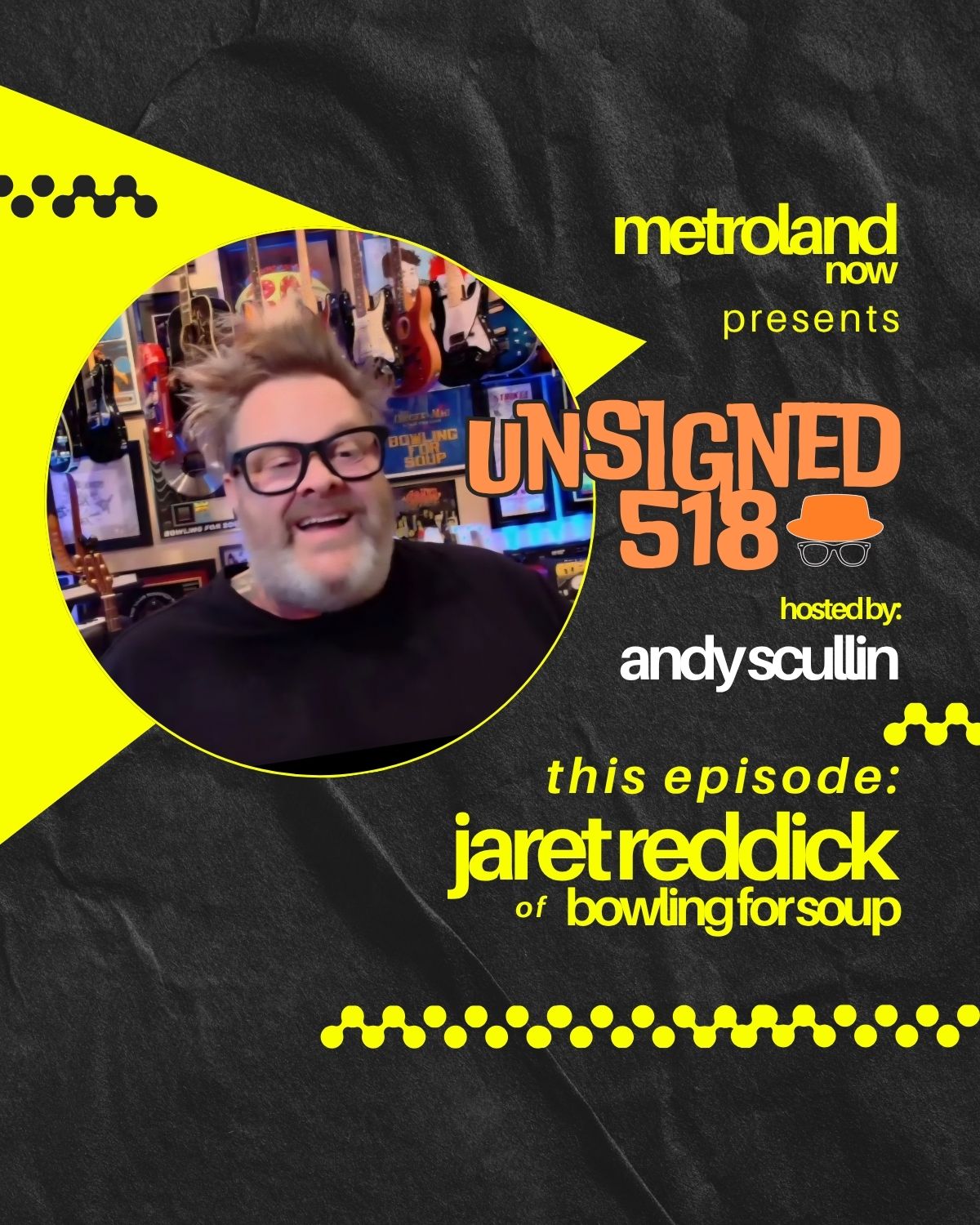
I'm here with Jarrett Redick, a Bowling for Soup. How's it going, man?
[00:00:33] Speaker C: Man, it's going great. Thank you for having me. Thank you for being flexible, by the way. By the way, Andy is the most patient person in the world because I drug him through the dirt to get here and. And we finally did it.
[00:00:44] Speaker B: Yeah, yeah, we finally did. I mean, it happens. I get, you know, I get rescheduled on all the time and I reschedule fucking all the time. So.
[00:00:52] Speaker C: Okay, good.
[00:00:52] Speaker B: It's just like normal. Just like totally normal.
But you know, I think what we want to talk about and we can split off into whatever, but you have a lot of really cool shit coming up.
I just had John of Punk Rock radar over here and we were talking about how he curates the playlist for Punk Rock Museum and was talking about his involvement with them.
And it kind of got me thinking, I'm like, I'm going to just reach out and see what's up. So I guess you've got the tour with Frank Turner. American hi Fi. You've got a stint coming up at the Punk Rock Museum. We have so much shit going on. So I guess, yeah, tell us what's up.
[00:01:33] Speaker C: It's crazy. Yeah, yeah. This week actually I'm heading to the Punk Rock Museum. I do it twice a year for a few days. And so I'm coming in, I'm going into Vegas and Thursday I'm doing a show at the Hard Rock with Thomas Ian Nicholas.
Sort of like a warm up to the WrestleMania thing. And then I'm at the museum for three days and I'm doing two tours a day. And then one day I'm doing an acoustic show. One day we're premiering a movie made by the guy that signed Bowling for Soup called Heavy Healing.
[00:02:04] Speaker B: Oh, wow.
[00:02:05] Speaker C: Which is about. It's about being in a band and touring with chronic illness. So I have ulcerative colitis and I have some mental health stuff, depression and anxiety as well.
And then they're doing a book signing on Sunday and I'm going to host that. And so it's busy weekend in Vegas and then.
And then, yeah, as you mentioned, Australia with Frank Turner. The UK with Frank Turner. And then summer into the fall with simple plan and 303 in the states, so tons going on.
[00:02:40] Speaker B: Now, when you go out and do, like, the tours of the Punk Rock Museum, is it just like, do you have to do, like, a ton of studying for all that, you know, or. Or do you just kind of know, you know, is this shit just in your blood where you're like, oh, yeah, and this is this and this and this.
[00:02:55] Speaker C: No studying. I mean, the first. This is a true story. The first time that I.
That I did my tour, like, I showed up 10 minutes before I was supposed to start, and Morat, who.
Who's the guy that does the. All the talent there, and he's just this British punk rock dude, you know, and he walked me through just to basically show me which way to go, you know, and he mentioned a couple of things as we went through, and then, yeah, man, I just got to my first tour and I just started walking and I was. I was real honest with him. I was like, hey, I'm seeing this. Like, you guys. So if you see something cool, point it out.
And honestly, man, now, after I've done, gosh, well, I guess I've done, you know, 20.
Over 20 tours now.
I still say, if you see something pointing out, point it out to me if I miss it, because I still see stuff all the time. You could. You're never going to see it all because somehow they managed to save. You know, they found people that saved flyers and. And album advertisements and. And things. I mean, it's wild there when you get so. Again, I see stuff every single time that I've never seen, but I just love it, man. It's. It's sincerely my home away from home. I love the. The staff and the bar and. And just walking people through there and telling them about the Descendants and.
And, you know, and. And, yeah, and like, when I started listening to Green Day and they're like, what? I wasn't even bor.
And it's, you know, that kind of thing. And then, you know, you get to the point where I've got a gold record in there. It's kind of cool.
[00:04:30] Speaker B: Yeah, yeah, yeah. And I wanted to say, you know, it's one of those things where I was like, you know, getting excited for this conversation. I wanted to kind of be like, you know, it's someone that I've been listening to since I was like a, you know, a little kid. But then I'm like, I'm like your age. So, you know, I was like, 22 when your first album came out. But I've been listening, you know, since that. But I know a lot of, you know, people that are, like, young, that came up with your music, to be able to go to a fucking place where they can talk to you and experience things through your eyes with you, that's just got to be.
[00:05:05] Speaker C: Yeah, gotta be such a. Oh, man, it's awesome. And sometimes, like, you know, they. Especially when I get, like, an audience that is super into it and they're asking questions and things like that. And then, like, you know, it's almost like we develop a rapport, you know, and. And it's fun for me.
I certainly like those. I certainly like the audiences that participate better. But everything's kind of has its place. I mean, one of the things is, like, one whole room is pretty much all the bands from.
Oh, shit. Why am I drawing a blank? The punk rock movie. You know, there's three of them. You know what I'm talking about?
[00:05:48] Speaker B: Yeah, but it's. I'm an old stoner. I'll never remember.
[00:05:51] Speaker A: Oh, no, it's.
[00:05:53] Speaker C: You know what it is? It's the fucking decline of the Western civilization. Okay?
So one whole room is just basically those bands. And so, like, you know, I could talk about. Just tell them about things from that movie, you know, because, you know, the Darby Crash is in there. Then, you know, he sort of, like, predicted that. That he was gonna die early. And he did. And, you know, that then that was the band that Pat Smear was in. And, you know, so there's things I. I sort of just recognized my first two or three times through there. And now I kind of have my thing that I do, but I do change it up a lot now.
[00:06:28] Speaker B: I, I. Speaking of changing. Changing it up, I guess I. I want to kind of switch gears. Like, the initial reason that I reached out was, you know, for Punk rock Saves Lives, what you do with them and the mental health, like, that's something that's, like, super important to me is, like, getting rid of the stigma and to be able to recognize when you need help and feel comfortable asking for help and feel comfortable for recognizing when someone, you know. So that's originally why I reached out to you. And then, you know, I got so excited with all the cool shit that you have coming up.
But. No, go ahead.
[00:07:07] Speaker C: Yeah, man. I mean, I think that's the thing, you know, it's that, like, you know, the stigma is actually the reason why I started sharing in the first place, because a friend from here who happens to be a therapist who was in a band called Slow Roosevelt back in the day.
He did a project called Louder Than Stigma. And I had never talked about my mental health stuff ever.
And because I'm the happy guy, you know, And I. I was. I was really, really worried about it being this thing that backfired. Oh, the. The guy. Oh, what? You got a couple of hit songs and you're sad, you know, And I was just, oh, you gained some weight, so you're sad. You know, it just.
I. I just. Honestly, I wouldn't say worried. I just really didn't want to put up with that shit, you know, And I. I didn't feel like I deserved it. And so I. And also, I was still really just learning to deal with, you know, my issues, so to speak.
But once I shared it the first time, I was like, I promise I have a point, by the way. No, once I shared it the first time, then I was like, okay. To my publicist, I'm like, hey, this is going to come out.
Please, when you talk to journalists, tell them, I don't want to talk about this all the time. I don't want this to become my identity.
And as soon as that Louder Than Stigma thing came out and that interview came out, the reaction to it, I took all that back and I was like, okay, this is helping people. And I mean, just because I talked about it, now this guy's going to get help. And this. This guy is talking to his wife about it, and this guy is doing this and this girl's doing this, and, you know, and this girl tried to commit suicide and. And is sharing her story and, you know, all of these different things.
And so at that point, it became something to where I was way more comfortable in sharing. And now it's pretty much, you know, my whole thing. It's my calling now, you know, I mean, my band is the most important thing in my life. But honestly, I really do sort of feel like I was put here to be a springboard for mental health awareness and just to try and share and go, look, I'm the happiest person I know. I really am.
If it could get me, it can get anybody. And just like you said, getting people to share, especially men who are from the rub some dirt on it generation, and we don't ever want help with anything, you know, Like, I just went to Home Depot today and I could not find this piece, these, this plumbing thing that I was looking for. And I would not. I did not ask for help. I conquered it. But I could have saved 25 minutes by asking. But I. I just, you know, I didn't.
You know, and then you. I'm so happy for you because I. I love where you're coming from on this because you're so right. And I don't even know if you realize you said it or if you. If you're aware of this, but whatever. But learning to listen is so important in all of this because not everybody experiences depression or anxiety. And it's like one of the things that can happen to somebody that they can't tell you what it feels like, no matter what. Like, I can't. If you've never had the flu, I can't tell you what the flu feels like. Chances are you've had it. So when I tell you I have it, I can give you three of the symptoms and you know exactly how I feel. I can't tell you what a broken wrist feels like unless you've broken your wrist.
You know, I can't tell you what a tattoo feels like. Even. I can just try and describe it, but it doesn't work, you know, So I certainly can't tell you what being depressed feels like, you know, And I certainly can't tell you to understand it if I don't understand it. What I could. What you could do, though, is listen and really just be there and offer just hearing somebody and not to fix it and not to ask what's wrong and not to ask how you can. What you can do and not, you know, and that's.
[00:11:07] Speaker B: Sometimes that puts, you know, pressure, like, as something, you know, I suffer depression and anxiety as well. And. And when someone tries to offer solutions, like, I'm, like, such a people pleaser that I want to listen to their solutions, but at the same time, I'm like, they're. It's making it work, you know, it was making it worse. Like, sometimes I just need to, you know, draw.
[00:11:30] Speaker C: Well, the thing is, is that, you know, so I learned in couples therapy that I'm a fixer and something that I've been working on for years to not try and fix everything that's wrong. That. That my. If my wife has an issue with something, to not go, oh, we could do this. We could do this, you know, and she has her own mental health issues or whatever. And so here I am, this anxious person, and she's like, oh, I'm not feeling. Oh, well, why? What's wrong? What can we do? You know, blah, blah, blah. And I was doing the same thing that people do, you know, to. And again, it's It's. It's not. It's out of love, you know, but I had to learn, like, oh, hey, I'm sorry you're feeling like that today. If there's anything that can do, or if there's another way I can offer you support, then. Then let me do that, you know, And. And so. But I think we're doing so well with the stigma, you know, I think it's. People are.
[00:12:17] Speaker B: Are.
[00:12:18] Speaker C: Are owning up to it and going, hey, you know what?
This is real.
You know, the people, you know, having, you know, these mental health things or whatever, like, we're. We're accepting of it or whatever. The thing that I.
That I worry and I don't want it to stop, but, you know, I've been saying this recently, is that, like, I think the it's okay to not be okay thing has become a little cliche, and it. I worried that it's sort of like, it's one of those things where it's almost becoming annoying to some people, you know, it's almost one of those things. But it doesn't mean we should stop saying.
Just means also that, like, we, you know, we have to be able to give explanations of that, of what we're talking about, you know, what we're saying is that, like, basically, like, you could admit that you don't feel good, man, you can tell me, you know, and. Small victories, brother. You can you get out of your bed and brush your teeth sometimes, and that's all you can do.
You did it. Yeah. Yeah.
[00:13:13] Speaker B: I always say, you know, like, my depression manifests as, like, inactivity, you know, Like, I get. When I get depressed, I can't fudgeing move. Like, I can't do anything. And when I was younger, it was like, he's lazy, you know, and it was like. And I found that, like, if. If I feel it coming, the best thing I can do is make sure that my hygiene doesn't slip and make sure that I'm getting dressed and getting out of the house, like, because, yeah, it's so easy to just sit and let it, you know, and that's almost like the. It's okay to not be okay. That's me when I'm not okay. And unfortunately, that's. It's not okay when I'm in that position, you know, when I'm there, that's not okay. So, like.
[00:13:55] Speaker C: And you know what? But it's different from. For everybody. It's so funny. I just did an interview with.
With a magazine yesterday. No, Friday.
And his depression he actually likes, like, gray days and the sun actually annoys him when he's like, in a low tide, you know? And it's so and so interesting to me because we do all feel it so differently because one of the things I always say to people is, you know, go see the sun. You know, you don't have to. I'm not saying lay out in the sun.
[00:14:29] Speaker B: Even just walking out in my yard will exactly switch something.
[00:14:33] Speaker C: You go, like, walk out your yard and feel that and then drink a bunch of water, feel it, like going through your whatever, do some breathing and stuff like that. But also, you know, all of that, and then just give yourself grace if that's all you do. Because my two years, my big. My big. I just. For your knowledge here, I started to.
I got this late in life. I was almost 40, and I went through a divorce and a custody battle, and my. I had to start splitting my time with my kids. And then I got in a new relationship and we had a son, and I moved to a different city and we had to, you know, blah, blah, blah. All of those things that your doctor says, any one of these could trigger this. And I did it all at one time, back to back. Oh, and I. Oh, and breaking up my band, you know, to try and save a marriage that was. Was not saveable, that I lost because of the band. You know what I mean? I'm just kidding. It's because of me and the band, but doesn't matter.
So I experienced it so late in life. But yes, inactivity is me too. I could get up, I could get. When I had my children, I could get up, get them to school, make sure my dog ate, and went outside. And then I was right back in bed in the fetal position until I had to be on again, you know, And I started gaining weight and I stopped moving. I didn't go to the gym anymore. And again, I was just. Existing shows were few and far between because we had kind of put the band on hold. And, you know, it was.
It was. It was a really, really tough time, you know, but, you know, getting out of it, what it meant, taking action, you know, I had to. I first started talking to my doctor, and then we, you know, I didn't want to be on meds. My parents are both recovering alcoholics. My brother's is an addict, and I have ulcerative colitis. So I'm already on medicine for the rest of my life because of that. And so I'm like, I'm not. I don't want Another thing, you know, I don't want to have to have to depend on another whole set of shit, you know, but.
Took about 18 months for me to find the right balance of medication. We fucking did it. And then while I was doing that, I was going to therapy, and.
And that's when, you know, it started with anxiety. And then the depression diagnosis came in, and it was pretty gnarly.
And so, you know, took a couple of years. But, you know, I.
And now, like you said, I can feel it coming on, you know, and. And I just communicate it. I say it to my wife. I say, hey, just let you know, I'm having. I'm a little low today. There is no particular reason. You did not do anything. I am, you know, not mad or upset. And. And then I. If I'm on tour, I tell the band and the crew. I just say, guys, just let, you know. Just kind of not feeling great today, and y' all didn't do anything. And I'm perfectly happy to be here, you know, and, you know, so if I'm. If I.
[00:17:25] Speaker B: If.
[00:17:25] Speaker C: If my body language is such that your work. Because if I'm mad it, you know, at everybody, then somebody up, you know, so, you know, like, you seem a
[00:17:37] Speaker B: lot the same because, like, I'm the same way. Like, you know, I can get quiet when I'm depressed. Like, no one's ever gonna guess if I'm mad or not. You know what I mean? Like, when I, you know, I' old Irish dude, like, when I met. You'll. You'll see it in my face. But, like. Yeah.
[00:17:52] Speaker C: Oh, yeah, Exactly.
[00:17:53] Speaker B: Confused. The.
The, like, you know, like, I'm withdrawn, as if I'm angry or, you know, something's wrong.
[00:18:00] Speaker C: Yeah.
[00:18:00] Speaker B: It's like, no, man, I'm just in. I'm in here. And like, for me, it's gotten worse.
Like, you know, I'm. I'll be 53 next month and on my fifth.
[00:18:10] Speaker C: You look great, man. We are the same age. You look awesome.
[00:18:13] Speaker B: Thanks, brother. And. And on my 51st birthday, I quit drinking.
[00:18:19] Speaker C: Oh, wow.
[00:18:20] Speaker B: So, like, it'll be two years in, you know, Next month it'll be two years. And there was no.
[00:18:27] Speaker C: Was it an issue or. Health stuff.
[00:18:29] Speaker B: That's the thing, really.
My anxiety has actually gotten, like. It reared its head basically, when I stopped drinking, but I. I really stopped, mostly because of heartburn.
I have gerd.
[00:18:44] Speaker C: Yeah.
[00:18:44] Speaker B: And, like, it was not fun to drink beers and deal with the consequences for two days, you know, it was like. That's what it was. I'd have heartburn, like uncontrolled, like unstoppable. Nothing would stop it for days. So I just stopped and I realized that I'm an anxious, A socially anxious person. And I never had a clue, you know, because you have a couple, have a couple beers and I'm certainly not an anxious person. But, you know, take that away. And, and I've struggled to level off
[00:19:20] Speaker C: and that's scary too, isn't it? It's scary because you look at, look back in the last 25 years of your life and you're like, holy shit. I've been just masking this, you know, you can't really put your finger on when that started or whatever. I'm the opposite. I mean, I still drink and, and, and we, I go pretty hard when I'm on the road, when I'm home. I, I'm not really. We're not. Me and my wife are. I mean, we had our time, right, but we.
[00:19:45] Speaker B: Same with me and my wife.
[00:19:47] Speaker C: But we'd rather sit on the couch and just watch tv. And then, you know, once every three months we'll drink four bottles of wine and just. And binge a whole show in one night. And then we're both dead for two days.
[00:19:59] Speaker B: Right?
[00:20:00] Speaker C: You know, it's the same thing. It's like if I go, go, go go real hard, like drinking, it's what it. But I'm the opposite. Then I'm really, really.
And so I have to be a little bit careful again. Really monitor the water intake.
And of course, at this age, I get my blood work done every six months and pay attention to all that shit and you got to do it. But yeah, man, it's one of those things where the anxiety, it's the part I dread the most.
The depression sucks so bad, but it's just like, it makes sense.
[00:20:41] Speaker B: The depression makes sense to me.
[00:20:43] Speaker C: Yeah.
[00:20:43] Speaker B: Anxiety does not make sense to me. You know what I mean? Like, I'm like, I'm anxious about shit that I have no, no idea like what the outcome could possibly be. And in my head it's already the worst thing possible, like depression. I'm like, yeah, you know, this thing happened. Now I'm sad is how I fool myself. But like, yeah, but yeah, one of them makes.
[00:21:03] Speaker C: Well, see, mine, I just get anxious about because I'm. I don't, I don't really worry about anything. I'm not a big worrier. I was as a kid, but I'm not anymore.
And I'm definitely not like a worst case scenario. Dude, I'm, I'm definitely more of like one of my superpowers is what's the worst that can happen? And I was taught that by my mentor, you know, but who was a father of, of my girlfriend in high school who taught me pretty much everything.
And the reason why I could go to Home Depot and get a plumbing part and actually install it was this man.
And, but you know, he'd always just be like, what's the worst that could happen? And sometimes like it could be pretty bad, but that. Now find the humor in that. Like, what's the worst thing that could happen? Oh, I don't know. The boat could sink, you know, but I'm, I certainly am not a big worrier, but. So when I get anxiety, it's almost always for no reason. Like I don't have a re. I'm just anxious.
[00:21:59] Speaker B: Yeah. And, and mine is, it's usually self, not self centered, like egotistical, but like it's always like self focused. It's always like what are people's perceptions of me? Like, am I up? Am I doing something to make that person uncomfortable? Am I like, you know, even with.
[00:22:14] Speaker C: Do you go to, do you go to therapy?
[00:22:17] Speaker B: I don't, you know, and I, I.
[00:22:18] Speaker C: Have you ever been?
[00:22:19] Speaker B: I have, I have.
[00:22:21] Speaker C: Are you, Are you. Wait, let me ask you, are you married?
[00:22:23] Speaker B: Yes. Been married.
[00:22:24] Speaker C: Did your wife, does your wife go to therapy?
[00:22:26] Speaker B: She does not. No.
[00:22:28] Speaker C: No. You've never been to therapy?
[00:22:29] Speaker B: I went like briefly, like 20 something years ago.
And, and I, I honestly just, and maybe it was probably just the dude, but I like honestly just found that he wasn't helpful.
[00:22:42] Speaker C: Like, oh no, it's a relationship. You're allowed to try them out and you can date, you know, but it's really important. But man, I, Man, I tell you this. If you, if you would just fucking go to three sessions at. Before you commit to it, man, it can, it will change your life because what your experience, I'm telling you this right now. I would say this to anybody. What' Your experience. And you can deal with that. You really can. You can, A therapist can help you. And you don't have to live like that, dude. You really don't. And again, this is what I do now. I, this, this is. I'm here for this, man. Like, I'm telling you, if you just went, if you have the means to
[00:23:22] Speaker B: go, I do go.
[00:23:25] Speaker C: Because you will walk out of at least that second time you go, you will walk out of there and you will feel an inch taller and you will just go, holy shit. You know, and it's just scary to start, man. And it's scary to start for boys, too, especially.
[00:23:41] Speaker B: Yeah. And I mean, I've always tried to be someone that jumps, you know, that takes jumps and does things out of my comfort zone. I mean, even just, you know, this, like, sitting here talking to you. Like, it. It stemmed from me just being like, you know what? It. I'm gonna. What's the worst that could happen? Like, I'm like, I'm just gonna. I'm just gonna send Jared a DM and be like, hey, you want to come on my little po?
And you were like, yeah. And I was like, holy fuck. I looked over at my wife, and I'm like, babe, like, he just said, yes. He's just gonna be on my pocket. And she was like, see, you know, just do. Just take. Take risks. So, you know, I think maybe I will.
[00:24:17] Speaker C: It must have been the way that you ask. It must have been the way you asked me, because I'm in a real big no phase right now because I'm so fucking busy. And, like, I just. I'm, like, telling everybody, hey, can. Can you please follow up with me later? This or this? This. But, you know, again, however you asked, it must have just got.
And I found it to be an interesting thing to discuss, and so I'm.
[00:24:42] Speaker B: Yeah, yeah, you know, I just. Again, it was the mental health. And Rob of Punk Rock Saves Lives is someone who I would really like to.
To talk to. And that's kind of what started this with this whole thing.
Just that that organization in general just really fucking gets me. And I know we have, like. I'm in Albany, New York area, and I know we have a chapter here, like a local ch.
[00:25:08] Speaker C: Yeah. So, yeah, get out there, man. You get to go to shows for free, and. And you meet a lot of cool people, and. And, you know, and we certainly need people like you who are.
Who especially, you know, someone who has these experiences or whatever, and that could. Because. Because there will be people that come up and. And want to talk about mental health, you know, and. And.
And. And when they. When they're able to find somebody that. That. That has those same kind of feelings or whatever. It feels very, you know, it's very comforting. Yeah.
[00:25:38] Speaker B: And I try to be an honest and open human being, you know, like.
[00:25:42] Speaker C: Yeah.
[00:25:43] Speaker B: Not like I wanted to spill, like, my. My entire personal life, but, you know, I. I do like to let people know that. Yeah, I go through this all the time, you know, like. Yeah, like, all the goddamn time. And even though I'm like you, the
[00:25:56] Speaker C: happy person, like we do so much in that. In that charity and just, you know, keeping the. Keeping the wheels turning on the vans is. Is. Is. Is just, you know, again, it's.
And you know, I got. I got involved with them over the pandemic and really it was. It was. It was over the mental health thing because that's what they were talking about during the pandemic, because we were off Fox. Obviously they weren't touring, you know, and so then taking them out on the road and realizing what. What it was we were actually doing, you know, swabbing cheeks and putting people in the bone marrow registry. And we did 10,000 swabs last year, you know, and one in 500 is a match. That's a lot of lives, you know, that the human beings that are still on the planet, you know, and I think it's more than 20. Like, I think we beat the average last year how many matches we had. So it's. It's a. It's a really good organization, man.
[00:26:54] Speaker B: Yeah. Hell yeah.
Well, you know, I don't want to. Want to keep you too much longer because I appreciate you just taking time out of your day to do this. You know, you have to the Punk Rock museum to get ready for. You got the tour with friend. And it was funny when you posted that picture of the Frank Turner album, I. I was like, oh, I have that as well. And I have a signed copy of that. And I immediately was like, look, look.
[00:27:18] Speaker C: Yeah, yeah.
[00:27:19] Speaker B: So Frank Turner's.
[00:27:20] Speaker C: Oh, man, I'm so excited to tour. I'm so excited to finally tourism. We played together obviously, a lot and. And he. You know, he. It's funny. And he knows this and we're friends. I mean, we're close, but you know, he was very. He. I discovered his music at a. At a really crazy time. It was right before all of this with depression hit and kind of as my marriage was ending and also kind of at a time where I.
I just wasn't into music. I kind of just. I wouldn't say given up on it. It just really wasn't my thing anymore. Like, I hadn't heard anything that I really liked in the. A long time or even just something that spoke to me, you know, or. And man, I mean, Beat One of Love Iron Song. And I just was like, what is happening right now? And I just. I went through that and then the next album, the next. And. And the whole catalog and stuff. And I just like, he. He Re. Really did, you know, put music back into my life and to be able to say, you know, now you know, that we're. I mean, I have him tattooed on me. Me, and he's my boy, you know, but it's. It's because. It's because he's important, you know, It's. His music is just that important to me. And so now that we're touring together, you know, it's gonna be. It's gonna be awesome. I can't wait.
[00:28:45] Speaker B: Amazing.
Well, again, it looks like we're kind of running out of time here on the. On the old Zoom Chat, but again, I want to thank you so much for your time. It was really cool to be able to talk to you and, like, anytime you want to want to chat, like, you know, now. Now we're friends, so. That's.
[00:29:02] Speaker C: That's right. Yeah.
Hopefully we'll. We'll be up there in New York soon. I know we. The last time we hit Albany was a couple years ago, I think, but, you know, we'll be around. So make sure you come say hi, bring the lady out on a date night, and we'll all hang. You can watch us drink.
[00:29:18] Speaker B: All right, sweet. I'll do. I'm, you know, I'm a great DD for my wife, so.
[00:29:22] Speaker A: Hey, there you go.
[00:29:23] Speaker C: All right.
[00:29:25] Speaker B: All right, brother. I really appreciate it. Thank you so much, Jared.
[00:29:27] Speaker C: Thanks, Andy. Take care, brother.
[00:29:29] Speaker B: Take it easy.
[00:29:30] Speaker D: Unsigned 518 is produced and hosted by me, Andy Scullin. New episodes are available every week wherever you stream podcasts. If you'd like to help support the show, please like and subscribe wherever you are listening. Or you could buy me a
[email protected] unsigned 518 if you would like to advertise on the show, send me an email and at unsigned518gmail.com and to be a guest on the show, reach out to me through Instagram @Unsigned5.1 8.
[00:30:02] Speaker B: Take care of one another and I'll
[00:30:04] Speaker D: see you next week.
[00:30:08] Speaker A: And.